Politics & Government
Fairfield Board Of Finance Sets Mill Rate At 19.19, As Accuracy Of Recent Revaluation Is Questioned
Nearly 80 percent of nearly 900 homeowners who appealed their property valuations were granted reductions, according to officials.


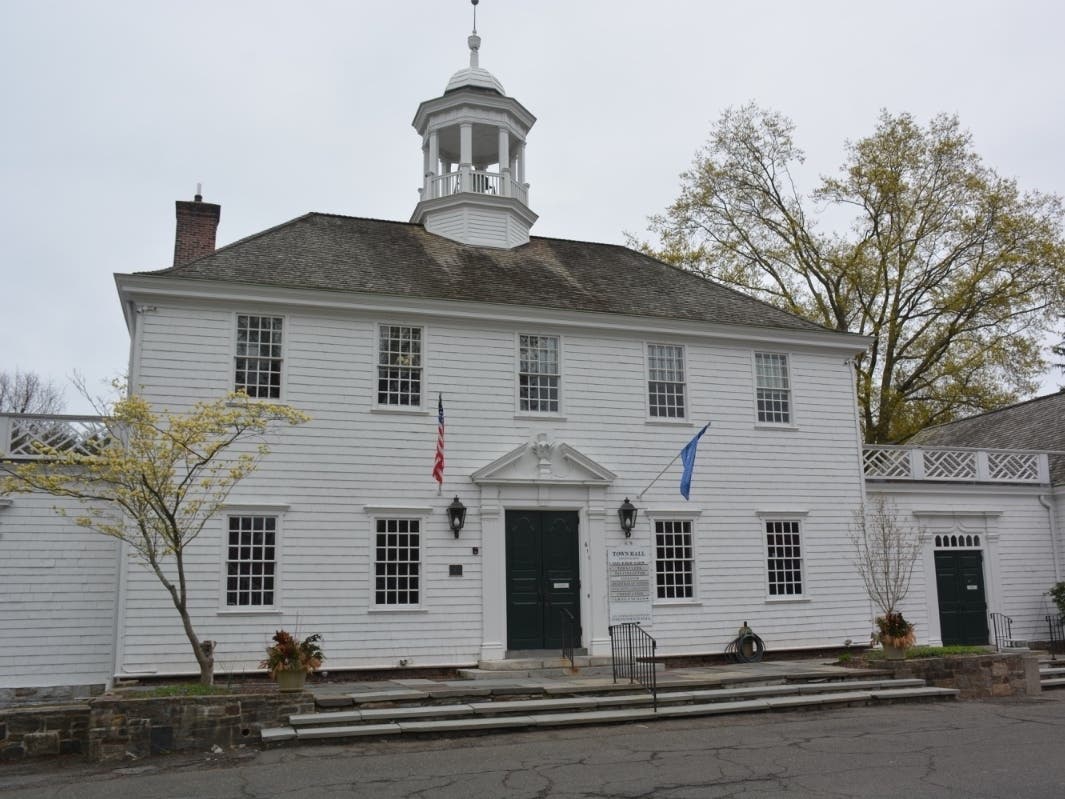
FAIRFIELD, CT — The Fairfield Board of Finance voted unanimously Tuesday to set the town's fiscal year 2026-27 mill rate at 19.19, concluding weeks of budget deliberations while also sparking a lengthy debate over the recent property revaluation and the high number of successful assessment appeals.
The mill rate applies to the fiscal year beginning July 1 and ending June 30, 2027.
At 19.19, the new mill rate is a significant decrease from the current mill rate of 28.39, but many homeowners will see an increase in the property taxes, because the recent revaluation showed that property values increased over the past five years.
Find out what's happening in Fairfieldfor free with the latest updates from Patch.
Ben Boveroux, Director of Financial Planning and Analysis, presented updated calculations based on the finalized grand list, Board of Assessment Appeals adjustments and a three-year average tax collection rate of 99.16 percent.
The calculations reflected the Representative Town Meeting's restoration of a $10,000 appropriation for the Norma Pfriem Foundation and incorporated the finalized assessment data following the appeals process.
Find out what's happening in Fairfieldfor free with the latest updates from Patch.
Finance board members spent much of the discussion examining the impact of appeals filed after the townwide revaluation.
>>>Read More: Fairfield First Selectperson Unveils FY27 Budget With 4.28% Gross Tax Levy Increase
Board member Jim Walsh questioned the significance of the reduced mill rate compared with the previous year, arguing that many homeowners will still face substantially higher tax bills because of increased property assessments.
Walsh also criticized the revaluation process, noting that approximately 77 percent of appeals heard by the BAA resulted in either full or partial reductions to assessments. Nearly 900 homeowners appealed their assessments this year, according to officials.
"To me, that's a 100 percent failure of the revaluation," Walsh said.
Board Chair Craig Curley pushed back on that characterization, arguing that the appeal process worked as intended and that the unusually large increase in residential property values likely contributed to the high volume of appeals.
"I don't think it's a fair statement to say that it was a complete failure just because we saw meaningful adjustments," Curley said.
Assessor Ross Murray, participating remotely, said the percentage of appeals receiving reductions was not unusual historically.
Murray told the board that 78 percent of appeals this year resulted in reductions, compared with 77 percent last year, 71 percent the year before and 81 percent three years ago.
"What makes the number large is the sheer number of appeals," Murray said.
According to Murray, the BAA heard and decided 876 appeals during the current revaluation cycle, compared with 619 appeals during the 2020 revaluation.
Murray said the 2020 BAA was more conservative in granting reductions, resulting in an average assessment reduction of about 3 percent, compared with roughly 17 percent this year.
Board members discussed whether differences in appeal outcomes reflected flaws in the revaluation process, changes in the BAA's approach or the unprecedented increase in residential property values.
Murray said revaluation companies generally use similar methodologies and that Fairfield's property data remains accurate and up to date.
"We didn't find a lot," Murray said of the data verification process. "That just tells us that the data we have is pretty good, pretty up to date, and current."
Several board members suggested the town conduct a postmortem review of the revaluation and appeals process. Murray said future analysis would be appropriate but noted that the current market conditions are unusual and difficult to compare with previous cycles.
The board also discussed whether to account for approximately $942,000 in additional state funding that became available after the budget was approved.
Members generally agreed the additional aid should help reduce the tax burden on residents. They also weighed the town's policy of maintaining reserve fund balances at targeted levels to preserve Fairfield's credit rating.
Tax Collector David Kluczwski advised caution when considering future collection assumptions, citing the significant increase many homeowners will see in their tax bills.
"My concern is people may not prioritize" paying the full amount immediately, Kluczwski said, adding that some taxpayers may delay portions of their payments because of larger bills.
Kluczwski recommended continuing to use a three-year average collection rate rather than a more aggressive two-year average proposed by Walsh.
Board members ultimately agreed that changing the collection-rate assumption would not affect the mill rate rounded to four decimal places.
After completing its discussion, the board voted unanimously to adopt the 19.19 mill rate.
Get more local news delivered straight to your inbox. Sign up for free Patch newsletters and alerts.