Schools
Eastern Professor Leading $270,000 Study of Block Island Shoreline Erosion
Bryan Oakley will study bluff retreat, sediment movement and coastal vulnerability in two-year project.


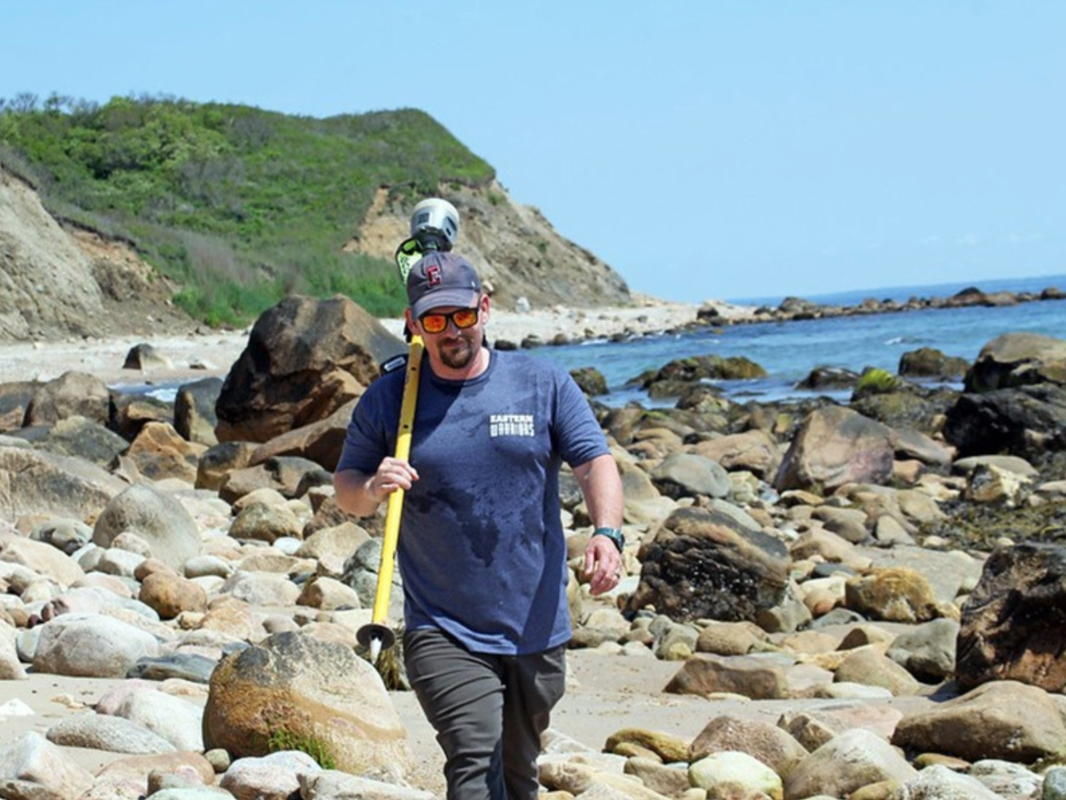
WILLIMANTIC, CT — An Eastern Connecticut State University coastal geologist is one of two principal investigators on a $270,000, two-year grant examining shoreline erosion and coastal vulnerability on Block Island, Rhode Island.
Bryan Oakley, a professor of environmental earth science at Eastern, is working with Nathan Vinhateiro, science director of the Coastal Institute at the University of Rhode Island, on the Rhode Island Sea Grant-funded project, “Bluff to Beach: Quantifying Shoreline Dynamics and Sediment Flux to Improve Coastal Resilience on Block Island, RI.”
The project is scheduled to conclude in 2028 and will focus on bluff retreat, shoreline change, sediment movement and areas at increased risk of erosion.
Find out what's happening in Mansfield-Storrsfor free with the latest updates from Patch.
Eastern environmental earth science professor Meredith Metcalf and Jason Parent, an assistant professor of natural resource science at URI, are also part of the research team.
Research to Use LiDAR, Drone Data
Find out what's happening in Mansfield-Storrsfor free with the latest updates from Patch.
Researchers will use high-resolution mapping, LiDAR, or light detection and ranging technology, unmanned aerial vehicle data and sediment analysis to measure shoreline changes and sediment movement.
The team will use the information to develop datasets, visualizations and other tools that can support coastal planning and decisions involving erosion, flooding and sea-level rise.
Three or four Eastern undergraduate students will participate in the project. Their work will include interpreting and digitizing bluff-crest positions using LiDAR technology, collecting and analyzing sediment samples and helping map high-tide swash using handheld GPS equipment.
“Climate change is creating challenges that no single institution can solve alone,” Oakley said. “By bringing together the EES department at Eastern, the University of Rhode Island, local organizations, and municipal leaders, we're building a collaborative framework that connects research with action.”
Project Developed With Block Island Community
Oakley has worked with the Block Island community on coastal erosion issues for more than a decade. He has conducted shoreline monitoring at seven Block Island locations since 2013.
The island's Coastal Resilience Committee was established in 2021 to address erosion and sea-level-rise issues.
Judith Gray and Nigel Grindley, members of the committee, said Oakley's research has provided scientific information used in local discussions about erosion, sea-level rise and changes in storm patterns.
Oakley said the new project grew out of questions raised by the Block Island community.
“Our goal is not simply to study coastal change at a variety of time scales, but to provide communities with the information they need to build resilience,” Oakley said.
Findings Could Apply Beyond Rhode Island
The research is focused on Block Island, but Oakley and his colleagues said the findings could have applications in other areas with similar bluff-backed shorelines.
Coastal bluffs composed of glacial deposits are found throughout New England, along the Great Lakes and in northern Europe, according to the researchers.
The project is one of seven currently funded by Rhode Island Sea Grant, one of 34 programs in the National Sea Grant College Program.
Oakley has also studied erosion at Napatree Point in Rhode Island, a narrow sandy spit whose shoreline has changed significantly over time. Research he published with Eastern students in 2021 found that storm surges, rather than rising sea levels, were responsible for erosion at that location.
Get more local news delivered straight to your inbox. Sign up for free Patch newsletters and alerts.