Crime & Safety
Owner Of Electric Blue Strip Club In Tolland Pleads Guilty To Charges Related To Prostitution, Tax Evasion
The establishment might also be considered delinquent on municipal taxes, local authorities said.


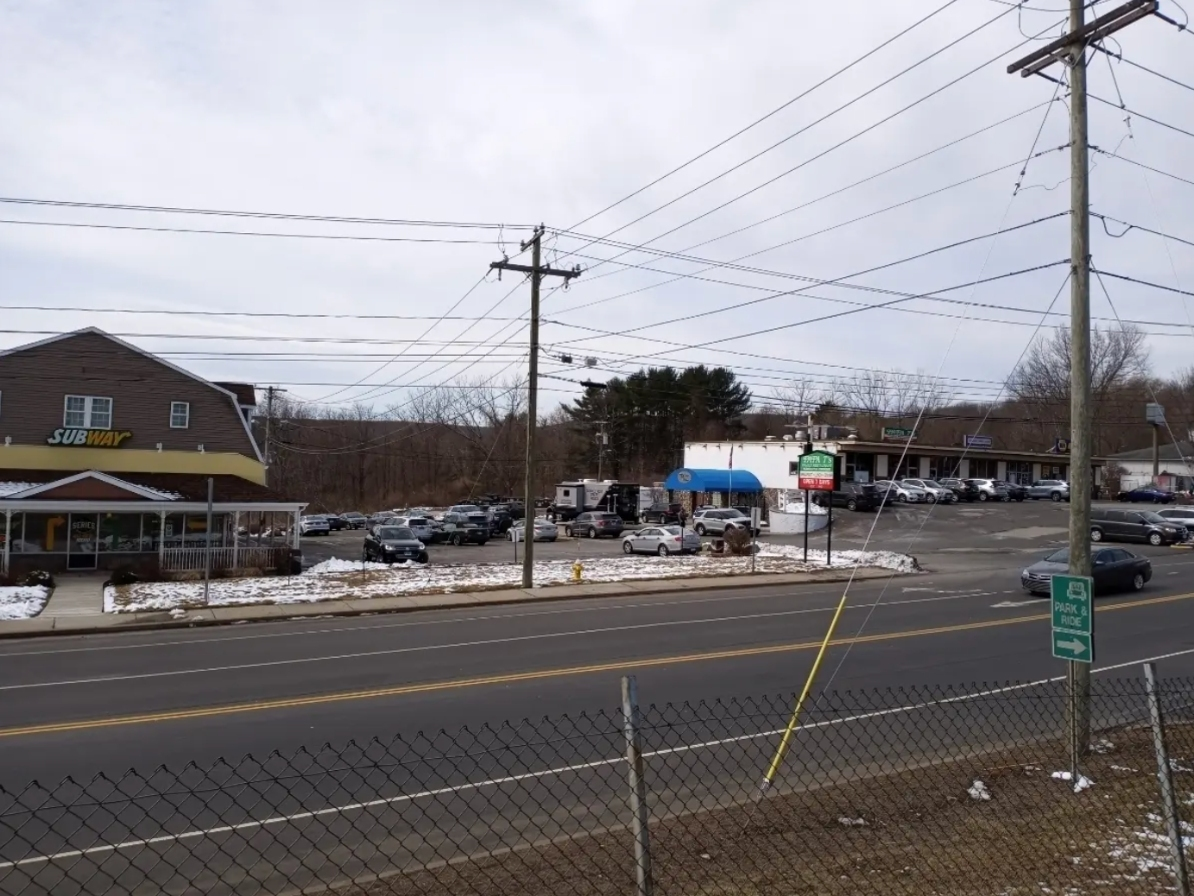
TOLLAND, CT — The owner of the now-defunct Electric Blue Strip Club is facing 45 years in prison, owes the government a half-million dollars in back taxes, and faces a six-figure fine in his federal case following a raid at the Tolland establishment three years ago.
Kenneth Denning, 69, of Holland, MA, pleaded guilty Tuesday in New Haven federal court to offenses stemming from his operation of the strip club in Tolland, where he and his employees "promoted and facilitated prostitution," prosecutors said.
According to court documents and statements made in court, Denning owned and oversaw the operation of what was known locally as "the Blue," an establishment that employed performers who performed nude dances and lap dances for customers.
Find out what's happening in Tollandfor free with the latest updates from Patch.
The Electric Blue was owned by "Denning Enterprises," a holding company nominally owned by Denning's wife but controlled by Denning, from the 1990s until it was sold in January 2025, case records show.
According to case records, Denning and his employees typically required dancers to pay a "house fee" of up to $50 each shift, and dancers were encouraged to engage in "commercial sex transactions" with customers in private and semi-private rooms and booths, including a "lap dance room," and "VIP rooms" and "champagne rooms."
Find out what's happening in Tollandfor free with the latest updates from Patch.
Customers, who had paid a cash cover charge to enter the Electric Blue, paid the club a fee, typically in cash, to use one of the private rooms, and then negotiated an additional fee directly with the dancer, according to case records.
The dancers kept these negotiated fees, which often were hundreds of dollars, case records show.
Case records divulge that club employees collected the cash received by the establishment, placed the cash in envelopes noting the source of the cash, and then placed the envelopes in a safe in Denning’s office. Staffers referred to the cash as "Kenny’s money," and used it to pay business expenses and fund Denning's "personal expenditures," including trips to casinos where Denning spent "large" sums of money, according to case records.
For example, case records indicate, that on Feb. 23, 2023, Denning deposited approximately $21,700 in cash at the Mohegan Sun Casino for gambling purposes.
Denning and his bookkeeper provided spreadsheets of the Electric Blue’s purported income to the club’s tax return preparer that purposefully omitted "Kenny’s money," prosecutors said.
On March 16, 2023, during a raid, investigators seized $45,421 in cash from a safe inside Denning’s office at the Electric Blue, case records show. Documentation found with the cash indicated that approximately $39,751 of the currency represented "Kenny’s money" that was collected between March 2 and March 15, 2023, prosecutors said.
Based upon an extrapolation analysis of the two-week period, investigators calculated that Denning and employees hid nearly $3 million in "material taxable business receipts" from the IRS for the 2020, 2021, and 2022 tax years, according to case records.
In March 2020, the Coronavirus Aid, Relief, and Economic Security, or CARES Act, provided emergency financial assistance to Americans suffering the economic effects caused by the COVID-19 pandemic. One source of relief provided by the CARES Act was the distribution of Economic Injury Disaster Loans, or EIDLs, through the U.S. Small Business Administration, which provided working capital to eligible small businesses to meet operating expenses. Case records show that Denning applied for and received an EIDL loan during the pandemic by falsely certifying that the business did not "present live performances of a prurient sexual nature."
On the EIDL application, Denning characterized the Electric Blue’s business activity as "Eating & Drinking Places," according to case records.
In July 2020, the Electric Blue received $149,900 in EIDL funding, and Denning almost immediately transferred $20,000 of those funds from the Electric Blue’s business bank account into his personal bank account, prosecutors said.
Denning pleaded guilty to one count of conspiracy to use an interstate facility to promote or facilitate prostitution, which carries a maximum prison term of five years; one count of conspiracy to defraud the IRS, which carries a maximum term of five years; one count of conspiracy to commit money laundering, which carries a maximum term of imprisonment of 20 years; and two counts of engaging in a monetary transaction in property derived from unlawful activity, which carries a maximum term of 10 years on each count.
Denning has agreed to pay restitution of $550,000 to the IRS and $150,000 to the SBA. He also has agreed to forfeit the $45,421 in cash seized from the Electric Blue in March 2023 and $1,047 seized from his residence when he was arrested on May 15, 2024.
Denning is released on a $250,000 bond pending sentencing, which is not scheduled.
The matter has been investigated by Homeland Security Investigations, the Internal Revenue Service – Criminal Investigation Division, the Connecticut State Police, the Connecticut Department of Consumer Protection – Liquor Control Division, and the Massachusetts State Police, with the assistance of the Willimantic Police Department and the Manchester Police Department. The case is being prosecuted by Assistant U.S. Attorneys Robert S. Dearington and Alexis L. Beyerlein.
Denning's troubles might not be done. Tolland Town Manager Brian Foley told Patch that the municipality might seek restitution on more than $20,000 in unpaid personal property taxes at the 62 Merrow Road location.
Foley said he was appreciative of the "resources" dedicated to the case.
The Blue has since been replaced by The Den, which mysteriously closed "for renovations" in April after losing its provisional liquor license.
Foley said he was informed by the Department of Consumer Protection that the license for The Den to sell booze expired on April 21. It cannot serve alcohol currently, Foley said.
Get more local news delivered straight to your inbox. Sign up for free Patch newsletters and alerts.