Politics & Government
FGCU Extends Its President's Term For One Year, Boosts Salary
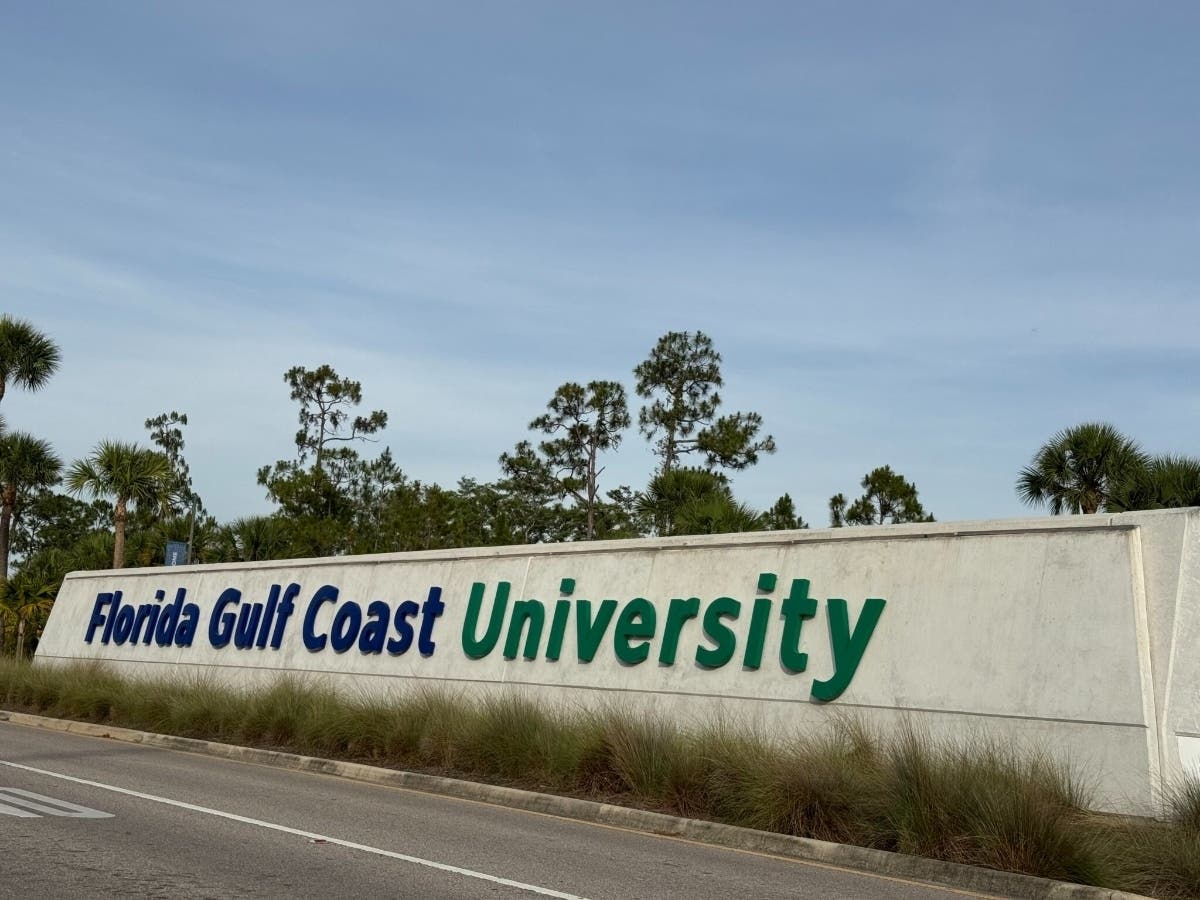
Florida Gulf Coast University trustees agreed Tuesday to extend President Aysegul Timur's contract for one year by unanimous vote.

April 14, 2026
Florida Gulf Coast University trustees agreed Tuesday to extend President Aysegul Timur’s contract for one year by unanimous vote.
Find out what's happening in Across Floridafor free with the latest updates from Patch.
The board extended the contract, initially three years long starting in July 2023, and approved a salary increase to $750,000.
The university in extending the contract did not deploy a new Board of Governors rule allowing extensions longer than one year.
Find out what's happening in Across Floridafor free with the latest updates from Patch.
The board approved the performance incentive in her contract to rise to 40% of base pay, too, an increase from 20%.
Both Timur and board chair Larry Antonucci, through a university spokesperson, declined to comment to the Phoenix.
Timur’s original contract provided her $500,000 base salary in the first year and increased by 4% each year.
She has a background in economics, earning her PhD from the University of South Florida. Timur has been at FGCU since 2019 and became president in 2023. She was a vice president for the university before becoming president. Before FGCU, she spent 19 years working at the former Hodges University, also located in Fort Myers.
Timur’s university bio describes her as “widely known for building collaborative teams of university and community stakeholders to implement strategic initiatives, including workforce alignments.”
Within the past year, FGCU’s foundation drew a $22 million donation for health care instructional technology.
Since 2022-23, FGCU’s research expenditures declined from $25 million to $22 million in 2024-25, the most recent data.
In the two most recent academic years, FGCU has ranked last among its state university peers in performance-based funding, a structure used to divvy up a pot of state money to schools that best prioritize state objectives like graduation rates, job placements, and students receiving Pell Grants.
On a scale of 100, FGCU earned 67 and 63 points in 2025 and 2024, respectively. The next closest was in 2025, when Florida Polytechnic University scored 74; in 2024, New College of Florida scored 71. Florida International University performed highest, scoring 96 each year.
In 2023, FGCU scored 74, nine points higher than last-place New College. The year before, FGCU was third to last, scoring 71, ahead of Florida Poly and New College, each scoring 66.
Several Florida institutions are under leadership today different from a few years ago. In some cases, the new president is a political ally of Gov. Ron DeSantis, including at the University of West Florida, FIU, Florida Atlantic University, New College, and Florida A&M University.
At the same time, Florida State University and the University of Central Florida retained their presidents in the past year, who have primarily academic backgrounds.
Former University of North Florida President Moez Limayem, a career academic, left that school to become president at the University of South Florida last year.
That leaves UNF and the University of Florida, now searching for presidents, and Florida Polytechnic University, which got a new president in 2024.
The Florida Phoenix, a nonprofit news site that’s free of advertising and free to readers, covers state government and politics through a mix of in-depth stories, briefs, and social media updates on the latest events, editorial cartoons, and progressive commentary. The Phoenix is part of States Newsroom, a national 501(c)(3) nonprofit supported by grants and a coalition of donors and readers.