Community Corner
Under-Eye Hollows or Eye Bags? Why the Right Treatment Depends on What’s Causing Them
Dark circles, puffiness, hollows and crepey skin have different causes. Here's why Fort Lauderdale patients may need different treatments.
This is a paid post contributed by a Patch Community Partner. The views expressed in this post are the author's own, and the information presented has not been verified by Patch.
Two people can both say they have “under-eye bags” and actually have completely different problems.
One person may have a hollow tear trough caused by volume loss. Another may have true fat pads pushing forward beneath the lower eyelid. A third may mainly have thin, crepey skin, pigmentation or mild laxity.
Those differences matter because the right treatment depends on what is creating the tired appearance in the first place.
The American Society of Plastic Surgeons notes that under-eye rejuvenation may involve restoring volume, resurfacing the skin or addressing lower-eyelid fat and excess skin surgically depending on the anatomy.
Refresh - Aesthetics & Wellness in Fort Lauderdale offers injectables, laser resurfacing, skin-tightening treatments and access to facial-surgery consultations, which allows patients to discuss several possible approaches rather than trying to make one treatment solve every under-eye concern.
For patients in Aventura and surrounding South Florida communities, the first question should be simple:
Is the problem volume loss, puffiness, loose skin, pigmentation or some combination of those?
What is an under-eye hollow?
An under-eye hollow is usually a depression between the lower eyelid and upper cheek.
This area is often called the tear trough.
The American Society of Plastic Surgeons explains that the tear trough can become more noticeable as facial soft tissue loses volume and shifts downward with age. That creates a deeper transition between the lower eyelid and cheek and can make someone appear tired even when they are well rested.
The shadow created by that hollow can also make the area look darker.
That means what appears to be a “dark circle” may sometimes be partly a structural shadow rather than pigment in the skin itself.
How is an eye bag different from a hollow?
A true under-eye bag is usually caused by tissue or fat projecting forward beneath the lower eyelid.
That creates fullness rather than a depression.
The distinction is important because adding filler directly beneath a prominent bag may not correct the problem and can sometimes make the area appear heavier.
Plastic surgeons interviewed by the American Society of Plastic Surgeons note that nonsurgical treatments have limitations when true fat herniation is causing the bag. In those cases, lower-eyelid surgery may provide a more direct solution by removing or repositioning the fat.
So a hollow may benefit from added support.
A true bag may require reducing or repositioning tissue instead.
Those are almost opposite treatment goals.
Can filler help under-eye hollows?
Sometimes.
Hyaluronic acid filler can be used to soften the transition between the lower eyelid and cheek when mild volume loss is creating the hollow appearance.
But direct tear-trough filler is not always necessary.
Refresh’s Fort Lauderdale cheek-filler guidance notes that restoring cheek volume can sometimes soften under-eye hollows because the cheek provides structural support beneath the eye. That means a provider may improve the under-eye transition by treating the midface rather than injecting directly beneath the lower eyelid.
That can be particularly important when a patient already has some puffiness.
The goal is not simply to fill every depression.
It is to restore support where it is actually missing.
Why might cheek filler make more sense than under-eye filler?
The lower eyelid sits directly above the cheek.
As the midface loses volume, the transition from eyelid to cheek can become sharper and create a more pronounced hollow.
Restoring strategic cheek support may lift that transition and reduce the appearance of the hollow without putting additional product directly into the delicate under-eye area.
Refresh says its Fort Lauderdale providers evaluate cheek structure, facial proportions and bone support before recommending filler.
That approach can also help prevent a common problem in aesthetics: treating the visible symptom without addressing the structure underneath it.
Can too much under-eye filler make things worse?
Yes.
The under-eye area has very thin skin and limited space.
Overfilling can create puffiness or make the area look heavy.
The American Society of Plastic Surgeons specifically cautions against overfilling patients whose primary concern is true fat herniation rather than hollowing.
That is why an experienced injector should determine whether the patient needs:
- Direct tear-trough filler
- Cheek support
- No filler at all
- A skin-focused treatment
- A surgical consultation
Sometimes the best under-eye filler decision is deciding not to inject the under-eye.
What if the problem is crepey skin instead of volume loss?
Then adding filler may not address the main issue.
The skin around the eyes is naturally thin, and it can become even thinner and less elastic with age and sun exposure.
That can create:
- Fine lines
- Crepey texture
- Mild looseness
- Crow’s feet
- A tired-looking appearance
For those concerns, collagen-stimulating treatments may make more sense than simply adding volume.
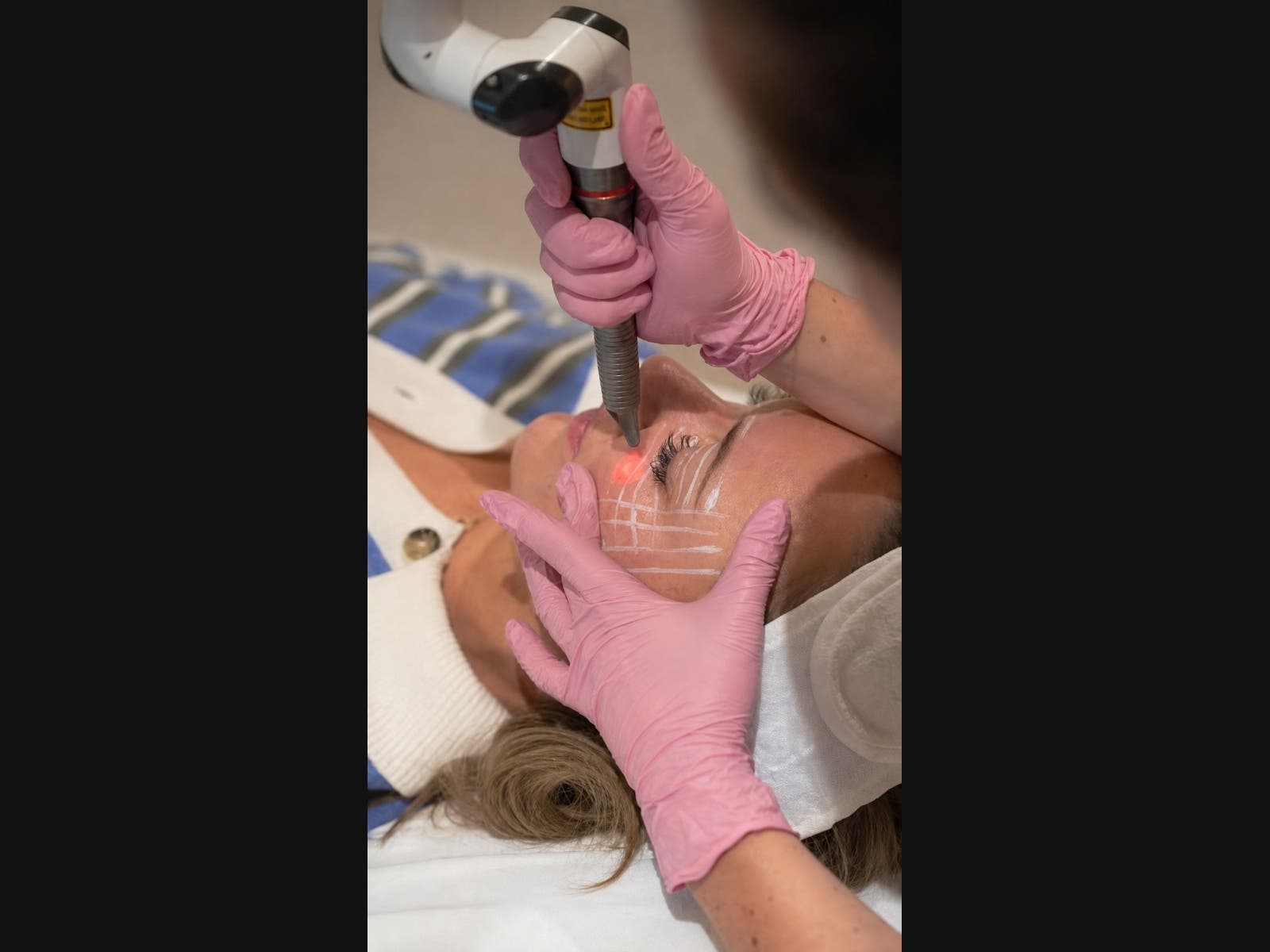
Refresh offers Fotona SmoothEye exclusively at its Fort Lauderdale location. SmoothEye uses a non-ablative Er laser to gently heat tissue around the eyes and stimulate collagen without removing the skin’s surface.
What does Fotona SmoothEye do?
SmoothEye is specifically designed for the eye area.
According to Refresh, the treatment delivers controlled heat into deeper layers of the skin around the eyelids, stimulating fibroblasts to produce new collagen over time.
Refresh lists potential uses including:
- Crepey upper or lower eyelid skin
- Crow’s feet and fine lines
- Mild eyelid laxity
- Mild puffiness
- A generally tired-looking eye area
Because it is non-ablative, the skin surface remains intact and downtime is generally limited.
Refresh says most patients experience only mild redness or warmth, with occasional temporary flaking.
Can SmoothEye replace eyelid surgery?
No.
Refresh specifically states that SmoothEye can improve mild to moderate laxity but cannot remove significant excess skin the way blepharoplasty can.
That distinction matters.
A patient with early crepiness may be an appropriate candidate for a non-surgical collagen-stimulating treatment.
Someone with substantial lower-eye bags or excess eyelid skin may be better served by a surgical consultation.
The more advanced the structural problem becomes, the less likely a non-surgical treatment is to reproduce what surgery can accomplish.
What role does skin tightening play around the eyes?
Skin-tightening treatments can help when laxity is part of the problem.
Refresh’s Fort Lauderdale location offers Sofwave, an ultrasound-based treatment designed to stimulate collagen and elastin in the mid-dermis. Refresh lists brow lifting, fine lines and overall skin firmness among the concerns Sofwave may address.
A subtle brow lift can sometimes make the upper-eye area appear more open.
But skin tightening is not the same thing as correcting a true lower-eyelid fat pad.
Again, the treatment needs to match the anatomy.
What about pigmentation under the eyes?
Not every dark circle comes from a hollow.
Some people have actual pigment in the skin beneath the eyes.
Others have visible blood vessels through thin skin.
Still others primarily have a shadow caused by tear-trough anatomy.
Those problems may look similar in a mirror but need very different treatment strategies.
Filler may help a shadow caused by volume loss.
Laser or other skin treatments may be more appropriate when pigment or texture is contributing.
A provider should first determine what is actually creating the darkness before recommending a treatment.
Can under-eye bags be caused by more than fat?
Yes.
Puffiness can have several contributing factors, including:
- Lower-eyelid fat pads
- Skin laxity
- Temporary fluid retention
- Allergies
- Sleep changes
- Genetics
- Aging
Aesthetic treatment is most useful when the concern is structural and persistent.
If puffiness changes dramatically from day to day, a medical or lifestyle factor may be contributing and should be considered before assuming a cosmetic procedure is the answer.
When does lower-eyelid surgery make more sense?
Lower blepharoplasty may be considered when there is more significant fat protrusion, excess skin or structural aging that nonsurgical treatments cannot adequately correct.
Refresh’s Fort Lauderdale facial-surgery guidance says lower-eyelid surgery can remove excess skin and fat and address puffiness or under-eye bags that non-surgical treatments cannot fully resolve.
Refresh can connect interested patients with facial-surgery consultations when the concern goes beyond what injectables, laser resurfacing or tightening treatments can realistically improve.
That does not mean every eye bag needs surgery.
It means surgery should remain part of the conversation when the anatomy calls for it.
What is lower blepharoplasty?
Lower blepharoplasty is surgery performed on the lower eyelids.
Depending on the patient, the surgeon may:
- Remove excess fat
- Reposition fat
- Remove excess skin
- Tighten supporting structures
- Improve the transition between the eyelid and cheek
The exact approach depends on anatomy.
The American Society of Plastic Surgeons notes that fat may sometimes be repositioned over the orbital rim to improve both under-eye bags and the nearby hollow.
That illustrates why bags and hollows can sometimes exist together.
The answer is not always “add filler” or “remove fat.”
Sometimes the best treatment involves repositioning existing tissue.
What if you have both hollows and bags?
That is common.
A patient can have a protruding fat pad immediately beneath the eye while also having volume loss along the tear trough or cheek.
That combination can make the contrast between the bag and hollow look even stronger.
A treatment plan may therefore involve:
- Cheek filler for structural support
- Carefully selected filler for a mild hollow
- Laser treatment for skin quality
- Skin tightening for mild laxity
- Lower blepharoplasty for more significant bags
- A combination of approaches
There is no single “under-eye treatment” that fits everyone.
How do providers decide which treatment makes sense?
A proper under-eye evaluation should look at several separate things.
1. Is there volume loss?
A hollow tear trough or flattened cheek may respond to filler or structural support.
2. Is there protruding fat?
True lower-eyelid bags may be better addressed surgically, particularly when they are pronounced.
3. Is the skin loose or crepey?
Laser or collagen-stimulating skin treatments may be more appropriate.
4. Is pigmentation causing the darkness?
That may require a skin-focused approach rather than adding volume.
5. Are several problems occurring together?
Combination treatment may make more sense than trying to fix everything with one procedure.
Refresh’s Fort Lauderdale location emphasizes personalized consultations and offers injectables, laser resurfacing, skin rejuvenation and plastic-surgery guidance within the same practice.
Why is the under-eye area so easy to overtreat?
It is a small area where very small changes are noticeable.
The skin is thin, the transition between eyelid and cheek is delicate and swelling can be more obvious than in other areas of the face.
That is why treating the entire facial structure can sometimes produce a more natural result than concentrating only on the exact spot where the patient sees a shadow.
Refresh’s cheek-filler guidance specifically notes that cheek support can improve some under-eye hollows without directly injecting the tear trough.
The goal is balance, not simply adding product.
What should you ask at an under-eye consultation?
Patients can ask:
- Is my concern primarily a hollow or a true bag?
- Is my cheek volume contributing?
- Is the darkness caused by pigment or shadow?
- Would filler actually help, or could it increase puffiness?
- Is my main issue skin texture or laxity?
- Would a laser treatment such as SmoothEye make more sense?
- Am I a better candidate for surgery?
- What result is realistic without surgery?
- What are the risks of treating this area?
- Should several concerns be treated separately?
A good consultation should answer those questions before deciding on a syringe or laser.
Under-eye treatments in Fort Lauderdale
Refresh - Aesthetics & Wellness offers several options for facial and eye-area rejuvenation at its Fort Lauderdale office.
The location provides cosmetic injectables and dermal fillers, laser resurfacing, Sofwave skin tightening and Fotona SmoothEye, which Refresh currently offers exclusively at its Fort Lauderdale office. Patients with more significant eyelid bags or excess skin can also discuss whether a facial-surgery consultation may be more appropriate.
The biggest mistake is assuming every tired-looking eye area has the same cause.
A hollow may need support.
A true bag may need reduction or repositioning.
Crepey skin may need collagen stimulation.
Pigmentation may require a skin-focused treatment.
And someone with several of those concerns may need a combination plan rather than one procedure.
That is why the evaluation should come before the treatment.
Refresh - Aesthetics & Wellness, Fort Lauderdale
1203 E Sunrise Blvd, Fort Lauderdale, FL 33304
(954) 947-7548
Monday through Wednesday, 10 a.m. to 6 p.m.; Thursday, 10 a.m. to 7:30 p.m.; Friday, 10 a.m. to 6 p.m.
Request an under-eye or facial rejuvenation consultation at Refresh.
This article is general information, not medical advice. Dermal fillers, laser treatments, skin-tightening procedures and eyelid surgery are not appropriate for every patient. Treatment recommendations should be based on individual anatomy, medical history, skin quality and evaluation by an appropriately qualified medical provider.
This post is an advertorial piece contributed by a Patch Community Partner, a local brand partner. To learn more, click here.