Community Corner
4 Signs Your Knee Pain May Be Coming From Your Back
If knee shots or knee-focused PT only partly helped, the real source may be your spine. A licensed Evanston PT explains what to watch for.
This is a paid post contributed by a Patch Community Partner. The views expressed in this post are the author's own, and the information presented has not been verified by Patch.
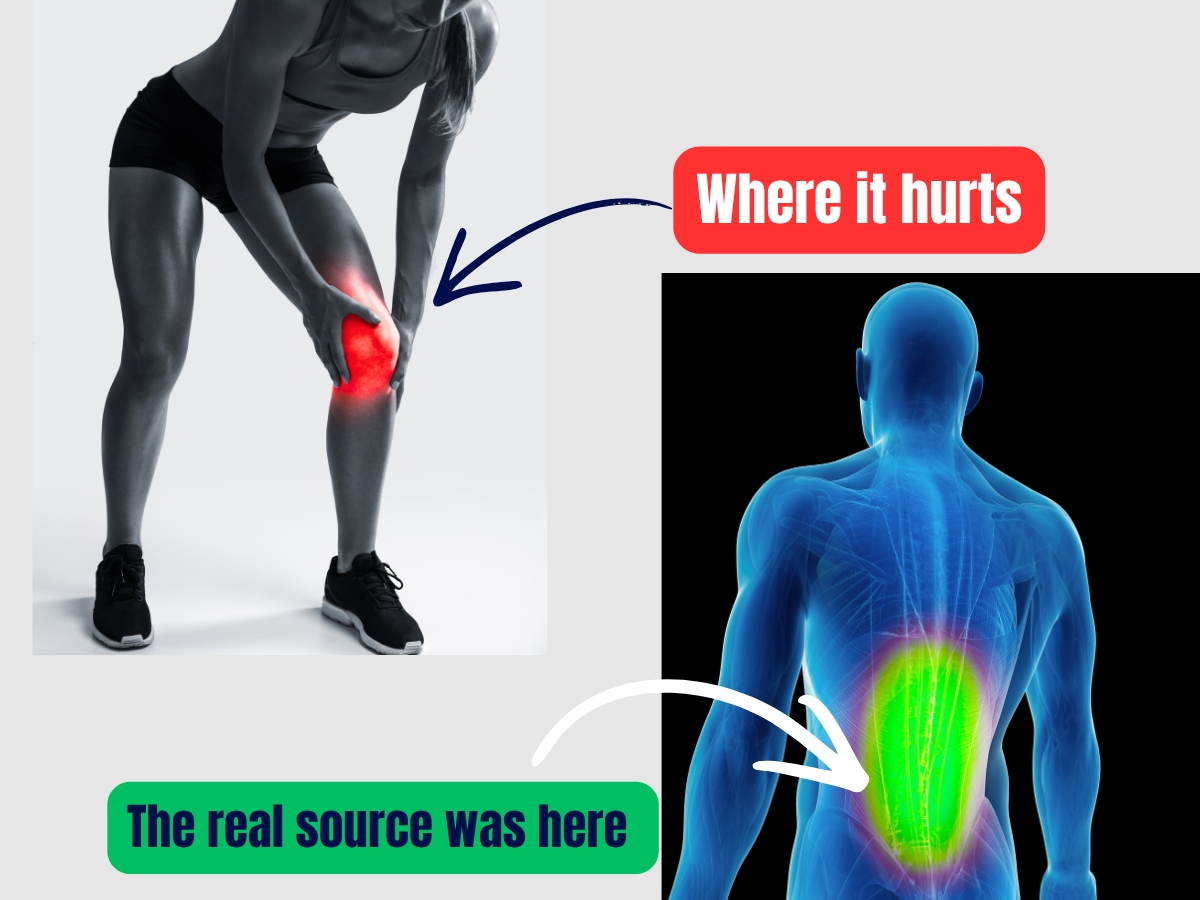
Knee pain can be frustrating because the place that hurts is not always the place causing the problem.
For many people in Evanston, knee discomfort shows up during normal life: walking the lakefront, climbing stairs, gardening, biking, playing pickleball, or simply trying to stay active after 40, 50, or 60. It is natural to assume the knee itself is the issue. Sometimes it is. Arthritis, tendon irritation, meniscus problems, weakness, and joint strain can all create knee pain.
But in some cases, the knee is where the symptoms show up, while the source may be somewhere else, such as the lower back.
Here are four signs that your knee pain may deserve a Pinpoint evaluation.
1. The Pain Feels Sharp, Tingling, Or Numb
Pain quality matters.
A dull ache after a long walk or a sore knee after stairs may point toward one set of possibilities. But symptoms that feel tingling, numb, or sharp can suggest that a nerve may be involved.
That does not mean your knee pain is definitely coming from your back. It does mean the lower back and nerve pathways should be considered. Nerves that begin in the lower spine help supply feeling and muscle control through the thigh, knee, lower leg, and foot. When one of those nerves is irritated or compressed, symptoms can sometimes be felt around the knee instead of only in the back.
This is why pain location is not always pain source.
2. A Cortisone Shot Did Not Help
A cortisone injection can be helpful for some knee conditions, especially when inflammation inside the knee joint is part of the problem. But if a treatment aimed directly at the knee provides little or no relief, that is useful information.
It does not mean the shot was “wrong.” It may simply mean the knee is not the main driver of the pain.
When symptoms do not respond as expected, an expert physical therapist at an experienced location like Skillz Physical Therapy in Evanston, may look beyond the knee itself. That can include checking how the lower back moves, how the hip and pelvis are functioning, whether certain positions change symptoms, and whether strength or sensation patterns suggest nerve involvement.
3. The Pain Comes and Goes In Ways That Do Not Match Activity
Many local knee problems have clearer triggers. For example, knee arthritis may feel worse after prolonged standing, stairs, or higher-impact activity. A local strain may hurt with a specific movement or load.
But some pain patterns are less predictable. Symptoms may appear while sitting, ease during walking, shift from the front of the knee to the side, change with bending forward, or feel different depending on posture.
When knee pain seems random, inconsistent, or tied to back position more than knee use, the back may need to be assessed. Again, this is not about assuming every knee problem is secretly a back problem. It is about remembering that pain location is not always pain source.
4. A Knee-Focused PT Protocol Helped Only a Little
Partial improvement is still important.
If knee exercises helped somewhat, that may mean the knee did need strength, mobility, or load tolerance work. But if symptoms plateaued or never fully matched the expected pattern, another contributor may still be present.
A thorough Pinpoint evaluation may include the knee, but it should not stop there. The low back can also influence how the knee feels.
Good clinical reasoning asks: Is the painful area the source, or is it where the symptoms are showing up?
When To Get Checked
Seek medical care promptly if knee or leg symptoms come with severe weakness, loss of bladder or bowel control, major trauma, fever, unexplained swelling, or rapidly worsening numbness.
For less urgent but persistent symptoms, especially pain that has not responded the way you expected, a Pinpoint evaluation can help determine whether the knee is the source or simply where the symptoms are showing up.
Aime Maranan, a licensed physical therapist at Skillz Physical Therapy, helps patients look beyond the painful area and identify the true source of symptoms before assuming the knee itself is the root cause.
If your knee pain has not responded the way you expected, it may be time to look beyond the knee. Call Skillz Physical Therapy to schedule a Pinpoint evaluation with Aime Maranan, and get a clearer understanding of whether your knee is the source of the problem or simply where the symptoms are showing up.
This post is an advertorial piece contributed by a Patch Community Partner, a local brand partner. To learn more, click here.