Neighbor News
Corie Walsh Ordered Detained as Defense Argues Psychosis in 2-Year-Old Son’s Death
By Maria Yazmin Garcia | Cookie's World — Independent Digital News

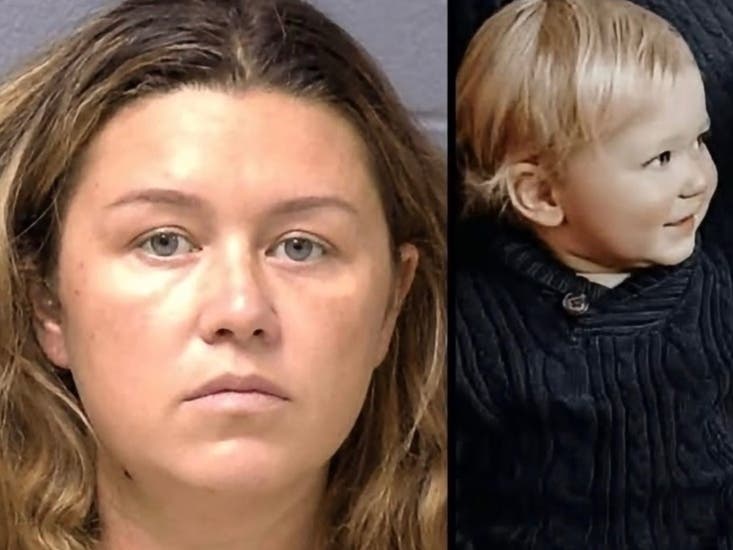
On September 8, 2026 a Will County judge ordered Corie A. Walsh to remain in custody Tuesday after a lengthy detention hearing that revealed new allegations about the death of her 2-year-old son, Barrett “Bear” Walsh, as well as significant new details about the defense’s position that Walsh was experiencing a severe psychotic episode.
Walsh, 40, is charged with three counts of first-degree murder in connection with Barrett’s September 1 death inside the family’s Frankfort, Illinois home.
I attended the September 8 hearing in person at the Will County Courthouse in Joliet.
Find out what's happening in Jolietfor free with the latest updates from Patch.
The hearing was scheduled for 9 a.m., but after several recesses, the substantive hearing began at approximately 11:23 a.m.
Walsh appeared in custody wearing a red jail uniform, handcuffs and shackles. Her attorneys, Robert J. Kerr and Andrea Lyon of Lyon & Kerr, PLLC, appeared alongside her.
Find out what's happening in Jolietfor free with the latest updates from Patch.
The primary issue before Judge Amy Bertani was whether Walsh should remain detained while the criminal case proceeds or whether conditions could be imposed that would allow her to leave the Will County Adult Detention Facility and receive psychiatric treatment.
Prosecutors argued Walsh represented a continuing threat to her husband and surviving children.
Her defense argued that what happened on September 1 occurred during a severe psychotic episode and that Walsh desperately needs psychiatric treatment—not simply incarceration.
Ultimately, the judge sided with prosecutors and ordered Walsh detained.
What prosecutors say happened September 1
According to the criminal complaint and prosecutors’ detention arguments, Barrett died from asphyxia caused by ligature compression of the neck.
A neighbor discovered Barrett in the basement and attempted CPR while calling 911. First responders continued lifesaving efforts, but Barrett was later pronounced dead.
Walsh was located elsewhere inside the home, fully clothed in a bathtub containing bloody water. Prosecutors said she had injuries to her wrists and thighs that authorities believe were self-inflicted. A neighbor reportedly removed a knife from Walsh’s hand and threw it into a sink, where investigators later recovered it.
Walsh was hospitalized before eventually being transferred to the Will County jail.
Published court reporting independently confirms those allegations and the preliminary cause of Barrett’s death.
Prosecutors allege Walsh also threatened her husband
One of the significant new allegations discussed during the September 8 hearing involved Walsh’s husband.
Prosecutors said Walsh had made statements about harming him and allegedly discussed poisoning him with a drink.
Her husband was working out of state at the time.
Prosecutors told the court that investigators found open prescription medication near a drink inside the home. The State relied on Walsh’s alleged statements concerning her husband and children in arguing that she continued to represent a real and present threat if released.
The Lindsay Clancy connection — and the defense’s strong objection to the “copycat” narrative
The Lindsay Clancy case also became a significant point of contention.
Investigators learned that Walsh had been discussing Clancy’s Massachusetts murder trial in a group text on the morning Barrett died.
Prosecutors previously alleged Walsh had become “very invested” in the Clancy case and was discussing it with friends until approximately 12:30 p.m.—roughly three and a half hours before Barrett was discovered.
But no evidence publicly released thus far establishes that the Clancy case caused or inspired Barrett’s death.
Kerr strongly objected in court to the characterization of Walsh as a Lindsay Clancy “copycat.”
He argued that investigators appeared focused on that theory early in the investigation and said repeatedly asking witnesses whether Walsh had discussed Clancy risked forcing the case into a narrative that the evidence had not established.
The defense did not dispute that Walsh had discussed the Clancy case.
Instead, Kerr argued that Walsh’s messages—and her behavior later that day—were evidence that something was seriously wrong with her mental state.
“I took them one by one and drowned them all.”
Some of the most significant information presented by the defense involved statements Walsh allegedly made during the incident.
Kerr told the court Walsh at one point stated:
“I took them one by one and drowned them all.”
But that had not happened.
Her other children were alive, and Barrett was not alleged to have died by drowning.
The defense argued that the statement was important precisely because it did not correspond with reality.
Kerr described additional behavior that he argued demonstrated disorganized thinking.
While being transported for medical treatment, Walsh was reportedly going in and out of consciousness. According to the defense, she randomly called out names of fruits—including oranges, bananas and apples—and made statements that did not appear to make sense.
At another point, she allegedly asked firefighters:
“Have you guys ever graped little girls?”
The word “graped” is being used here in place of the actual sexual-assault terminology for platform purposes.
The defense also said Walsh made statements about playing golf and going to McDonald’s for breakfast during the afternoon and at one point began singing about the Yellow Brick Road.
Kerr’s argument was that these statements should not be viewed individually. Taken together, the defense says they demonstrate that Walsh was experiencing a serious break from reality.
CBS Chicago similarly reported that the defense described Walsh as going in and out of consciousness, yelling names of different fruits, hallucinating and making statements that did not make sense.
Defense says Walsh was diagnosed with brief psychotic disorder
Kerr told the court that Walsh had been evaluated after the incident and that medical professionals had diagnosed her with brief psychotic disorder.
The defense specifically distinguished its position from postpartum depression or postpartum psychosis.
Kerr said Walsh spent approximately three to four days at Silver Cross Hospital following the incident and that inpatient psychiatric treatment had been recommended.
He argued that the Will County jail was not an appropriate environment to provide the level of psychiatric care she needed.
The defense further alleged that since Walsh had been transferred to jail on September 4, she had not been receiving the psychiatric medication that had been initiated or recommended during her hospitalization.
Published reporting also confirms that Kerr told the court Walsh was severely mentally ill and needed treatment, while prosecutors maintained that the jail was capable of addressing psychiatric needs.
Importantly, a diagnosis of a psychotic disorder does not automatically establish legal insanity.
Kerr told the judge that the case could ultimately become one involving a not-guilty-by-reason-of-insanity defense. That was an argument about where the case may be headed—not a ruling that Walsh was legally insane and not necessarily a formal insanity defense at this stage.
The Disney trip
The defense also presented evidence it said was inconsistent with a planned killing.
According to Kerr, Walsh’s family had been planning a trip to Disney involving Walsh, her husband, their children and both grandmothers.
The defense said that on the morning of September 1, Walsh spoke with her mother about the upcoming trip and specifically talked about how excited she was to see Bear’s reaction to Disney.
Kerr also told the court Barrett had a speech delay and that among his early words were “Bluey” and “Mickey.”
The defense offered those details as part of its argument concerning Walsh’s state of mind and future planning.
They do not independently prove or disprove intent, but they were among the circumstances the defense asked the judge to consider.
“She’s fully supported by the Walsh family and her own.”
Kerr repeatedly emphasized the support Walsh continues to receive from her family.
He told the court:
“She’s fully supported by the Walsh family and her own.”
The defense said Walsh’s husband was willing to cooperate with whatever restrictions the court imposed and would help ensure those conditions were followed.
Kerr also told the court:
“She is supported by those that she hurt the most.”
The defense said Walsh had no prior criminal history and argued that, before this incident, the people closest to her described her as a loving and trusted mother.
The defense’s proposed alternative to jail
The defense wasn’t asking the judge simply to send Walsh home.
Kerr proposed a highly restrictive treatment plan.
Walsh would be transported directly for psychiatric evaluation and, if admitted, receive inpatient psychiatric treatment. The defense envisioned stepping down afterward to a partial hospitalization program, then intensive outpatient treatment and eventually individualized therapy.
She would live with her mother rather than her husband and children.
The defense proposed electronic monitoring and essentially 24-hour home confinement except for treatment and medical appointments.
Most significantly, Walsh would have no contact with anyone under 18—including her own children.
Kerr argued those restrictions, combined with psychiatric treatment, could mitigate any potential danger.
Prosecutors disagreed.
Prosecutors: What happens if she simply leaves treatment?
One of the State’s major concerns was that the proposed hospitalization would be voluntary.
Prosecutors argued that if Walsh decided to leave a voluntary psychiatric facility, the State could face significant problems trying to ensure she remained separated from the people prosecutors believed she threatened.
The defense countered that inpatient psychiatric facilities can be locked and structured environments designed to prevent patients from simply walking away.
There was also disagreement about Walsh’s medical information.
The defense referenced extensive medical documentation, while prosecutors told the court they had received only a very small portion of those records.
The State maintained that detention was necessary while the case proceeded.
Judge Bertani orders Walsh detained
Judge Amy Bertani ultimately found the State had met its burden.
The judge found clear and convincing evidence connecting Walsh to the charged first-degree murder offense and determined that Walsh represented a threat to her husband and surviving children.
She also acknowledged compelling evidence that Walsh needed mental-health treatment.
But the judge concluded there was no combination of release conditions sufficient to mitigate the danger identified by the State.
When the defense urged the court to consider compassion and empathy, Bertani explained that those considerations could not determine the legal decision before her.
She ordered Walsh to remain detained.
ABC News reported Bertani’s ruling similarly, quoting the judge as finding clear and convincing evidence concerning the charged offense and a threat to Walsh’s husband and other children.
The judge then turned to Walsh’s psychiatric medication
The detention ruling did not end the discussion.
Judge Bertani appeared particularly concerned by the defense’s allegation that Walsh had not been receiving necessary psychiatric medication since entering the jail.
The judge questioned the State about why medication had not been provided and was told the jail had a process for establishing treatment.
Bertani then made clear that she expected the issue addressed immediately.
She told the prosecutor:
“I’m holding you responsible in ensuring that it is made possible and it happens ASAP.”
So while Bertani rejected the defense’s request to release Walsh for outside psychiatric treatment, she also made clear that detention did not mean Walsh’s mental-health treatment could simply be ignored.
A second fight: what can the attorneys say publicly?
The September 8 proceeding also included a separate dispute over media coverage of the case.
Prosecutors sought restrictions on statements attorneys could make outside court, arguing that extensive media attention could jeopardize Walsh’s right to a fair trial and potentially contaminate the future jury pool.
Andrea Lyon argued that Illinois attorneys are already governed by Rule 3.6, which regulates trial publicity.
Lyon told the court she had declined interview requests and intended to continue doing so, but argued that the defense should still be permitted to make appropriate public statements within the existing ethical rules.
Judge Bertani ultimately directed both sides to comply with Rule 3.6 rather than imposing complete silence.
Recent reporting confirms that the dispute centered on Lyon’s public comments about Walsh’s alleged psychosis and concerns about prejudicing a future jury.
What happens next
Walsh remains in the Will County Adult Detention Facility.
Her next scheduled court appearance is September 24, 2026, at the Will County Courthouse in Joliet.
There are still major questions that have not been answered publicly, including what a complete forensic examination of Walsh’s phone will show, what her full medical records contain, whether additional psychiatric evaluations will be conducted and whether the defense will ultimately pursue a formal insanity defense.
The September 8 hearing did not determine whether Corie Walsh is guilty or not guilty.
It determined whether she would remain detained while the criminal case proceeds.
Corie A. Walsh is presumed innocent unless and until proven guilty.
Maria Yazmin Garcia is an independent digital journalist with Cookie’s World. Follow her reporting on TikTok: @Cookieyazmin.