Neighbor News
What the Court Documents Actually Say About the Corie Walsh Murder Case
By Maria Yazmin Garcia | Cookie's World — Independent Digital News

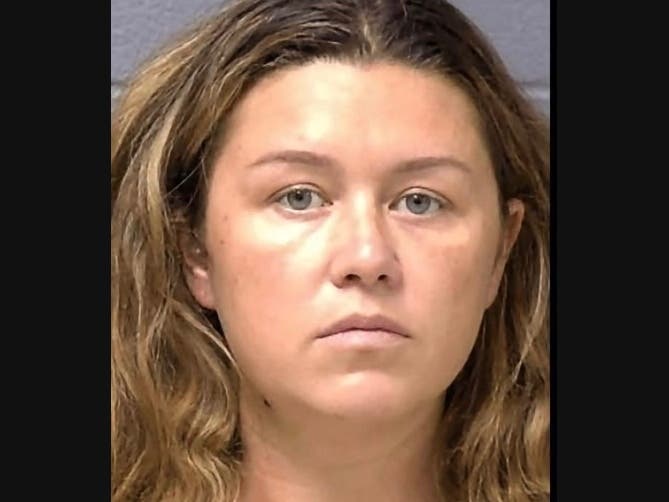
Much of what the public knows about the Corie Walsh case has come through news reports and social media. But the actual court documents provide a clearer picture of exactly what prosecutors have charged her with — and what they have not.
I obtained and reviewed the criminal complaint, arrest warrant and related court records in person at the Will County Courthouse in Joliet. These records are particularly important because images of many of the filings are not available through the standard public online case lookup.
Corie A. Walsh is charged with three counts of first-degree murder in connection with the September 1, 2026 death of her 2-year-old son, Barrett “Bear” Walsh, in Frankfort.
Find out what's happening in Jolietfor free with the latest updates from Patch.
One question has come up repeatedly since the charges were announced: Why are there three murder charges when there was only one victim?
The court documents answer that question.
Find out what's happening in Jolietfor free with the latest updates from Patch.
All three counts involve Barrett. Prosecutors are charging Walsh under three different legal theories of first-degree murder for the same death. Recent reporting based on the court filings confirms the same distinction.
The Arrest Warrant
The arrest warrant identifies Walsh, the Frankfort Police Department and police report number 26-0001310. It lists the alleged offense as “FIRST DEGREE MURDER (3 COUNTS)” and gives the date of the alleged offense as September 1, 2026.
The warrant was issued September 3.
Importantly, the judge checked the portion of the warrant stating that probable cause was found for the arrest warrant to issue.
That has a specific legal meaning.
A probable-cause finding at this stage does not mean a judge has found Walsh guilty. It means the court determined there was sufficient probable cause to authorize her arrest on the charges.
The warrant also directed that Walsh be held without release and brought before the court for a pretrial detention or conditions-of-release hearing.
That was not a final determination that she would remain incarcerated for the duration of the case. It ensured that she would be held until the court could conduct the required hearing and determine whether she should remain detained.
That hearing subsequently occurred on September 8, when Judge Amy Bertani ordered Walsh to remain in custody.
The Criminal Complaint
The three-page criminal complaint identifies Barrett Walsh as the victim and Detective L. Wakefield as the complainant.
The complaint was sworn on September 3 and subsequently filed with the court.
It is important to identify this document correctly: it is a criminal complaint. It should not be confused with an indictment.
The complaint contains three separate first-degree murder counts.
Although some of the language is similar, each count alleges a different mental state.
That distinction matters because a person’s state of mind is one of the elements prosecutors must prove in a first-degree murder prosecution.
Count I: Intent to Kill or Cause Great Bodily Harm
The first count alleges that Walsh acted with the intent to kill or do great bodily harm to Barrett.
According to the complaint, prosecutors allege that Walsh caused Barrett’s death through asphyxia due to ligature compression of his neck.
Count I is brought under 720 ILCS 5/9-1(a)(1).
In plain language, this is the prosecution’s intent theory: prosecutors are alleging that Walsh intended to kill Barrett or intended to cause him great bodily harm and that her actions caused his death.
This remains an allegation that the State must prove.
Count II: Knowledge That the Act Would Cause Death
Count II also cites 720 ILCS 5/9-1(a)(1), but the alleged mental state is different.
Rather than alleging intent to kill or cause great bodily harm, prosecutors allege that Walsh caused Barrett’s death knowing that her actions would cause his death.
The physical conduct alleged in the complaint is essentially the same. What changes is the mental state prosecutors are alleging.
Put simply:
Count I: Prosecutors allege she intended to kill or cause great bodily harm.
Count II: Prosecutors allege she knew her actions would cause death.
Count III: Strong Probability of Death or Great Bodily Harm
The third count is charged under 720 ILCS 5/9-1(a)(2).
Here, prosecutors allege that Walsh caused Barrett’s death while knowing her actions created a strong probability of death or great bodily harm.
This is another recognized theory of first-degree murder under Illinois law.
So again, there are not three alleged victims and prosecutors are not alleging three separate killings.
There is one child, one death and three first-degree murder counts based on different legal theories.
Published reporting based on the prosecution’s filings similarly describes the three theories as intent to kill, knowledge that the conduct would cause death, and knowledge that it created a strong probability of death or great bodily harm.
Barrett’s Age Appears Throughout the Charges
The complaint specifically states that Barrett was under 12 years old at the time of the alleged offense.
He was 2.
Each count includes a citation to 730 ILCS 5/5-5-3.2(b)(3)(i), an Illinois sentencing provision addressing certain felonies committed against a person under 12.
The presence of that statute in the complaint is significant, but it should not be interpreted as a prediction of Walsh’s eventual sentence.
There has been no conviction, and sentencing is not the issue currently before the court.
What the Complaint Says About Barrett’s Cause of Death
The charging document alleges that Barrett died from asphyxia due to ligature compression of the neck.
That same preliminary cause of death was subsequently described in the State’s pretrial detention filing and during the September 8 hearing.
According to the State’s filing, a neighbor found Barrett in the basement with a ligature around his neck, removed him and began CPR while calling 911. He was later pronounced dead at a hospital.
Prosecutors said preliminary autopsy findings indicated asphyxia caused by ligature compression of the neck.
The Will County Coroner’s Office has previously indicated that final cause and manner would be determined after the necessary autopsy, police and toxicology reports were completed.
That distinction is important: a preliminary finding and a finalized coroner’s determination are not necessarily the same stage of the death investigation.
What These Documents Do — and Do Not — Establish
Court documents can contain disturbing and highly specific allegations. But the existence of an allegation in a criminal complaint does not transform that allegation into a proven fact.
The complaint establishes what the State has formally accused Walsh of doing.
The arrest warrant establishes that a judge found probable cause sufficient to issue a warrant.
Neither document establishes guilt beyond a reasonable doubt.
That determination comes through the criminal court process.
Likewise, the fact that Walsh faces three counts does not mean prosecutors have evidence of three deaths. It reflects alternative legal theories prosecutors may pursue concerning Barrett’s death.
Additional Allegations Came Later
The criminal complaint itself is relatively concise. Many of the details now circulating publicly came from a separate filing by prosecutors seeking to keep Walsh detained before trial.
That filing contains substantially more information about what police allegedly discovered inside the Frankfort home.
According to the State, a neighbor found Barrett in the basement and attempted CPR. Walsh was found upstairs, fully dressed in a bathtub surrounded by bloody water with injuries to her wrists and thighs. Police recovered a knife that the neighbor reportedly said she had taken from Walsh.
The State also alleged that Walsh made statements concerning Barrett after police arrived.
Those details come from the State’s later detention filing and should not be confused with the allegations contained in the original three-page criminal complaint.
This distinction is one reason reviewing the underlying records matters: different documents serve different purposes and contain different levels of detail.
What Happened After the Charges Were Filed
Walsh was initially hospitalized and was later transferred to the Will County Adult Detention Facility.
At her September 8 detention hearing, prosecutors argued that she presented a threat to her husband and surviving children.
Her defense attorneys argued that Walsh had been experiencing a severe mental-health crisis. Attorney Robert Kerr told the court that Walsh had been diagnosed with brief psychotic disorder and needed psychiatric treatment.
Judge Bertani ultimately granted the State’s request to deny pretrial release and ordered Walsh to remain detained.
The defense’s assertions regarding psychosis are important to the developing case, but a psychiatric diagnosis does not by itself establish legal insanity. Kerr discussed the possibility that the case could eventually involve an insanity defense, but that is different from a court having already determined that Walsh was legally insane.
Why Primary Documents Matter
This case has attracted substantial attention, and with that attention has come commentary, speculation and information repeated from one source to another.
That is why I went to the courthouse and obtained the underlying records.
The criminal complaint tells us precisely what Walsh is charged with.
The warrant tells us what the judge authorized and why she was initially held.
The later detention filings contain additional allegations and evidence the State relied upon when asking the judge to keep Walsh in custody.
And the September 8 hearing provided an opportunity for both prosecutors and the defense to challenge each other’s positions before the judge.
Those sources should not be blended together as though everything contained in them has already been proven.
Walsh’s case remains pending.
Her next scheduled court appearance is September 24, 2026, at the Will County Courthouse in Joliet.
As the case moves forward, additional filings and evidence may provide answers to questions the existing documents cannot yet resolve.
Corie A. Walsh is presumed innocent unless and until proven guilty.
Maria Yazmin Garcia is an independent digital journalist with Cookie’s World. Follow her reporting on TikTok @CookieYazmin.