Neighbor News
It's Past Time To Dismantle the DNC, DCCC and DSCC. Build Something That Actually Works.
The Democratic Party's Three-Headed Hydra of Incompetence Has Cost Enough Elections. Here's How to Fix It.
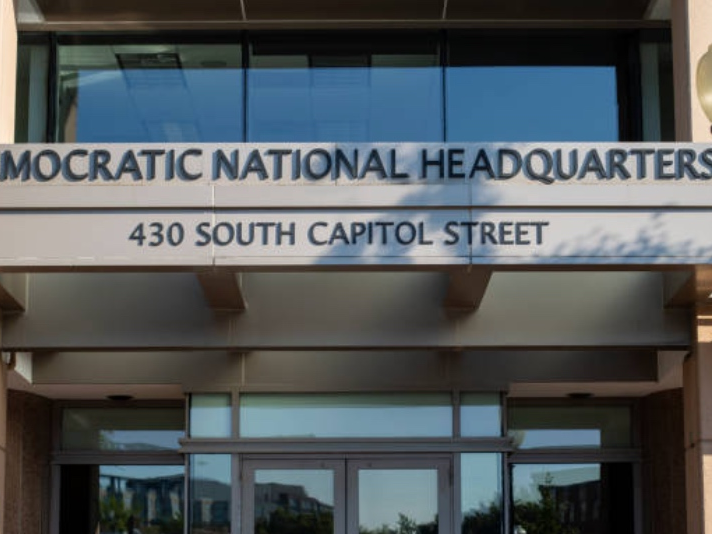
Article Glossary: DNC= Democratic National Committee, DCCC=Democratic Congressional Campaign Committee, DSCC = Democratic Senate Campaign Committee
Every hospital drama has one of those fraught scenes each season where a well-intended nurse or doctor keeps desperately pumping a dead person’s chest furiously to try to revive them. Then, their sage mentor walks in slowly and says “time of death is…”
Here we are. The only problem is the mentors do not want to speak up or come near the dead body.
Find out what's happening in La Grangefor free with the latest updates from Patch.
The DNC, DCCC, and DSCC have been operating as a glorified three-ring circus for decades, burning donor money, suppressing grassroots energy, and somehow managing to lose winnable races with the consistency of a team that’s actively tryingto lose. It’s impressive, really — in the most tragic way possible.
It’s time to stop pretending these three organizations are functional. They are not. They are redundant, bloated, occasionally corrupt, and structurally allergic to winning. It’s time to consolidate, restructure, and, dare we say it, actually try.
Find out what's happening in La Grangefor free with the latest updates from Patch.
Here is the current diagnosis across the DNC, DCCC, and DSCC: Terminal, due to a lack of evolution, vision, strategy, ongoing education about voters, revenue generation, structural efficiency, and adaptation of technology.
A Brief History of Spectacular Failure
Let’s start with the greatest hits, shall we?
In 2016, Debbie Wasserman Schultz, then DNC Chair, turned the Democratic primary into what can only be described as a rigged carnival game where Bernie Sanders was the rubber duck that kept getting passed over. Leaked emails confirmed what many suspected: the DNC had its thumb — both thumbs, actually — firmly on the scale for Hillary Clinton. Wasserman Schultz resigned in disgrace, was immediately hired by the Clinton campaign (because Washington has a remarkable sense of irony), and the Democratic base fractured in ways that arguably handed Donald Trump the presidency. A great moment for everyone.
Then there’s the DCCC, the US House campaign arm, which has operated under a rotating cast of chairs who have perfected the art of strategic mediocrity. Former Chair Ben Ray Luján, who has gone on to be a solid senator, presided over a 2020 cycle where the party lost 13 House seats despite every favorable wind imaginable. The DCCC’s brilliant strategy? Recruiting candidates without vetting them properly, flooding purple districts with cookie-cutter messaging written by tired old consultants who last visited those districts sometime around the Clinton administration, and blacklisting vendors who worked with progressive challengers is not a winning model. Nothing says “big tent party” like punishing people for supporting Democrats.
The DSCC, the senate campaign arm hasn’t exactly covered itself in glory either, repeatedly underinvesting in states that were actually competitive while pouring money into races that were essentially lost causes — all while sending you seventeen emails a day warning that democracy will end if you don’t donate $5 right now.
This year, it’s epic failure in Michigan and Maine in supporting vanilla, do-nothing candidates was striking and led to the current turmoil in those races.
Now, witness the current disarray of the DNC. Last year, David Hogg, a younger DNC leader, was forced out for truthtelling about the dramatic changes in voter priorities and the acute need for younger leaders. Turns out on every occasion and every race, people prefer younger, anti-establishment folks who campaign on real, proven ideas that work, not a rehash of 2020.
Further, the current DNC president, Ken Martin, has failed at what he ran on in his campaign to become the leader. He vowed to fully study, understand and be transparent about what went on during the 2024 race and why we failed. Well, that worked out about as well as when mayonnaise is eaten after sitting out for a day. The “DNC 2024 Autopsy Report” was managed by a bunch of interns, did not actually share what the prescriptions are moving forward and was only fully released after immense pressure for six months. It read like a book report from a 14-year old.
And of course, there is the reported $2 million in debt problem.
I have no doubt Mr. Martin is a good man and has done some good things in Minnesota, but he is way out over his skis. Part of it is the DNC’s structure and part of it is lack of executive skills.
The Money Problem (Or: Where Did All That Cash Go?)
Here’s a fun game: try to get a straight answer about how the DNC spends its money.
We’ll wait right here.
Nothing yet? Yeah…
Between the three organizations, Democrats raise hundreds of millions of dollars each cycle, billions at the presidential level. And yet, somehow, the party consistently struggles with basic infrastructure in swing states, candidate recruitment pipelines, and — this is a personal favorite — voter outreach. In 2022, the DCCC spent lavishly on late television ad buys in markets where the race was already decided, while underfunding ground games in districts that flipped Republican by fewer than 3,000 votes. That’s not strategy. That’s expensive guesswork.
The redundancy alone is financially criminal. Three separate communications departments. Three separate finance teams. Three separate polling operations often producing contradictory data. Three separate HR and accounting teams. Three sets of highly paid executives sending three sets of fundraising emails to the same exhausted donors. The administrative overlap is staggering — and it’s donor money funding it all.
Democrats have three organizations that routinely contradict each other’s messaging, compete for the same donor base, and occasionally undermine each other’s candidates when ideological disagreements arise.
It would be funny if it weren’t so consequential.
The Fix: One Democratic National Committee, Built Like It Actually Wants to Win
Here’s the radical idea: consolidate all three into a single, restructured DNC with clearly defined divisions, real accountability, and leadership that understands the 21st century.
Revolutionary, I know.
Regional Voter Interaction Structure
The new DNC should operate through five regional divisions that report into the national organization— Northeast, Southeast, Midwest, Southwest, and West — each led by a Regional Director with deep roots in that geography, not a D.C. transplant who just discovered that people in Wisconsin have concerns beyond Twitter discourse. The DNC claims to do this each cycle, and then proceeds to do the opposite by only listening to donors and not constituents. Each region would maintain permanent, year-round field offices, not pop-up shops that appear six weeks before Election Day and disappear like a food truck in November.
The Executive Team: With Actual Experience for the Job
The consolidated DNC needs an Executive Director — not a party figurehead, but an actual operational leader with a management background — overseeing the following real divisional leaders and teams:
- Grassroots Infrastructure Director — Responsible for building and maintaining volunteer networks, community partnerships, and state party relationships between election cycles. Novel concept.
- Marketing & Messaging Director — Someone who understands that “we’re not them” is not a platform. Responsible for a cohesive national narrative that regional teams can adapt locally. Understand that the message will be slightly different in each region and race, so candidates are speaking in the language of their constituents. CRITICAL TO UNDERSTAND: It is no longer a left/right discussion. It is a “have-nots and haves” discussion, meaning, it is the billionaires vs the rest of us, NOT centrists vs. progressives or Democratic Socialists. Also, they must understand that at least 45% of this nation identifies as an independent voter.
- Fundraising Director — Accountable for transparent budget allocation, small-dollar donor cultivation, and — here’s a thought — not sending 11 PM panic emails or texts with lines like “It’s over.” Stop the nonsensical waste of money for things like postcards and actually talk to voter groups who can become fundraising ambassadors and fundraising teams. Equally importantly, work directly with the marketing director and the research team, to execute smarter and more effective media and social media campaigns.
- Creator, Influencer and Partners Director: Have a soothsayer and cats-corralling group who can wrangle a deep and vast set of influencers and content creators into an agreed model and campaign strategy.
- Down-Ballot Races Director — Dedicated entirely to state legislature, county commissioner, and local races, because Democrats keep learning and then immediately forgetting that democracy is built from the ground up.
- Federal Races Director — Coordinating Senate and House candidate support without the bureaucratic turf wars that currently define the DCCC-DSCC relationship. Similarly, assign a leader the senate races and congressional races that report into this director.
- Voter Outreach & Research Director — Running continuous focus groups, not just in October of election years, but constantly, because voters’ concerns evolve and the party should probably know what they are. There should be a constant tracking study (each quarter) that is shared across the party to keep track of the temperature on issues. This leader would be in charge of voter research and oppositional research.
- A Real Human Resources Director — Because apparently the party that champions workers’ rights has had a remarkable number of workplace misconduct issues it would rather not discuss publicly.
- Candidate Mentorship Division — A structured program pairing emerging candidates with experienced operatives, former officeholders, and communications professionals before they’re thrown into a general election without knowing how a campaign finance report works.
- Recruitment Group that has a methodical background in opposition reasearch and vetting candidates’ backgrounds. We cannot learn enough lessons from this cycle. It is critical that candidates are vetted properly.
- Campaign Legal and Ethical Standards & Compliance Division — A standing team producing living manuals of legal, ethical, and operational best practices. Think of it as a “what not to do and do” manual, with the 2016 primary debacle example serving as Chapter One.Marie Newman Studio Substack is a reader-supported publication. To receive new posts and support my work, consider becoming a free or paid subscriber.
We Can Do This
It takes will, fearlessness in the face of the establishment, and tenacity.
The Democratic Party is not short on talent, voters, or resources. It is short on coherent structure, executive leaders who are steeped in contemporary electorates, honest leadership, and an organizational model built for the era it’s actually operating in. The DNC, DCCC, and DSCC — in their current form — are monuments to institutional inertia, kept alive by the same consultant class that profits from their dysfunction.
The party that claims to be the party of good governance cannot govern itself. That’s not just ironic; it is a very real crisis.
Burn it down. Build it back. And maybe this time, hire someone who’s actually managed something.
marienewmanstudio.com