Neighbor News
Real Talk About How Lobbyists Choreograph Washington, One Vote at a Time
How lobbying really works
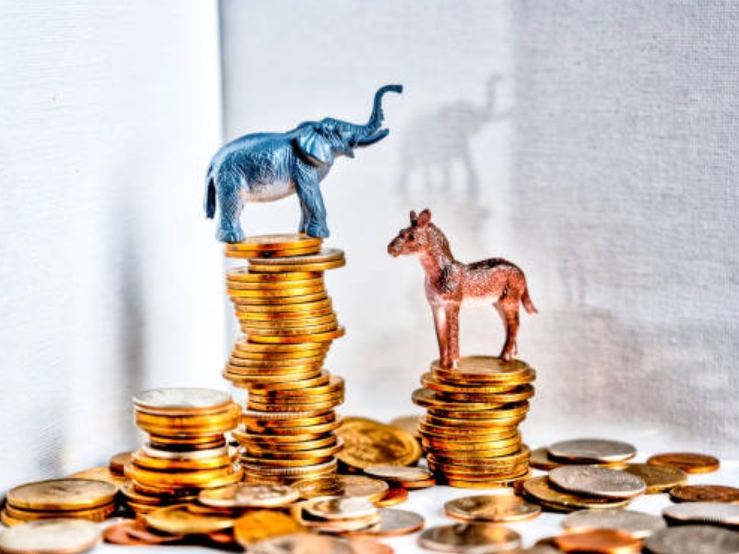
It all feels so innocent at first for candidates and elected officials. Usually, they are complimented by the incoming call from a PAC. Or, perhaps the candidate or congressperson in question has been pursuing the PAC’s support and it is a welcome call back.
The lobbyist is charming and “really seems to care.”
Then there is the invite to “a little reception we are having for members of congress and their chiefs to stop by - just right off the hill on New Jersey Ave.”
Find out what's happening in La Grangefor free with the latest updates from Patch.
After a quick hello to the lobbying firm, members of the PAC, the lobbyists then take the member of congress out for a lovely lunch. They chat about the mission and its importance to the PAC and schedule a meeting to discuss their legislative agenda, bills the member wishes to pass/support and those the PAC may want to support and those bills that the member “should avoid.”
Mysteriously, but immediately after, a PAC check shows up in their account.
Find out what's happening in La Grangefor free with the latest updates from Patch.
PAC checks are typically $5,000. But lobbyists supporting the PAC will give, executives from the organization gives and it starting to look more like $50-100,000 in the first year of the relationship. More money folds in. Seems great!
At this point, no votes on relevant legislation is brought to the floor for the receiving member of Congress and so it all seems harmless. We are all just friends.
But, the day comes when the congressperson gets a call that does not really seem like a warning, and yet it clearly is. It usually goes like this…
Lobbyist: “Hey Congressman - giving you a heads up. There is a bill that will really grease the skids for Medicare for All and well, that will be soooo problematic. You know the issue. All those crazy lefties think universal healthcare is the bomb, when in reality it will just means the collapse of the insurance industry and its employees will be out of work. So, yeah, obviously we can count on your vote as no? Correct?”
Congressman: “Well, I keep seeing surveys showing 70% of Americans want it and then the analyses done by all those universities show employees would simply join the Medicare for All system or the insurance companies would just convert to smaller orgs that warehouse data only and employees would shift into the new healthcare ecosystem. Seems reasonable.”
Lobbyist: “Sounds like somebody has been brainwashed! Let’s put it this way. If you get push back on your “no” vote, just ask for a study to be done on the topic. You know, just slow walk it. Oh, and we know your primary election is just around the corner and I know a bunch of third party folks in my industry will have your back if you hang with us. Sooooo yeah, you’re with us - right.”
Congressman: “….Yeah, I guess so.”
It’s called grooming. It only gets uglier from there.
Ever wonder why universal health care stays stuck in the “we’ll study it” column? The donor class and Big Healthcare has a calendar, a budget, and a fundraiser playlist that keeps the policy notes in check. Welcome to a tour of the the lobbying economy—where access is currency and slogans are the coin.
Similarly, many ask why even the self proclaimed climate hawks seem to never introduce bold or transformative climate legislation?
Big Oil does the same thing to those members of Congress. It is quite the formula.
Imagine Washington, DC, as a grand old ballroom where policy footprints are traced in the glitter of campaign checks. The lobbyists float in wearing perfectly tailored patience, the PACs are the ever-hungry gift shops, and the dialogue often starts with a simple promise: “If you vote our way, the next fundraisers will be even more fruitful” It’s funny, it’s infuriating, and yes, it’s real enough to fill a week’s worth of late-night monologues. Let’s walk through the lobbyist ecosystem—the polite version of a mafia-don narrative, minus the trench coats and with a lot more spreadsheets.
And the reason spreadsheets are necessary is that many members of Congress receive millions each and every year. It is a sea of money.
- Lobbying 101: who’s in, how it works, and why it never quite ends
- The cast: corporate PACs, industry trade groups, lobbying firms, think tanks, and the occasional foreign-policy interlocutor like AIPAC that layers into the domestic policy conversation. It’s a full cast of stakeholders who all want a seat at the table—and a line of credit to keep it warm.
- The mechanism: money isn’t just bribe-as-occasion; it’s a continuous signal. If you vote with us, you’ll see money in your re-election loom, endorsements, and access that feels almost concierge-level. Drift, and the donor network quietly adjusts its RSVP list. The “donor as compass” isn’t always evil, but it’s certainly a loud, well-lit compass. Oh and the by the way, our current campaign laws keep all the bribery legal. And to be clear, it is legalized bribery.
- The craft: lobbyists aren’t just check-writers. They draft talking points, line up expert witnesses, and curate the narrative so that a complex policy issue sounds like a responsible, easy-to-swallow bite. It’s the access economy, with a side of policy-by-press-release. They also act as the muscle and loan shark to keep congresspeople in line.
- The optics: the revolving door is less a symptom and more a lifestyle. Lawmakers become consultants and lobbyists; ex-lobbyists become staffers; and the knowledge economy of influence becomes a currency that compounds across years and committees.
- Timeline: how intrusive is the lobbyist calendar?
- Pre-Election: fundraising shows up like clockwork. Bundlers and lobbyists bundle; donors feel warm and needed; candidates begin to see the donor class as a kind of social security blanket for campaigns. Then groups like Big Pharmaceutical, Big AI, Big Crypto and AIPAC put together millions of dollars for independent expenditures (disguised as super PACS with sunshiny names with “progress” and “America” in the title) to sway voters in a sea of ads and character assassination of opponents.
- Pre-vote phase: memos, one-pagers, “policy scripts.” The aim is to make “compromise” sound reasonable and “no budget-busting reform” feel prudent. The goal: a banner headline that looks like bipartisanship, even if the underlying posture is carefully tethered to donor priorities.
- Reality: The strategy is to never, ever have impactful, transformative legislation because it always does not fit with Big Oil, Big Healthcare, Big Pharmaceutical, Big Banks, Big Real Estate or AIPAC and the far right pro-Israel lobby
- Legislative calendar: every committee mark-up, every amendment, every budget rider becomes a stage for donor-friendly framing. Meetings aren’t casual; they’re rehearsals for a performance where the donors’ preferences get to be the audience and the director.
- Post-action wrap: after votes, donors return to rooms that feel like victory-lounges, where the messaging is reinforced and next-quarter expectations are set with the same clarity you’d expect from a fortune teller with a spreadsheet.
- Talking points and obedience: who shapes the script?
- The script is real and relentless. Lobbyists supply a library of talking points crafted to survive scrutiny, designed to be persuasive in print and palatable on TV. They aren’t mere slogans; they’re frames that stay within a policy corridor where donors feel they’re steering the ship.
- The discipline: incumbents learn to explain policy in the simplest terms—jobs, growth, security, fairness—while echoing donor priorities. Think tanks, PR shops, and former aides co-author the language so it sounds trustworthy even when it’s being channeled toward a narrow outcome.
- The toolkit: soundbite templates, op-ed blueprints, and “educational” briefings for reporters. The aim is to keep a lawmaker in a corridor where the donor agenda never appears controversial, even when it narrows the field of possible public options.
- Why universal healthcare, paid leave, and universal childcare struggle (with a wink and a sigh)
- The core argument from critics: the donor ecosystem creates a high-stakes climate where votes become calculus, not conscience. Proposals that would broaden protection require money, administrative heft, and, often, a willingness to risk the political cost—so the lobbyist-provided counterframes emerge to position universal programs as fiscally reckless or politically impractical. Or worse - and yes they are excellent at this game.
- The donor calculus: corporate interests worry about short-run profits and competitive positioning. Foreign-influence considerations, including various policy actors like AIPAC in some discussions, complicate domestic policy, often turning a noble public aim into a chessboard of strategic messaging. Critics argue this tilts the board away from universal protections.
- The larger truth (and a candid caveat): there are lawmakers who push universal options, and groups that champion robust public options. The point of critique isn’t that every vote is bought; it’s that the money loom—bundled, broadcast, and life-enhancing for donors—poses a risk to deliberative democracy and to the speed at which broad protections can materialize.
We Know What Needs Reform, But Here’s The List Anyway
- Reform ideas worth debating: public campaign financing, ending PACs, stronger lobbying disclosure, tighter cooling-off periods, ending the revolving door of congresspeople who leave congress and become lobbyists. Obviously we need rules that curb foreign influence in domestic elections. The aim isn’t to vilify every lobbyist but to shrink the “donor as fate” dynamic and reclaim room for universal protections that reflect public interests, not just private agendas.
- The moral of the ballroom: money can be a ledger, but democracy deserves a lantern. Let transparency, accountability, and citizen voices illuminate the floor. If we dim the lantern for too long, the spectacle won’t be a policy debate; it’ll be a marathon of donor-approved theater.
Fair warning to all voters: When an incumbent says “yes, I take corporate or foreign lobby PAC money, but I don’t let it affect my votes,” they are lying. 98% of the time.
Just remember why we do not have transformative action on climate change, a fair economy, or healthcare or housing.
It’s PACs and the congresspeople who take their money.