Neighbor News
What Americans Want and Fun Facts About Why That Is Hard To Do In Congress
It is no longer just the clash of parties; It is the structure of Congress itself.
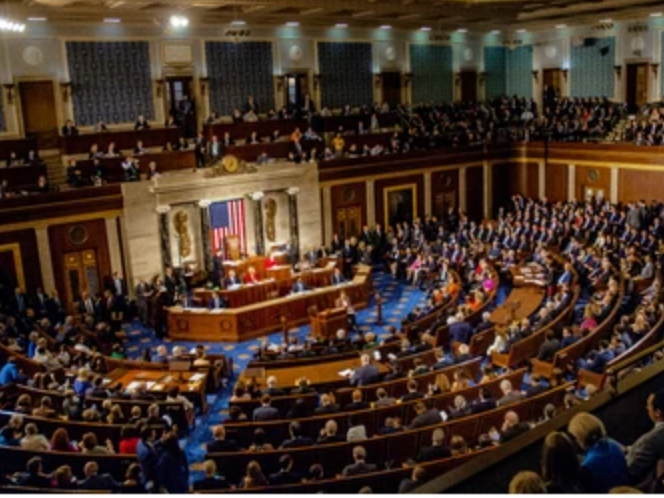
Emojis and sarcasm aside, there’s real gravity to Congress’s “next level inertia.” It isn’t merely procrastination or a fondness for coffee-stained committee hearings; it’s a machine built to preserve itself. The result is a centuries-old institution that can bat away 2025 like a pop fly and still claim to be the republic’s stern guardian. The trick is to pretend you’re modern while moving at the speed of a ceremonial mace.
In public, Americans are loud, specific, and practical. The latest public mood, captured in surveys, is blunt: people want lower costs for healthcare, housing, and food; they want inflation managed; they want democracy strengthened; they want humane immigration policies ; and they want to know where their money goes. In other words: do the job, and do it with more transparency.
Top voter priorities signal a straightforward homework list for Congress:
- Cost of Living & Economy: healthcare costs are at the top of the to-do list (34%), followed by housing/rent (22%) and food costs (20%). The math is simple; the politics, less so.
- Democratic Norms & Accountability: voters want Congress to act as a check on executive power and to demonstrate ethical behavior. In a democracy built on checks, this is the part that should actually check out, not check the box.
- Transparency in Governance: Americans crave clarity on how bills become law, how money is spent, and how to have their voices heard. It’s the “show your work.”
- Ethical Behavior: honesty and integrity aren’t optional to most Americans.They’re public-facing necessities rather than party-line slogans.
Just A Sample Of The Operational Issues That Create Inertia
Here are some “fun facts” that illuminate the daily grind behind the chamber doors. They are not trivia to be filed away; they are the hinges on which the institution swings (or creaks).
Find out what's happening in La Grangefor free with the latest updates from Patch.
- Campaign finance & costs: Money matters, and the price tag is telling. The average winning House campaign cost about $2.4 million in recent cycles; Senate campaigns average around $27 million. The math suggests a political marketplace where the product isn’t policy so much as persuasion—and whoever has the deepest pockets often gets the loudest fanfare. Most members spend better than 18 hours a week on fundraising alone.
- Member backgrounds: The House average age hovers around 58, with pay at $174,000 annually. The Senate skews older still. The combination of seniority and pay shapes the culture inside the chambers as surely as the marble and portraits do outside. One might say we are not sending people to congress at the height of their energy levels.
- The US House Congress does not have a Human Resources Department to manage employee relations, ethical issues, bad behavior, structural inefficiencies, talent problems, systems, processes and organizational issues. Mind boggling an organization of 10,000 people has no oversight, very little process or supports.
- Voting records: Constituents want to know how representatives voted on specific bills. This is the ledger that connects street-level concerns to the chamber’s ledger books—and, ideally, to consequences for public trust. While there are place like congress.gov, it is hard to find voting records readily.
- Congress Has Been Working-ish for 237 Years. At least 12,421 people have served in the House and Senate since the first Congress convened, according to House records. About 680 people have served in both chambers. And yet, there have not been dramatic changes in process.
- Key Facts on Bill Passage Rates: It takes a long time and multiple introductions for a bill to pass. Period. It’s a slog.
- Low Success Rate: Only about 3-7% of introduced bills become law.
- High Volume: Over 10,000 bills are considered by each Congress, but very few are enacted.
- Multiple Congresses: Significant legislation, such as major healthcare or tax reforms, may be introduced in several consecutive two-year sessions before finally passing.
- High Failure Points: Bills face many obstacles (”veto gates”), including committee tabling, lack of scheduling for a vote, filibusters, or failure to pass both chambers, which often necessitates restarting the process. [1, 2, 3, 4, 5]
The behind-the-scenes reality is if anything more revealing:
- There are thousands of lobbyists. In 2021, more than 12,000 registered lobbyists worked the corridors, plus the fly-ins and grassroots campaigns that never appear on a single bill. They are everywhere and very powerful.
- Most Have Family. About 80% of Congress members are married and a similar percentage have children. Yet single parents may be under-represented. Almost a quarter of American children under 18 live with one parent, according to the Pew Research Center. That’s not true in Congress.
- The House is a small city: about 9,000 staffers serve 435 members across committees, creating a 20-to-1 staff-to-member ratio.
- Youth vs. tenure: roughly 60% of staffers (meaning non- members of Congress) are under 35; 75% are under 40. The era of the fresh face is real, but so is the overtime clock—roughly two-thirds of staff work more than 50 hours a week, with senior staff pushing past 60 on a regular basis.
- Turnover and movement: the average staffer sticks around about three years, which means a rotating cast of aides who must become fluent in the arcane art of legislative survival.
- Representation is Unequal. People of color have long been underrepresented among Congressional staff. Among senior House staff, only 14% were people of color in 2019, according to the New America report. Among senior Senate staff, it was only 11% in 2020. “Though these numbers are still low…they both represent significant improvements in recent years,” the report said. Overall, about 74% of Democratic staff and 94% of Republican staff are white. About 62% of the U.S. population is white, according to the 2020 U.S. Census.
- The Hours are Looong. About two thirds of Congressional staff work more than 50 hours a week, according to the New America report. About 20% work more than 60 hours. It is senior staff rather than junior employees who work the most. “More than one-third of senior staff — defined here as those with supervisory authority, such as CoS, committee staff director, legislative director, and the like — work more than 60 hours per week on average,” the report said.
- Pay floors and senior salaries: the House instituted a $45,000 minimum salary in 2022; a typical staff assistant earned about $55,200 by 2023. Senior roles—chiefs of staff, district directors, legislative directors, communications directors—show proportional rises. And yes, many staffers eventually head to the private sector; the revolving door is not just a cliché but a calculable reality.
- Lawmakers’ profiles and lack of representation: the institution is aging gracefully in public—average ages around the high 50s to early 60s, with long tenures and substantial campaign costs, but it remains strikingly less representative of the nation’s demographic mix than the country it purports to govern. People of color are not represented enough in Congress and it appears that progress is stagnating.
- Education and experience: roughly 96% of members are college-educated; a sizable chunk earned law degrees; Ivy League affiliations are common; military experience is less common than one might expect.
The result is an institution that is not merely antiquated; it’s a living museum of legislative muscle memory.
So what does a modern, reform-minded public do? The answer is not a single thunderbolt of legislation but a series of reasonable, verifiable fixes:
Find out what's happening in La Grangefor free with the latest updates from Patch.
- Increase transparency about how bills become law and how money moves through the process.
- Improve accountability by clarifying how votes align with stated public priorities, and how lobbying works in practice.
- Expand and diversify the congressional candidates and the staff that surrounds lawmakers to reflect the country’s demographics and life experiences.
- Reassess campaign finance norms to reduce the gravitational pull of fundraising on policy outcomes.
- Streamline the legislative process without sacrificing rigor: more open hearings, clearer timelines, and better public-facing data.
- Create a Human Resources department
In the end, inertia can be a shield against rashness; it can also be a cage that muffles the desperate need for essential work toward progress. If Congress wants to be relevant to the cost of living crisis and to the other urgent items on voters’ minds, it must prove that it can be both a tradition and now, an innovation factory.
The country is watching. Congress needs to move when we get the majority back.
Inertia is blocking innovation and progress. We need new people.
Let’s elect folks who have ideas and are willing to make deep structural change as well as pass bills to solve problems
We need both.