Community Corner
Decade After Lifesaving Double Lung Transplant, Orland Park Man In Dire Need Of Living Kidney Donor
Bob Meyers needs a kidney transplant to extend his life. His family is hoping the community can help their "go-to guy."


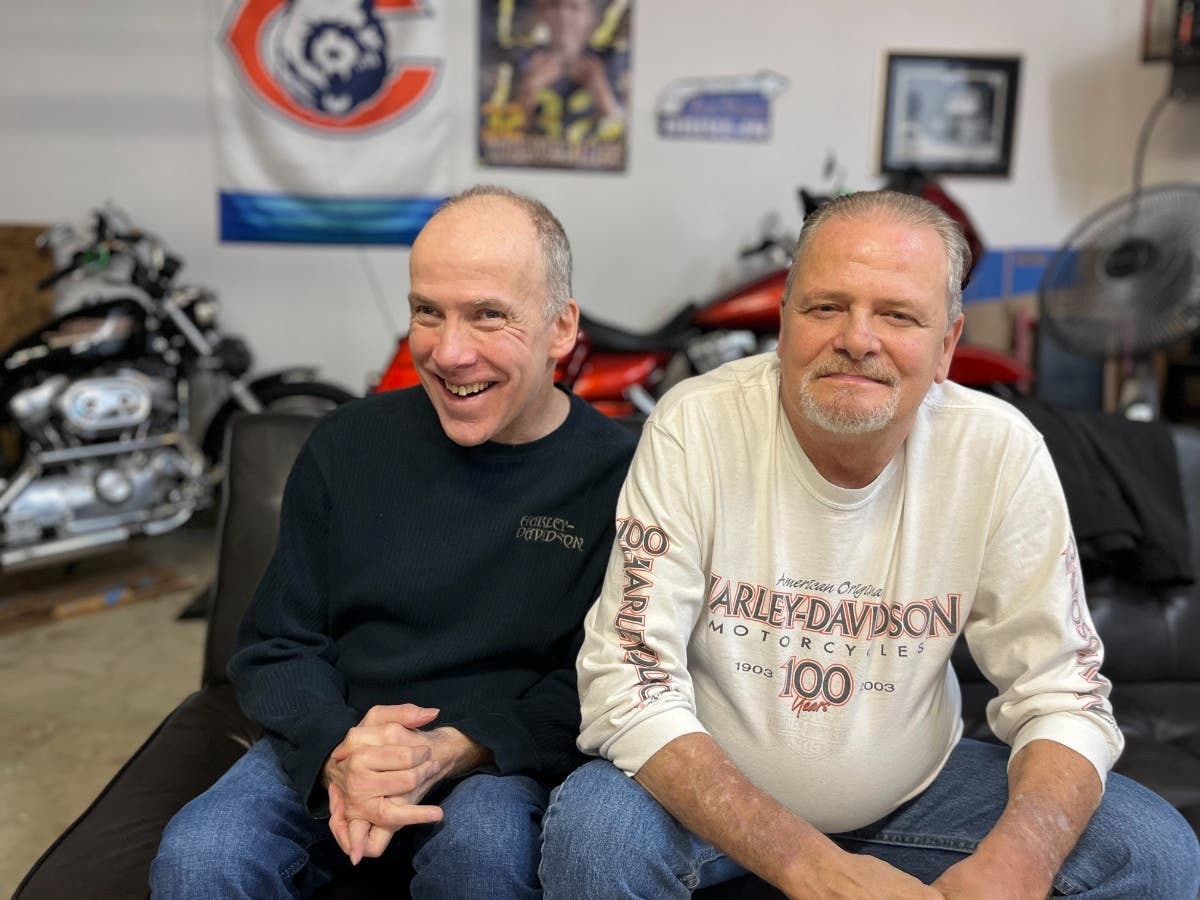
ORLAND PARK, IL — Bob Meyers would drop everything to help anyone.
The longtime Orland Park man known for his giving nature once drove overnight to retrieve his daughter's car that had broken down on a West Virginia highway.
Later, he also sprang into action when that same daughter's future husband hit a patch of black ice and flipped a trailer. Meyers was on the road 30 minutes later, rushing to Jake's side.
Find out what's happening in Orland Parkfor free with the latest updates from Patch.
"Bob doesn’t care who it is," said his daughter, Marijke de Jongh. "He jumps and just goes. He doesn’t really say with words that he loves you—he shows you with action."
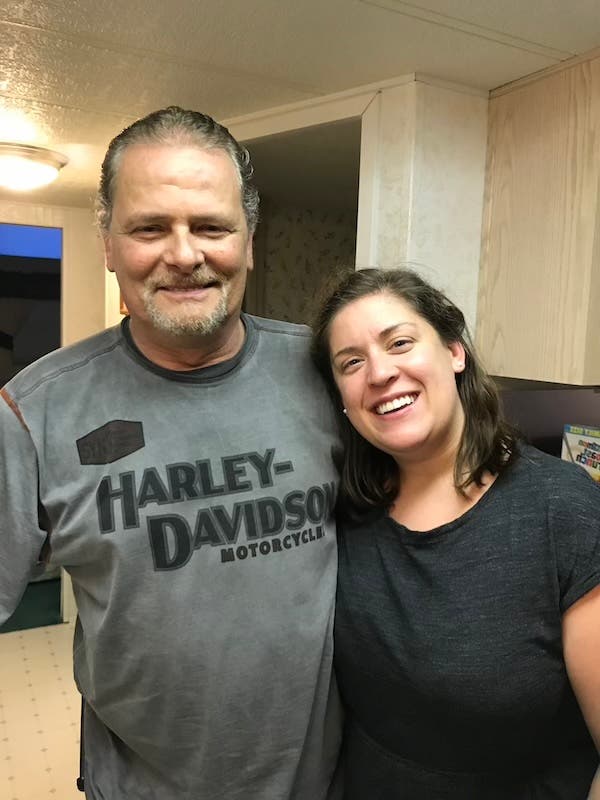
It's that openhearted care for the people around him that has inspired de Jongh's efforts to help him in his own time of dire need. Meyers, 64—who received a life-saving double lung transplant 10 years ago—now is in critical need of a living kidney donor.
Find out what's happening in Orland Parkfor free with the latest updates from Patch.
After years of anti-rejection medications and antibiotics to protect his body from rejecting the lungs, Meyers is in end stage kidney failure.
de Jongh, with her mother and Meyers' wife Helga, is turning to the public in hopes someone will be willing to donate to their favorite guy.
"What’s so hard is, Bob was always the guy—he’d be there to help," de Jongh said. "If someone needed moving, he brought his trailer. If someone needed towing, he brought his own car.
"He’s a very quiet guy ... very reserved. He felt like his biggest contribution was being everybody’s go-to guy. Now he struggles to stay awake, struggles to do basic life stuff."
Meyers' condition has stripped him of his energy, leaving him easily exhausted. His employer, Tibor Machine Products, has enabled him to work remotely full-time, while he also serves as caregiver for his 62-year-old autistic brother and an autistic son in their family home.
"I’m watching him just burn it at all ends trying to take care of everyone, while he himself is still struggling," de Jongh said.
"We all need him. I need him. He’s been there for me my whole life."
All family members have been tested, and none are a match.
"We’re a pretty healthy family, so it’s kinda shocking to hear that we were all ruled out," de Jongh told Patch.
Meyers is a rare B Negative blood type, which poses its own challenges. Doctors have also advised that a living donor is preferred.
"A living donor can give you up to 12-15 years of life," de Jongh said. "Essentially, they would start the surgeries at the same time, and they wouldn’t take the donor kidney until they’re certain it would be successful."
Meyers' critical status and dire need of a kidney donation feel like another blow to the family, who already thought they would lose him once before.
In 2014, Meyers was hospitalized more than 10 times for pneumonia. Tests revealed that he had Mycobacterium Avium Complex (MAC) lung disease, a serious, non-contagious infection caused by common environmental bacteria.
"The combination of the MAC diagnosis and multiple hospitalizations for pneumonia did a number on my lungs, and I was told that the only viable option was for me to get a double-lung transplant," Meyers wrote.
de Jongh remembers how the family navigated those times, with Helga taking on the caregiving tasks of two autistic family members.
"We felt like we were crumbling," de Jongh said. "It was really difficult."
Then in March 2016, Meyers received the transplant that would grant him—so far—10 more years with his family.
"With the transplant, it felt like he got a new lease on life," de Jongh said.
"A lot of times, people with lung transplants, the life expectancy is 4-5 years. On one hand, we’ve gotten double that. God has blessed us with extra time. But he’s beaten the odds so much, when this kidney failure started coming online, it shook us.
"... How much more could one person take?"
'Always the handy man'
Helga and Meyers met while both were entertaining their love for camping, or as Helga would say, "glamping."
They had lots near each other at a campground in Marseilles, where they first met. They've been together since 1999.
"Twenty-seven years," Helga said, "though he'll tell you it feels like 50."
An Orland Park native and graduate of Carl Sandburg High School, his roots were firmly planted in the south suburb, and he brought Helga and her family to be with him there.
"He’s the reason we all moved out to Orland, and our family has stayed in Orland this whole time," de Jongh remarked.
Meyers has been involved in the local Special Olympics community for years, with both his own brother and Helga's son.
For years, he also drove a truck for a local towing company in the Orland Days parade, de Jongh said.
The family is hoping his stake in the community will help inspire people to act on his behalf.
"He was always Mr. Go-Getter," Helga said. "'I can do this, I can fix anything.' Big boys with big toys—he always wanted to be doing something."
Limitations brought on by kidney failure have impacted his morale.
"He’s really down on himself," Helga said. "He knows how to do everything, but his body won’t let him."
Meyers wrote of his struggle on his donation website.
"Kidney failure causes fatigue, bloating, nausea, forgetfulness, and a complete lack of energy," Meyers said. "It can get depressing when I cannot do things with my wife and our adult kids, I cannot attend my 31-year-old son's Special Olympics activities, and caring for my 62-year-old special needs brother can be a challenge. I have good days where I get a lot done, and I feel very accomplished, but the next three days always wipe me out. There are other days where I start a project, but then it sits unfinished.
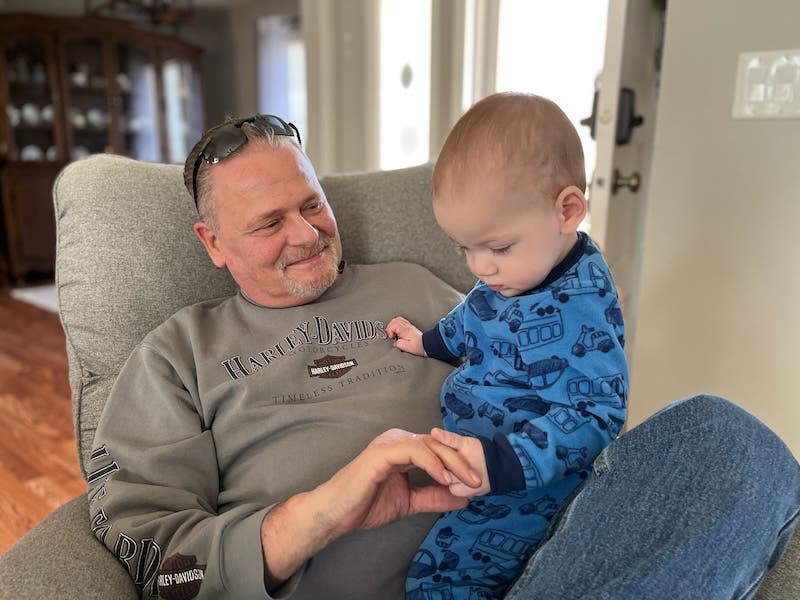
"Without normally functioning kidneys, it is hard to keep up with the responsibilities of our house, it's impossible to be as active as I'd like to be and live life to the fullest, and playing with our three grandchildren (all under the age of 5) wipes me out."
He longs to take his brother out on a bike ride again, as well as ride his motorcycle and take his boat out on open water. If a donor is found and all goes well with the transplant, in three months Meyers should be "living his best life again," Helga said.
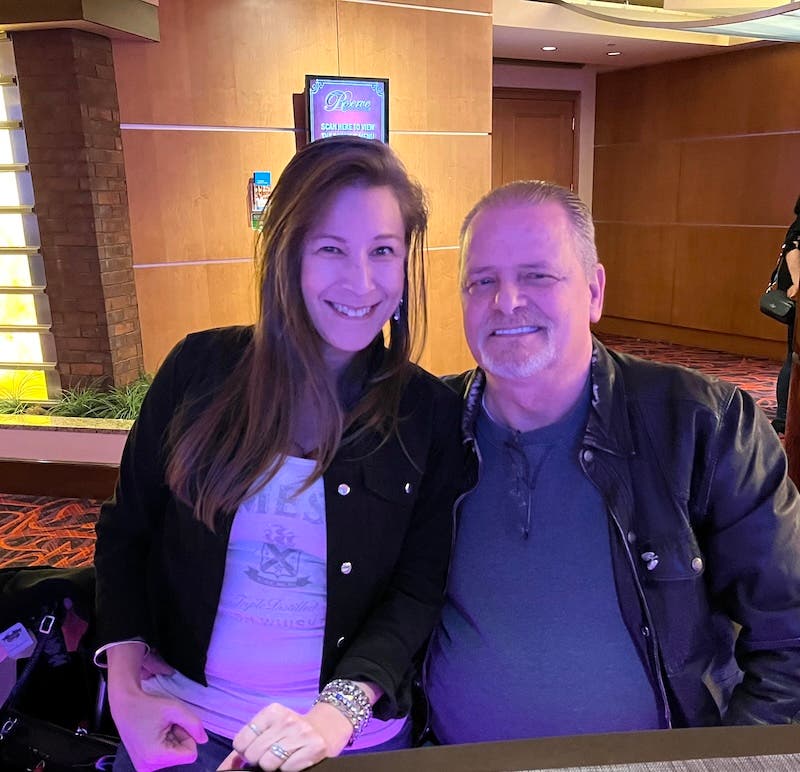
"A new normal," she said. "He might not have such a negative reaction to the medications he has to take the rest of his life.
"They say that if he recovers, he can live another 15-20 years. In doing that, he’ll be able to see the 'littles' grow up. Maybe even get to see them graduate from high school."
Anyone willing can begin the donor testing process online. A testing kit is sent out via mail. All procedures would be done through Loyola University Medical Center, in Maywood.
"I was on the UNOS kidney donor list for seven years, but in 2024 I was removed from the list because I wasn't sick enough," Meyers wrote. "My situation changed drastically, I am in end stage kidney failure, and now I need a live donor for a kidney because I'm too sick, and a kidney that has been transported (on ice for hours) may not be good enough.
"Since none of my family members are a match, I'm hoping that someone will read my story and consider being a live kidney donor for me or donate a kidney to the Kidney Foundation list on my behalf so that I shoot to the top of the list for a live donor."
The National Kidney Registry also offers prioritization for a living donor kidney transplant as part of Donor Shield, a comprehensive suite of protections offered to living kidney donors. If a living donor needs a donation in the future, they receive first priority. You can find out about other support provided to donors online.
"I have a lot to live for," Meyers said. "A lot of things I still want to do, and I would love the chance to receive a kidney in hopes that I can live again."
Get more local news delivered straight to your inbox. Sign up for free Patch newsletters and alerts.