Politics & Government
A Way Out of Framingham's Budget Chaos
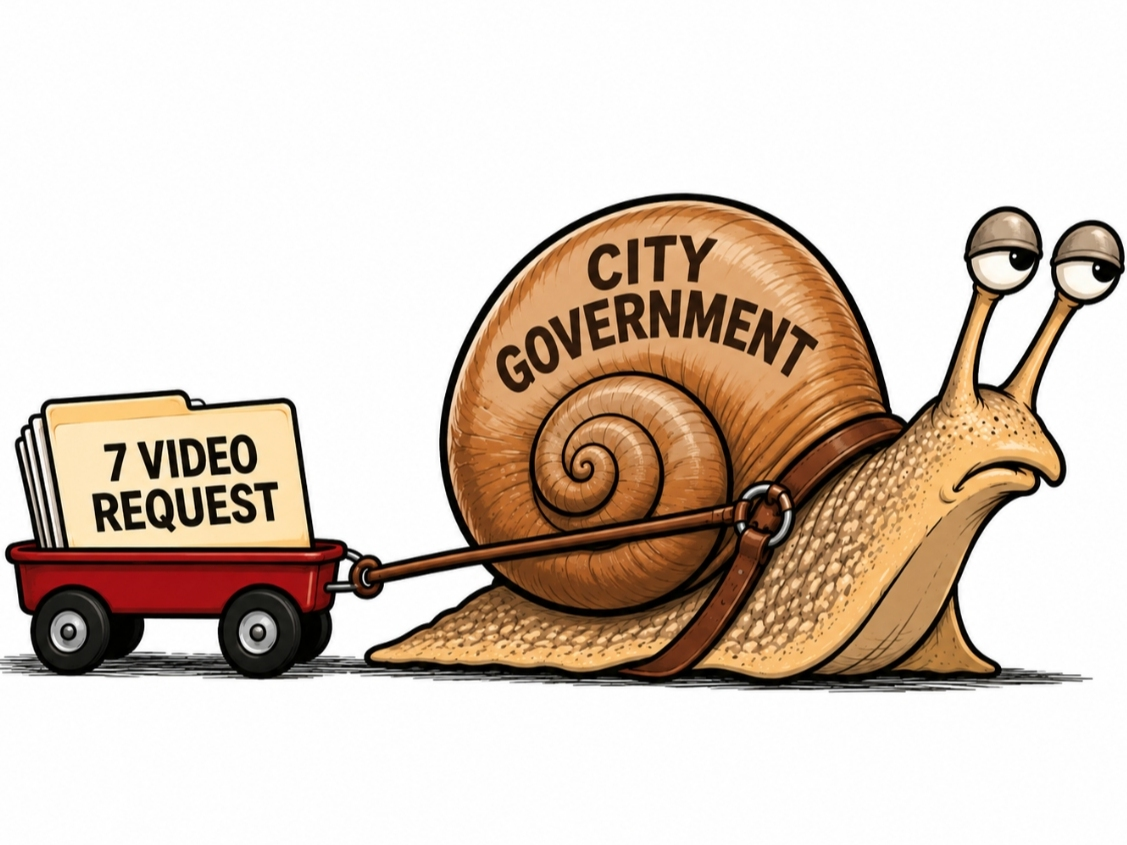
The City Council rejected the Mayor's budget submission, creating chaos in the budget process and offering little guidance on solutions

Framingham has a very big FY27 budget problem.
The Mayor's FY27 budget, rejected by the City Council on May 5, 2026, had 3 principal features:
1. A 4.5% property tax increase
Find out what's happening in Framinghamfor free with the latest updates from Patch.
2. Use of $14 million in free cash
3. An additional $2 million in cuts to the Framingham Public Schools, which have already cut 80 staff to align with the reduced student enrollment, principally at the high school and middle schools
Find out what's happening in Framinghamfor free with the latest updates from Patch.
The City Council balked at the 4.5% property tax increase, even suggesting that such an increase would require a vote of approval from the community, forgetting that it happily approved 0% property tax increases for each of the 4 fiscal years: 2019, 2020, 2021, 2022, stalling tax revenue in 2021, and triggering a Moody's bond rating downgrade.
So, in perspective, a 4.5% increase would simply be a small reversal of those cuts, especially, since although the FY21 tax increase was advertised as 0%, it actually was -2%, which is why tax revenue stalled that year. A 4.5% increase in FY27 could be viewed as simply correcting that FY21 error.
During its 8 years of operation, the City Council has focused on throttling back city property tax revenue growth well below inflation. That effort has now reduced tax revenue by $41.4 million/year, with an accumulated loss of $316 million in tax revenue since taxing below the levy limit began.
That $41.4 million/year loss in city property tax revenue, generated by taxing below the Proposition 2 ½ levy limit, is commonly called Excess Capacity.
Some other cities and towns have generated substantial Excess Capacity, but have done so, because they had other revenue streams to compensate. Framingham ranks #5 in Excess Levy Capacity in the state, but has a weak and eroding commercial sector compared to Cambridge (#1), Marlborough (#2), Everett (#3) and Waltham (#4), the municipalities with the largest Excess Capacity in the state.
This big deficit in recurring revenue, created by taxing under the levy limit without a compensating additional revenue stream, is one of the problems driving the current budget crisis, and is unique to Framingham.
Other Cities and Towns Are Raising Revenue
The FY27 financial picture is made worse by an additional broad set of problems afflicting all cities and towns across the Commonwealth: rising inflation, special education costs, pension liability payments, and health care costs.
Communities are responding to these problems by raising recurring revenue:
1. Brookline just passed a $23.25 million override, especially to protect its schools.
2. Natick did the same on a smaller $7 million scale.
3. Newton pushed out the payoff date of its pension liability from 2032 to 2035 and also plans to pay it off with a 20 year bond, reaping tens of millions of dollars in freed up annual revenue to solve its problems, again with a primary focus on protecting its schools.
Just as these communities did, Framingham needs to protect its schools, and find recurring revenue to solve its large structural financial problem.
How the Student Opportunity Act Boosted Revenue and Masked the City’s Budget Problems
To a great degree, the fundamental financial problems caused by bad planning in Framingham were masked by the revenue which came in from the state via the Student Opportunity Act, which boosted Chapter 70 state aid for education (recurring money) especially in FY23 and FY24.
Over the last 4 years, as that boosted state aid rolled in, the city reduced its local funding of the schools by a total of $18 million below the FY22 funding level, reaping a real cash bonanza for the city. Two prior articles explained what happened:
Framingham Administration’s Extreme Misuse of State Chapter 70 Education Aid Caused Schools Budget Crisis (February 6, 2026)
Framingham & Marlborough Take the Prize for Blocking Increased State Aid from Reaching Disadvantaged Students (March2, 2026)
The Student Opportunity Act Chapter 70 increased boosted aid for Framingham’s most disadvantaged students by a total of $105 million over 4 years, but only about $25 million actually resulted in hiring additional support staff (116) for those students over that period. The rest went to prop up the city's failing finances.
In the Mayor’s rejected FY27 budget, 80 of those 116 staff have already been cut by the school system, but a further $2 million in cuts would have to be made to the voted FY27 Framingham Public Schools (FPS) budget, as the School Committee approved a budget of $190,457,868, but the Mayor wants that lowered to $188,457,868. That bad situation could be made even worse if the City Council applies pressure for even more drastic school system budget cuts.
With student performance dropping, and hundreds of experienced teachers taking jobs elsewhere over the last several years, the school system is in peril.
Further cuts, even the $2 million proposed in the Mayor’s budget, would likely collapse staff morale. They would create such damage that recovery could take years, even if in future budgets money was invested back in the schools to fully fund pre-K and boost classroom support, the two principal problems dragging down student performance and causing teacher flight.
The FY27 budget signals a turning point for Framingham, especially for the Mayor and the City Council, who in large part caused the financial problems, and artfully hid them during the recent city election cycle.
It is time for the Mayor and the City Council to own the problem, and start solving it in a manner which does not destroy the school system.
In an attempt to help that process along, here is a possible way to avoid damage to city services, produce substantial recurring revenue, and buy time to settle on a durable solution in the next year.
A Suggested Solution in Two Parts for Framingham
A number of things are clear:
1. The use of free cash on a $14 million scale just makes the problem worse in future years, and needs to be cut back to a much lower level.
2. A 4.5% property tax increase improves revenue, but falls way short of solving the recurring revenue problem.
3. The school system has seen its local funding cut over the past 4 years, resulting in the two major problems of declining student performance and teacher flight. Major cuts have already been made to align the schools with lowered student enrollment. The situation must not be made worse by further cuts. If the FY27 FPS budget approved by the School Committee is accepted by the Mayor and City Council, chaos, further damage to the school system will be avoided.
Any solution should include a sound near term move to keep city services intact and protect the school system. It should also reduce the use of one time reserves, and include a good chunk of additional recurring revenue.
That would take care of FY27, and buy time to hammer out a plan for a more complete solution to be deployed in FY28.
Part 1: The Near Term Solution
The principal move here is to use a variant of the strategy employed by Newton, regarding extending the payoff date of the pension liability, as explained in a prior article:
Framingham Could Help Solve Its City Budget Problems by Stealing Ideas from Newton’s Playbook
Note that this strategy has also been employed by many cities and towns across the Commonwealth. It is not a Newton specific solution.
It is much like the approach used by a homeowner faced with a 10 year mortgage and high monthly payments that use all the homeowner’s income, while the roof is failing and the furnace is broken.
To solve that problem, the homeowner can refinance the mortgage to a 20 year term, lowering the monthly payments and freeing up cash to properly maintain the house, and get into a stable financial and maintenance situation.
Just as refinancing a home mortgage is a sound and commonly used tool to solve cash flow problems, and ensure that homes are properly maintained, so refinancing the term of pension liability payoff is a sound and commonly used tool to solve city or town cash flow problems, and ensure that city/town services and assets are properly maintained.
Here is a partial list of municipalities which have used this strategy to free up funds for local services/schools. [The data comes from PERAC (Public Employment Retirement Administration Commission) with AI assistance.]
Confirmed systems with pension liability payoff dates past 2030
2031: Swampscott, Reading, Concord, Dukes County, Plymouth County, Blue Hills Regional.
2032: Newton, Salem, Beverly, Taunton, Malden, Southbridge, Haverhill, Gardner, Hampshire County, Holyoke.
2033: Arlington, Revere, Falmouth, Webster, Somerville, Fairhaven, Lynn, Medford.
2034: Maynard, Northbridge, Worcester, Springfield, Fitchburg, Gloucester, Bristol County, Westfield, Norfolk County, Braintree.
2035: Clinton, Essex Regional, Methuen, Montague, Milford, Danvers, New Bedford, Hingham, Plymouth.
2036: State, Massachusetts Teachers Retirement System, Middlesex County, Shrewsbury, Worcester Regional, Peabody, Hampden County, West Springfield, Weymouth, Marblehead.
2037: Andover, Barnstable County, Melrose, Adams, Pittsfield, Attleboro.
2038–2040: Woburn — 2038; Easthampton and Quincy — 2039; Norwood — 2040.
A back of the envelope estimate for Framingham, which is paying off its roughly $100 million pension liability at the rate of $25 million/year, and has a payoff date of 2030, suggests that moving the payoff date out to 2036 would roughly halve the annual payment, yielding about $12 million/year in recurring funds to support the FY27 budget and following year budgets.
So, for FY27, the fix could be:
1. Extend the pension liability payoff date to 2036, yielding $12 million in additional annual recurring funds.
2. Cut the use of free cash to $4 million.
3. Fund the FY27 FPS budget at the voted level of $190,457,868.
4. Raise property taxes by 4.5% to make some progress towards reducing Excess Capacity.
5. Reduce the use of free cash if the $760,000 in additional Chapter 70 funding for Framingham passed by the state house makes it to the final state budget.
These numbers are rough, but provide the outline of a viable solution.
That would allow the FY27 city budget cycle to complete in an orderly fashion, mitigate the damage to the school system, and encourage teachers to stay rather than leave.
Part 2: The Long Term Solution
The first requirement here is that both the Mayor and the City Council embrace the Strategic Initiatives & Financial Oversight Committee recommendations to put together a sound strategic plan, and use it to drive budget decisions in the future.
They both should be heavily involved in creating the plan. Any elected official unwilling to energetically put a lot of time and effort into that should step aside.
We also now have a competent Chief Financial Officer on board, with a great planning track record, and who should be a very important player in the strategic planning process.
There are many examples of good strategic plans, and some borrowing of content from good ones is in order.
This is not rocket science.
People want good schools, good roads, a sound water & sewer system, well kept buildings, expansion of composting and solar installations, well planned development, open space preservation, well maintained parks, good daycare for children, senior services matched to our aging population, decent transportation, and so on.
Not gold-plating.
Simply good, well maintained operations and assets, to provide a sound level of service to the community, with a clear path for future improvements, including clear goals and benchmarks.
Integrated into that plan would be all of the fiscal maneuvers covering revenue and expenses.
A key problem for Framingham is the pressing need to revitalize its commercial sector, but we have the Economic Development Corporation ramping up, and it should co-ordinate its efforts with the strategic planning effort.
For too long Framingham government has been focused on cost, not value, and cuts rather than investment, with a complete absence of planning.
The City Council especially needs to shift its culture to include planning properly for the future, with the right set of investments, and break out of its short term, cost cutting, revenue throttling posture.
Its resistance to change and improvements and bringing in best practices needs to end.
Over the next year, all of this can be worked out and if it is done well, the FY28 budget cycle will be very different from this one, and will set the city and its community on a sound path to the future.
In the meantime, community members should turn up to every City Council meeting and every meeting of its Finance Subcommittee, starting with the meeting today at 5pm in the Blumer Room at City Hall.
Here is the agenda, which includes a Zoom link to join the meeting remotely.