Politics & Government
Judge Halts Minnesota Ban On Prediction Markets
Prediction markets, which have soared in popularity in recent years, allow people to bet on almost anything in the political sphere.

July 28, 2026
A federal judge halted a new Minnesota law aimed at stopping the massive expansion of gambling via prediction markets on sites like Kalshi and Polymarket.
Find out what's happening in Minneapolisfor free with the latest updates from Patch.
The two companies and the Trump administration sued Minnesota to invalidate the new law, and federal Judge Katherine Menendez granted a preliminary injunction to stop the law from taking effect during the ongoing litigation. She determined the companies and the federal government were likely to prevail and face “irreparable harm” should the law — the first of its kind in the nation — go into effect.
Prediction markets, which have soared in popularity in recent years
Find out what's happening in Minneapolisfor free with the latest updates from Patch.
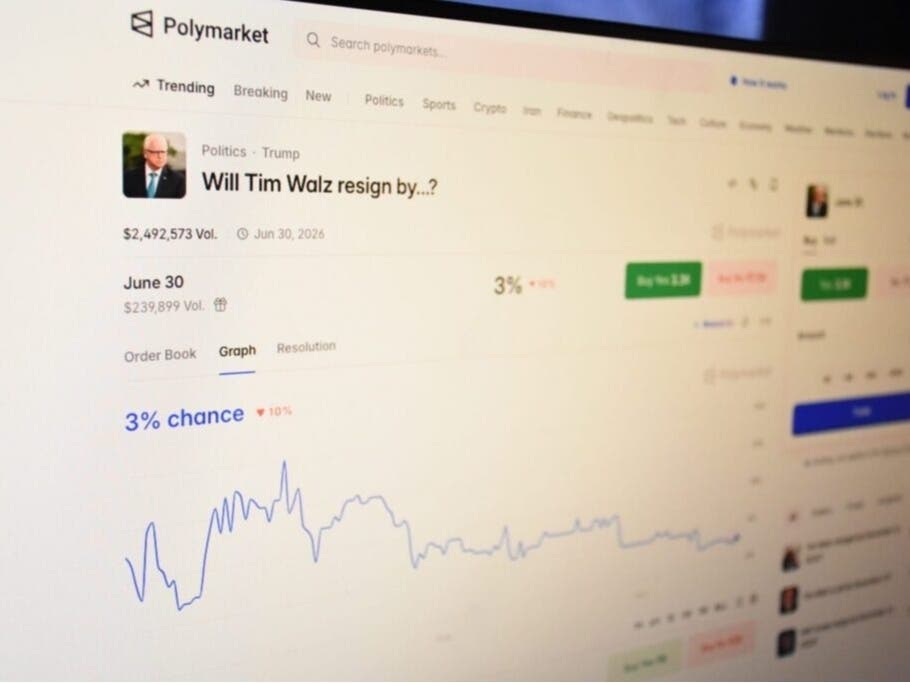
Prediction markets, which have soared in popularity in recent years in part thanks to regulatory relief from the Trump administration, allow people to bet on almost anything, including whether Gov. Tim Walz will finish his term or Jonathan Ross will be charged in the killing of Renee Good.
The companies have successfully persuaded the Trump administration that they are not gambling sites but a platform for futures contracts — a common financial instrument for buying or selling something at a fixed price in the future, which helps investors hedge against risk. Except, instead of speculating on the price of, say, a barrel of oil, the companies allow people to predict a sports or political or pop culture outcome.
News stories about suspected insider trading on Kalshi and Polymarket — when people use inside information not available to the general public — are a near-daily occurrence. President Donald Trump’s teleprompter operator made more than $100,000 betting on the content of his speeches, ABC News recently reported.
The judge ruled that federal law gives the CFTC “exclusive jurisdiction to regulate transactions” involving the futures contracts known as swaps, Menendez wrote in her 44-page ruling.
Congress gave the CFTC more robust authority after the global financial crisis of 2008, when unregulated contracts known as credit default swaps sank some massive financial firms when they bet wrong.
Here’s how NPR described credit default swaps back in 2008:
“Let’s say there’s a guy named Frank and he has a life insurance policy. When he dies, the beneficiary gets a million dollars. Now imagine a whole bunch of other people saying, “I want a million dollars if he dies, too.” And so they take out life insurance policies on Frank. Now imagine Frank dies, and all those people bought their policies from the same company. That company, more or less, was AIG.”
Now, paradoxically, the Trump administration is using the CFTC’s authority — which was intended to limit the economy’s exposure to massive risk-taking — to ban Minnesota from limiting people’s ability to take on extreme risk by, say, betting their life savings on whether Costco will increase hot dog prices before 2027.
Rep. Emma Greenman, a Minneapolis Democrat, told MPR she’s disappointed by the ruling but considers it just the start of the litigation around Minnesota’s law.
“If it walks like a duck and if it quacks like a duck, it’s gambling,” Greenman said. “It’s a duck and we should be able to regulate it in the public interest.”
The Minnesota Reformer is an independent, nonprofit news organization dedicated to keeping Minnesotans informed and unearthing stories other outlets can’t or won’t tell..