Politics & Government
Ayotte Adds State House Wins With Votes For DUI Reform, Paint Tax Veto
The first-term Republican has been pushing the legislation for weeks — including at a press conference featuring a mom who lost her son.

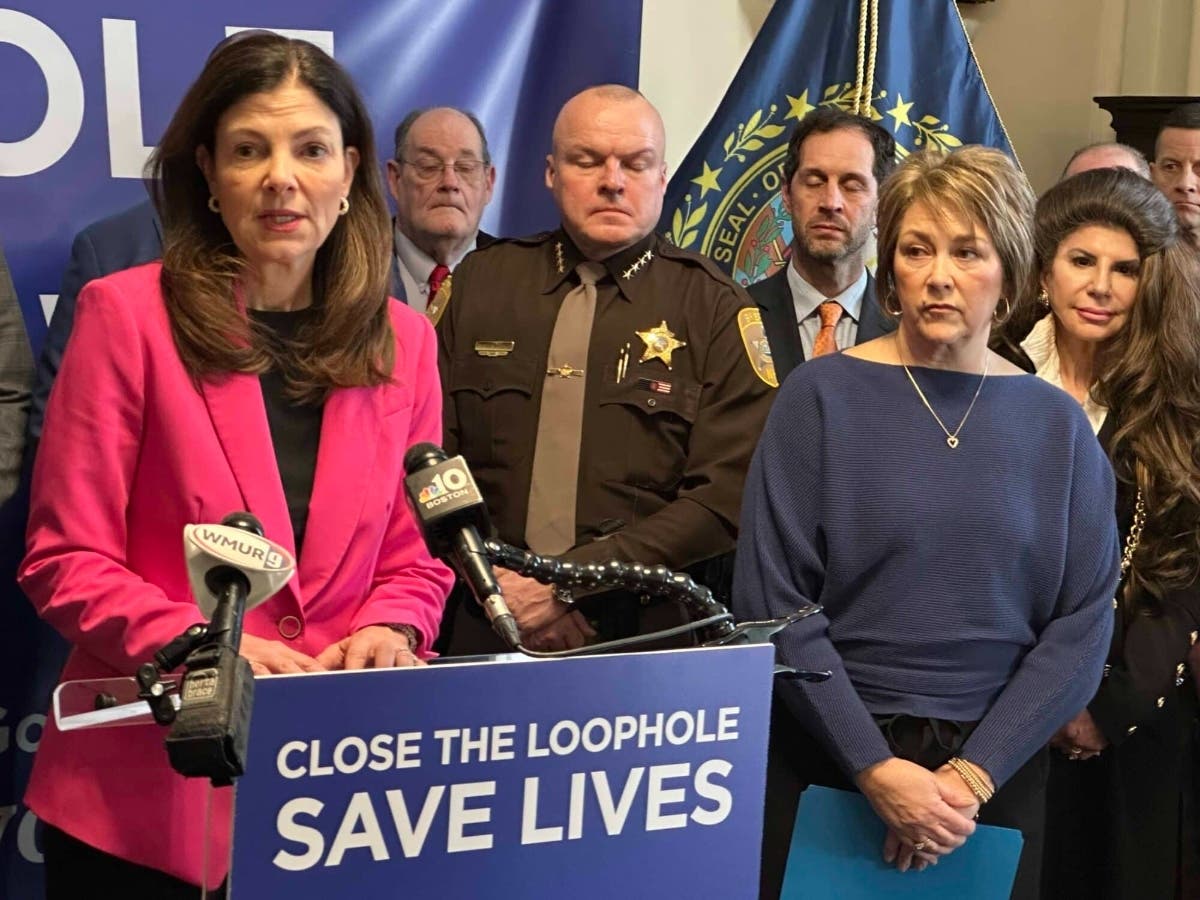
Gov. Kelly Ayotte’s two governing philosophies — tough on crime, no new taxes — were on display Thursday as the state House sustained her veto of the so-called “paint tax” and passed an Ayotte-backed bill providing harsher punishment for drivers who refuse to take a blood alcohol test.
When Ayotte vetoed HB 451 last month, she wrote “No Sales Tax!” in red pen underneath her signature. The bill would have created a Paint Product Stewardship Program operated by PaintCare, a nonprofit industry organization. Advocates argued that it simply implemented a self-funded process for disposing of empty paint cans.
Find out what's happening in Across New Hampshirefor free with the latest updates from Patch.
The program would have been financed by a mandatory surcharge added to the retail price of every container of paint sold in New Hampshire. Early estimates suggested fees of around 75 cents per quart, $1.75 per gallon, and $3 for larger containers.
Rep. Judy Aron (R-Acworth), chair of the House Environment and Agriculture Committee, repeatedly insisted that referring to the program as a tax was “ridiculous.”
Find out what's happening in Across New Hampshirefor free with the latest updates from Patch.
“This is not a radical policy or some kind of European socialist mumbo jumbo,” she said when the bill passed the House.
On Thursday, Rep. Ross Berry (R-Weare) took to the floor to make Ayotte’s case.
“It’s a hidden tax on paint,” Berry said. “If this legislation is such a great idea, why is there legislation requiring sellers to hide the cost? If you have to mandate that the charge be buried in the cost by law, you’re not the good guy.”
The vote to override the veto failed to get the two-thirds majority required. Only 30 Republicans joined Democrats in supporting the program and overriding the veto.
But it was Democrats who helped get Ayotte’s DUI reform bill through the House.
The first-term Republican has been pushing the legislation for weeks, including at a March 10 press conference featuring a mom who lost her son to a drunk driver. Ayotte called on the legislature to close what she described as the “DUI loophole” by increasing the punishment for refusing a blood alcohol test from six months to a year.
“New Hampshire has the second-highest refusal rate for taking the breath alcohol test in the country,” Ayotte said at the press conference. “Seventy percent of drivers stopped for impaired driving refuse to take a breath alcohol test. That is completely unacceptable.”
Ayotte made her pitch again on Tuesday during a press conference on the first anniversary of the passage of the state’s new bail reform law, urging the House “to do the right thing” and pass the DUI reform.
Libertarian-leaning Republicans in the House objected, arguing that it violated the right against unreasonable searches and seizures.
“Due process is important,” Rep. Michael Granger (R-Milton Mills) posted on Twitter/X. “A license suspension for refusing a breathalyzer seems like a punishment without due process.”
The bill passed overwhelmingly, 259-94. Despite having the support of House GOP leadership, the bill passed with more Democrats voting for it (135) than Republicans (124).
“Proud to see the House pass legislation to increase the license suspension time for refusing a DUI test,” Ayotte said after the vote. “This bipartisan bill is a critical step to keep New Hampshire the safest state in the nation. I thank the Legislature for working with me to close the loophole and save lives.”
Senate Transportation Committee Chair Denise Ricciardi (R-Bedford) also applauded the vote, calling the bill a “vital, bipartisan public safety measure.”
“Drunk driving and distracted driving are the greatest threats on New Hampshire roads. Far too many impaired drivers are refusing to take roadside sobriety tests because the license suspension is just 180 days,” Ricciardi said.
This story was originally published by the NH Journal, an online news publication dedicated to providing fair, unbiased reporting on, and analysis of, political news of interest to New Hampshire. For more stories from the NH Journal, visit NHJournal.com.