Schools
3 Siblings Awarded $2.5K For Rain Garden To Fight LI Pollution
The student-designed project will reduce nitrogen pollution and manage stormwater runoff on campus, officials said.


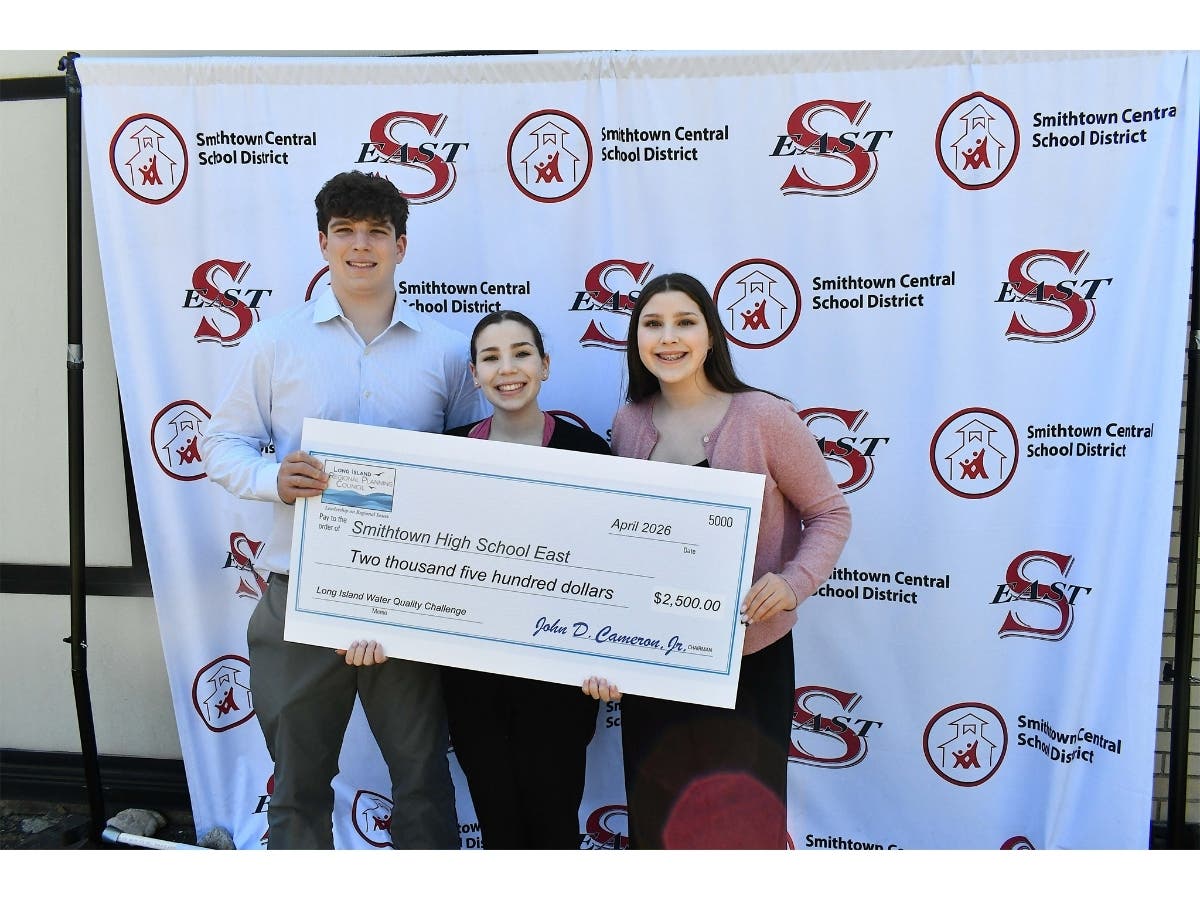
SMITHTOWN, NY — Three siblings from Smithtown High School East were recognized April 27 after earning a $2,500 grant through the 2026 Long Island Water Quality Challenge, funding a student-designed project aimed at reducing nitrogen pollution on campus.
Junior Hannah Sack, freshman Julia Sack and senior David Sack developed the winning proposal, titled “Reducing Nitrogen Pollution Through a Rain Garden and Nitrogen Filter Bed,” which will transform part of the school courtyard into a functional environmental system.
“This achievement perfectly embodies the Smithtown Promise — applying STEAM excellence to solve real-world problems for our community,” Principal Paul McNeil said.
Find out what's happening in Smithtownfor free with the latest updates from Patch.
The Long Island Water Quality Challenge, presented by the Long Island Regional Planning Council in partnership with the New York State Department of Environmental Conservation, encourages students in grades 6 through 12 to develop solutions that improve water quality across the region.
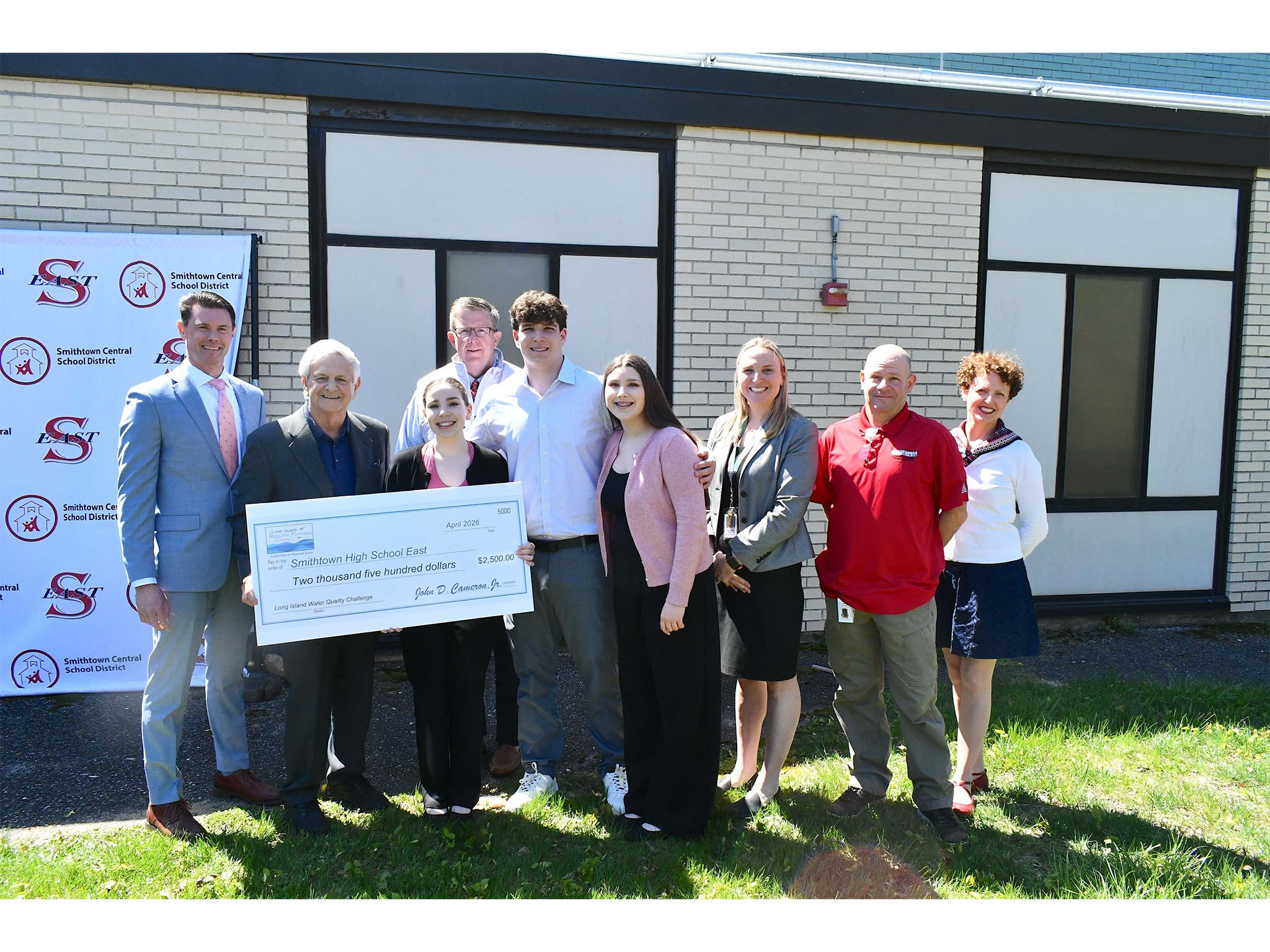
The Sack siblings said their project was shaped by both their upbringing and what they’ve learned in the classroom about environmental responsibility.
Find out what's happening in Smithtownfor free with the latest updates from Patch.
“We were raised in a house where we didn’t throw out plastic water bottles — we had to recycle everything — and that became part of who we are,” Hannah said. “One of the best ways we can make an impact, whether big or small, is by creating something that gives back — like the rain garden.”
Their proposal centers on using native plants and an underground filtration system to naturally absorb and treat stormwater runoff before it can carry nitrogen into local waterways — a major contributor to harmful algal blooms and water quality degradation across Long Island.
“After doing a lot of research, we decided to pick native plants and create a project that would best filter out nitrogen pollution and target one of the big problems we have on Long Island,” Hannah said.
The siblings said the project was led by Hannah, who said the idea began taking shape last year before evolving into a full proposal through extensive research and collaboration.
“After discovering the project and doing the research, I realized it could actually come to fruition — be a real thing,” she said. “After long hours of collaborating, we decided the best way to do this, and I think we worked pretty well.”
Their mother, Joyce Sack, said sibling teamwork at the highest levels is rare, especially across different grade levels, but their shared awareness of environmental issues helped drive the project forward.
“It’s not often you see siblings at these ages who even want to say hi to each other in the hall — much less spend extra time working on something together,” she said.
For Julia, the youngest of the three, the project represents something lasting beyond the classroom.
“It’ll be really nice to walk by and be reminded of my siblings and the positive impact we made,” she said.
Beyond the environmental impact, the siblings said they hope the project strengthens their school community and inspires others to take action.
“Obviously, there will be cleaner water and fewer algal blooms — but also [we're] giving back to the earth and the community,” Hannah said.
Julia added that she hopes their work encourages others to follow suit, saying the goal is “to inspire other schools and towns to take the initiative.”
David also pointed to the role teachers played in bringing the project to life.
“We also want to give back to the teachers who helped us every step of the way,” he said.
School officials said the project reflects a broader shift toward hands-on, solution-based learning across the district.
“We’re hoping to replicate this here — something that’s not only aesthetically pleasing but also functional in managing rainwater runoff,” McNeil said to Patch. “Students are identifying problems in the community and not just writing a paper about it — they’re developing real-world solutions. We have a number of altruistic students doing great work."
Get more local news delivered straight to your inbox. Sign up for free Patch newsletters and alerts.