Politics & Government
More Gas, Less Relief: NH Pays Price For Pipeline Politics
Despite a production binge, the lack of infrastructure — aka "pipelines" — has left customers in the Northeast paying a premium.

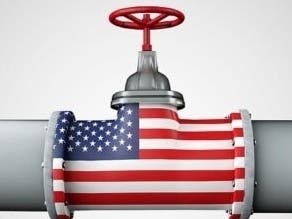
Granite State drivers are paying high prices for gasoline and even higher prices for diesel fuel and home heating oil. But the price of one energy source is falling — natural gas.
That’s the good news.
Find out what's happening in Across New Hampshirefor free with the latest updates from Patch.
The bad news is that New England residents won’t get the same bang for the lower-price buck due to differences in energy policy decisions made by blue-state politicians.
America has been on a natural gas production binge, with The Wall Street Journal reporting that the U.S. Energy Information Administration expects record production in 2026.
Find out what's happening in Across New Hampshirefor free with the latest updates from Patch.
But even with more natural gas being pumped out of Pennsylvania, the lack of infrastructure — aka “pipelines” — has left customers in the Northeast paying a premium.
The difference is substantial: The average price for natural gas paid across the U.S. is projected to be around $16 per 1,000 cubic feet. New England residents will pay close to $24. That’s 50% more for these blue-state consumers.
“This is not something that just happened,” Kenny Stein, vice president for policy at the Institute for Energy Research, told NHJournal. It’s a consequence of anti-natural-gas energy policy.
Progressive Democrats like New York Gov. Kathy Hochul and Massachusetts Gov. Maura Healey, with the help of their Democratic-controlled legislatures, have blocked pipeline projects in the past that could have increased supplies to northern New England. Now, energy prices are soaring, and these same Democrats are asking the Trump administration to rush pipeline projects and increase natural gas supply.
One Democrat who has not reversed course is Cinde Warmington, a candidate for New Hampshire governor.
In 2024, she released a plan calling for New Hampshire’s energy use to be “net zero by 2040,” a pace even faster than Massachusetts’. Warmington still opposes increasing access to natural gas in New Hampshire, and she acknowledged in the WMUR debate Thursday that she wants to eventually eliminate natural gas and other fossil fuels entirely.
Meanwhile, lack of reliable access to natural gas is one reason a disproportionate number of New England residents are stuck using home heating oil, which, unlike natural gas, is getting more expensive.
EIA’s household heating data show 37% of New Hampshire homes relied primarily on heating oil in 2024, 10 times more than the national average (3.5%). Half of Maine households and more than a third of Vermont households rely primarily on heating oil, much higher rates than the rest of the nation.
Democrats blame the Trump administration and its Iran war policy for higher gasoline and home heating oil prices. Energy policy experts say the lack of infrastructure, driven by political decisions, will continue to hurt New England long after the Iran war is over.
“States and local governments have a lot of say on potential pipeline expansions, and it is not always easy or cheap to build new pipelines in expensive areas that don’t already have much natural gas infrastructure,” said Philip Rossetti with the Lighthouse Energy Institute, a market-oriented energy policy research and education nonprofit.
During a stop at an electric co-op in New Hampshire this summer, Energy Secretary Chris Wright shared some pipeline math.
“What’s great about natural gas is it’s cheap. And if it’s in a pipeline, it’s the equivalent of 50-cent-a-gallon diesel. Who wouldn’t buy it? I’d fill up every tank I had if I could buy diesel for 50 cents. That’s what natural gas is if it’s delivered in a pipeline.”
Lack of natural gas access also impacts electricity costs.
ISO New England, the region’s electric grid operator, says pipelines run at or near capacity on cold days as demand for home heating increases, leaving less fuel available for power plants. Natural gas generates about half the electricity produced in the region in a typical year. Lower supply and higher demand mean utility companies pay more for the electricity they deliver to northeastern homes.
“These high prices and limited supply are a deliberate policy choice,” said Stein. “They have sought to restrict supply of natural gas in the name of climate change, and so they reap the cost of high prices.”
This story was originally published by the NH Journal, an online news publication dedicated to providing fair, unbiased reporting on, and analysis of, political news of interest to New Hampshire. For more stories from the NH Journal, visit NHJournal.com.