Business & Tech
Speaking Of Words: Hap, Luck, And Fortune
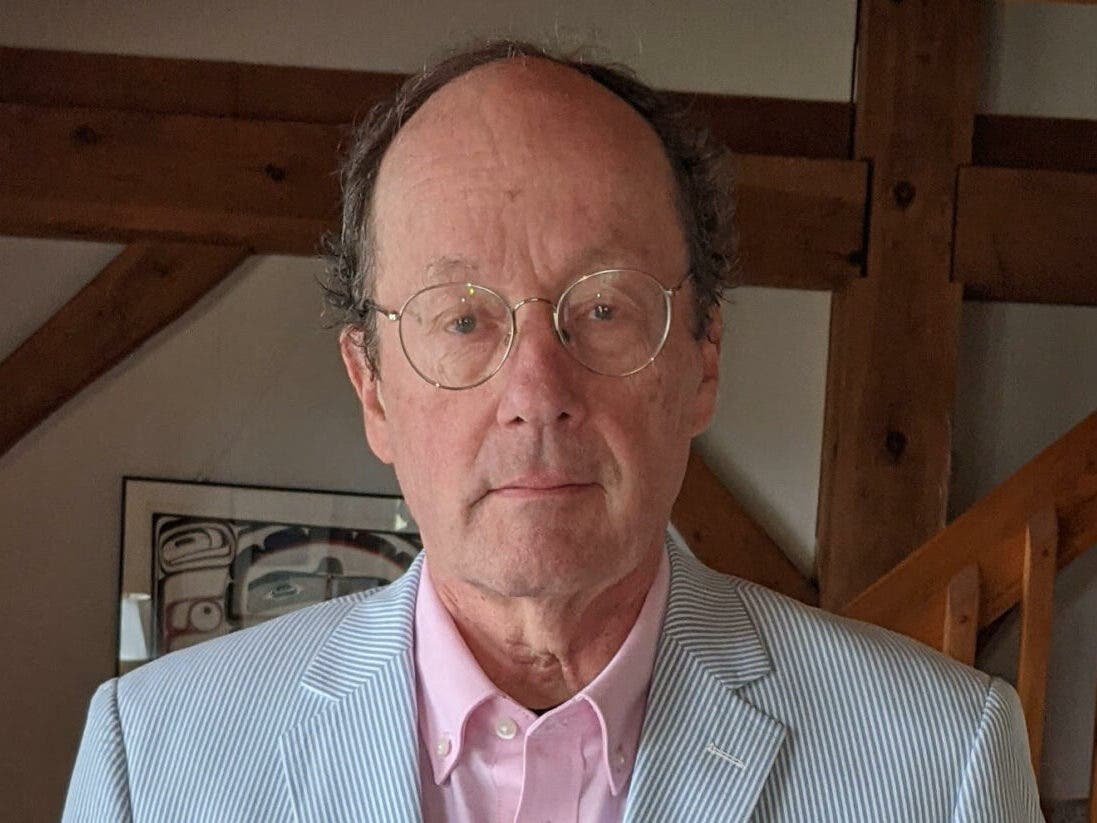
Ferber: I resist venting peeves in this column. But it is a loss to the language when important distinctions like this one are blurred.

You have probably noticed that in recent years the words fortunate and fortuitous have converged in meaning. “The timing of the new mortgage rate could not have been more fortuitous.” “How fortuitous that we should meet today!” The Longman Dictionary on line defines fortuitous as “happening by chance, especially in a way that has a good result.”
I try to resist venting my peeves in these columns, but I have to say it is a loss to the language when important distinctions like this one are blurred. Such losses are surely unfortunate, but I wonder if they are fortuitous, which means, or should mean, “random” or “happening by chance” without regard to good (or bad) results. Its earliest use in English, in the seventeenth century, was in the phrase “fortuitous concourse of atoms,” an idea of materialists or scientists drawing from the ancient atomists. It comes directly from Latin fortuitus, from forte “by chance,” from fors “chance.” In Italian forse means “perhaps.” Is it just random semantic drift that is bringing fortuitous into the domain of fortunate, or something like a failure to understand that something could actually be fortuitous?
Find out what's happening in Across New Hampshirefor free with the latest updates from Patch.
English fortunate always meant “with good fortune” or “favored by fortune,” but the noun fortune by itselfwas not always favorable or good, and it still isn’t. If you go to a fortune teller you may get bad news. The main sense of fortune for centuries was “chance” or “accident,” an accident being something that happens or befalls you by chance (not necessarily bad). “Good or ill fortune is very little at our disposal,” wrote David Hume in 1752.
But by the fifteenth century fortune could also sometimes mean “good fortune.” And soon it specialized to “prosperity” or “wealth,” as in “He made his fortune” or “He spent a small fortune on his vacation.” The very fact that we have misfortune and unfortunate testifies to the growing sense that the default sense of fortune is good. It has the same root, of course, as fortuitous, but comes from Latin fortuna, which meant “chance, luck, fate, lot.” A slight shift toward “good fortune” is detectable in Latin as it is in English, for fortuna could also mean “property.”
Find out what's happening in Across New Hampshirefor free with the latest updates from Patch.
But Fortuna was a goddess, with statues and shrines all over the Roman world, and she was not always benevolent. Ovid wrote about the “wheel of Fortuna,” which raised some people and sank others as it rolled relentlessly through society, and that image became a favorite of writers and painters well into the Renaissance. “Dame fortune turns then her wheel,” a medieval text tells us. Another of her insignia is a ship’s tiller, to suggest that we are subject to winds and currents beyond our control. And yet the very fact that people prayed to Fortuna and left gifts for her suggests that she was placable and might turn kind.
The noun luck, like fortune, has been mainly neutral, meaning “chance,” good or bad; we say “good luck” and “hard luck” and “the luck of the draw.” Our Lady Luck is Dame Fortune. (It is surely a male prejudice, by the way, that has made her female, on the assumption that women are notoriously fickle and there’s nothing you can do about it.) Of course we can carry a rabbit’s foot or blow on our dice and say “Luck be a Lady tonight,” but these little superstitions are no help. The old blues line, “If it weren’t for bad luck, I’d have no luck at all,” captures the neutral sense of the word with wonderfully sad irony.
And yet lucky, like fortunate, means “having good luck.” And the noun too has in some uses acquired a “lucky” patina. “I wish you all the luck in the world” would be a strange wish if “luck” was neutral, both good and bad. “Lotsa luck” may be sarcastic but it still implies luck is a good thing. Luck comes from Dutch or maybe Low German, where the form lücke sometimes takes a prefix (gelücke); closely akin to this word is High German Glück, which means “happiness”!
And that brings us to a third family of words, based on hap, which I find the most interesting. The noun hap is fairly rare now, but it has been in English since about 1200, when it was borrowed from Old Norse happ, usually with a favorable sense, “good fortune”; a text of c.1450 reads “He had hap in all thing that he bought,” and Walter Scott repeats the alliterative phrase “Be it hap, or be it harm” (1813). Like fortune and luck, however, it could also be neutral. When Milton’s Satan undertakes his seduction of Adam and Eve, “He sought them both, but wish'd his hap might find Eve separate” (Paradise Lost book 9). Good hap and bad hap were both common phrases, though today the main related noun is mishap, like misfortune.
The adjective happy, like fortunate and lucky, is always favorable, of course. There are two negative adjectives, unhappy and hapless, the latter implying that having some hap is a good thing. Only very rarely was happy neutral, as hap often was; an author even used the phrase “Any happy concourse of Atoms” instead of fortuitous (1676). Happy used to mean “lucky”: Defoe’s Robinson Crusoe says, “I was so happy as not to be thereabouts at that Time” (1719); and we still sometimes speak of a “happy accident.” The German word for “happy” is glücklich, from the same root as luck.
Two adverbs preserve the neutral sense of hap: perhaps and haply (not to be confused with happily), with pretty much the same sense. Shakespeare has the clause, “If haply you my father do suspect” (Othello). Haply, like mayhap, is now felt to be archaic, but I would be unhappy to lose haply.
Then there is the verb happen, which means “take place” or “occur,” but when it is its subject the sense of chance or accident emerges: “It so happens that …,” or “as it happened ….” We also say, “As it chanced ….” or “As luck would have it ….” We happen upon something and something may happen to us, both with the sense of unplanned or accidental occurrence. A recent coinage (since about 1850) is happenstance, which is “something that happens by chance, or a coincidence.”
Finally there is the noun happening, which since 1430 or so has meant “occurrence” or “event,” but since 1959, thanks to the artist Allan Kaprow, it has come to mean “an impromptu or spontaneous performance.” Andy Warhol would host happenings in his loft. In those days, if you asked someone “What’s happening?” you might be told that it just so happens that a happening is happening tonight, perhaps.
What’s the lesson in all this? I think many people are still trying to bribe Dame Fortune. They have turned her into a kindly grandmother from the cold-hearted goddess who once rolled her mighty wheel wherever she chose. Fortune is good fortune and luck is good luck. And even the random paths of atoms have swerved a little to brighten our day. It all seems too wishful, too sentimental, too soft-minded. We need words to remind us that the world was not designed for us and that much that happens is truly fortuitous.
I am happy to hear from readers with questions or comments: mferber@unh.edu.
Michael Ferber moved to New Hampshire in 1987 to join the English Department at UNH, from which he is now retired. Before that he earned his BA in Ancient Greek at Swarthmore College and his doctorate in English at Harvard, taught at Yale, and served on the staff of the Coalition for a New Foreign Policy in Washington, DC. In 1968 he stood trial in Federal Court in Boston for conspiracy to violate the draft law, with the pediatrician Benjamin Spock and three other men. He has published many books and articles on literature, and has a deep interest in linguistics. He is married to Susan Arnold; they have a daughter in San Francisco.
This article first appeared on InDepthNH.org and is republished here under a Creative Commons license.