Politics & Government
Agreement Reached On New Hampshire Local School Budget Tax Cap Vote
HB 1300 would impose a tax cap on school district taxes and another tax cap limiting administrative costs to 6%.

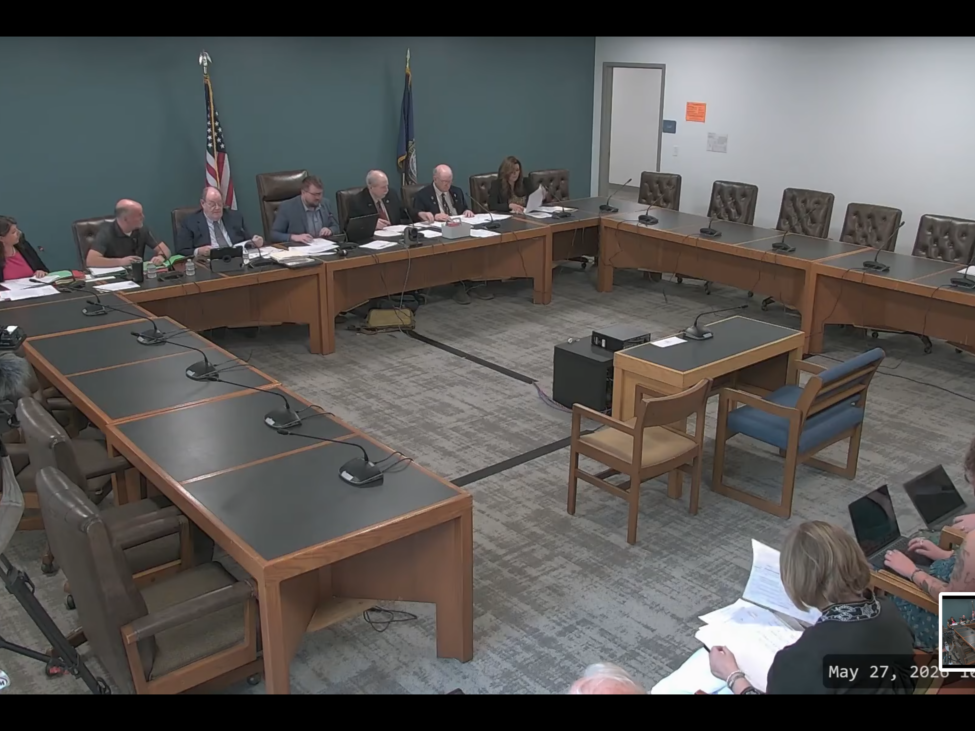
CONCORD, NH — The state wants to impose a tax cap on school district budgets that would limit annual growth to the rate of inflation offset by additional taxable property.
House and Senate negotiators reached agreement on House Bill 1300 which would impose the tax cap and another tax cap on administrative costs at 6 percent.
Find out what's happening in Concordfor free with the latest updates from Patch.
Although Rep. Ross Berry, R-Weare, said at the conference committee the cap only affects administrative cost, the bill’s text clearly states there are two tax caps, the general tax cap tied to inflation and the set tax cap on administrative costs.
“During the November 2026 state general election, every town and ward in a city shall conduct a vote on a local tax cap question for their school district and fixed cap on the school administrative unit central office administrative budget.”
Find out what's happening in Concordfor free with the latest updates from Patch.
The tax cap provision would require a three-fifth majority for passage and a two-thirds majority would be needed to override a tax cap once in place.
The House had proposed the tax cap be on general election ballot every two years, but the Senate version included only one vote on the issue during the 2026 general election.
The two sides agreed to a provision for votes in the general elections in both 2026 and 2028.
Sen. Rebecca Perkins Kwoka, D-Portsmouth, did not support the compromise or the bill and will be replaced on the conference committee.
She called the bill “an ideological solution not a real solution” and said it was an end run around the state’s constitution which does not include statewide referendums but would require a statewide question to receive a two-thirds majority for a constitutional amendment.
Perkins Kwoka also said logistical problems with implementing a tax cap for the 2027-2028 school year will also serve as another cap as school boards try to prepare budgets that will be voted on in March to reflect any cap that is approved.
But Republicans on the committee said putting the issue on the general election ballot will allow a greater number of school district voters to have a say on school budgets that along with municipal budgets are driving up property taxes which is voters' biggest concern.
“We are here because the abuse must end. This will allow the most local voters possible to vote,” Berry said. “Ten percent at (an annual) meeting is not representative of the local community. If you want a sense of people, give them a choice.”
He said they have seen people at the local level be abusive of the process at both deliberative sessions and annual meetings with some district meetings going on for two days and a superintendent standing up and reading from a spreadsheet until enough voters leave the room and then call for a vote.
“This is the taxpayer protection act,” he said.
Sen. Timothy Lang, R-Sanbornton, said voters on a November ballot present “a much more widespread data collection.
“This puts voters in control,” he said, “not selectmen, not school boards.”
Perkins Kwoka said the bill is another way for lawmakers not to respond to local control, you have to listen to your municipality and work with them to lower costs.
She noted a number of unclear statements in the bill and issues raised by the Department of Revenue Administration.
The bill excludes market appreciation, revaluation or reassessment; or changes in assessment methodology from contributing to the provision for “new taxable property growth” that is considered in setting tax rates, she noted, saying those are fundamental to setting tax rates.
“To say this is not ready for primetime is an understatement,” Perkins Kwoka said.
Lang said Perkins Kwoka listens to her city and town representatives while he listens to voters and their concern is high property taxes which are a total local control issue.
The state does not tell cities and towns and school districts what to spend, he said. The bill will give a larger sample of a school district’s voters a say on how spending is managed in their local community, Lang said.
To continue down the same road without a tax cap will be more of the status quo, Berry said, or the Democrats' solution of raising taxes. “The solution to lowering taxes is not to raise other taxes,” he said.
Perkins Kwoka noted property taxes have gone up while the State House has been under Republican control, adding they have passed new mandate, after new mandate down to school districts, cities and towns with no new funding and have not fully funded the state’s constitutional obligation to pay for education and all that drives up property taxes.
“We need to do more problem solving to come up with better solutions in Concord,” she said.
Berry also proposed amendments that changed the language to appear on the ballot in November for the tax cap, and a requirement that the question be on the state ballot for the general election, on the front or the back if there is room before a separate ballot for the tax cap question vote would be needed.
Another change would have the effective date of the act be 60 days after passage to allow time for absentee ballots to be sent out before the November election.
The effective date on the bill is Nov. 1.
The compromise will be voted on by lawmakers June 4. The Senate will act on the bill first, and if it is approved, it will then go to the House for a vote.
Garry Rayno may be reached at garry.rayno@yahoo.com.
This article first appeared on InDepthNH.org and is republished here under a Creative Commons license.