Politics & Government
Appeals Court Sides With Bow Parents In 'XX' Free Speech Fight
The Appeals Court ruled Wednesday Bow school officials likely violated the First Amendment by punishing parents for wearing "XX" wristbands

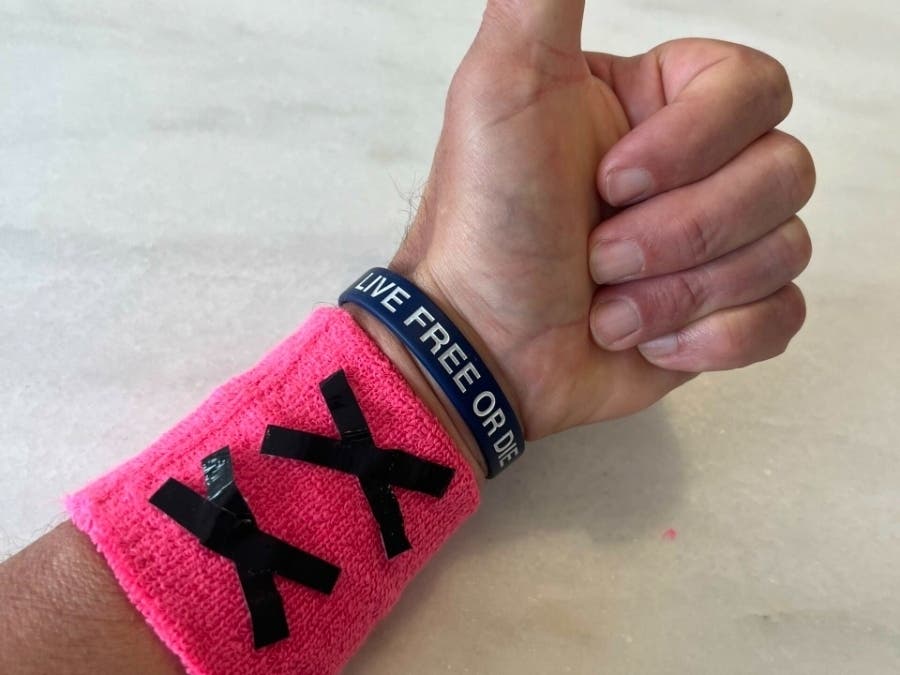
U.S. District Judge Steven McAuliffe and the Bow School District got more than a slap on the wrist Wednesday when an appeals court unanimously reversed a ruling allowing school administrators to discriminate against parents protesting against boys in girls sports.
The First Circuit Court of Appeals ruled Wednesday that Bow school officials likely violated the First Amendment when they punished parents for silently wearing pink “XX” wristbands at a high school soccer game.
Find out what's happening in Concordfor free with the latest updates from Patch.
The decision is an embarrassing reversal of McAuliffe’s ruling, one that declared the silent wristband protest could reasonably be viewed as “directly assaulting” people who identify as transgender and potentially “poison the educational atmosphere.”
Anthony Foote, Kyle Fellers, Nicole Foote, and Eldon Rash, all family members of players on the Bow High School girls soccer team, were banned from SAU 67 property after they wore pink wristbands emblazoned with the “XX” symbol.
Find out what's happening in Concordfor free with the latest updates from Patch.
“All we wanted was to cheer on our daughters and stand up for what we believe. Instead, officials threatened us and banned us from school grounds for wearing a wristband. No parent should have to go through that,” Kyle Fellers said. “Today’s decision is a victory not just for our family, but for every parent who believes they have the right to peacefully express their views at a public event.”
SAU 67 Superintendent Marcy Kelley had previously testified that the “XX” wristbands would not be permitted because she considered their message exclusionary. But she said pro-LGBTQ messages, including rainbow symbols, would be allowed because she considered them inclusionary.
The First Circuit said government officials cannot favor one side of a political debate, particularly when parents are expressing concerns about an issue of public interest involving their children.
The appeals court’s conclusions echoed the skepticism judges expressed during oral arguments in Boston.
Jonathan Shirley, the attorney representing SAU 67, compared speech to poison while arguing the district needed broad authority to prevent protests before they became disruptive.
“You know, poison is often determined by the dose,” Shirley said. “We’re talking about future events where we don’t have an understanding of how many people are going to be showing up with these wristbands.”
Del Kolde of the Institute for Free Speech, who represents the parents, responded, “Your Honors, free speech is not poison.”
The appeals court gave McAuliffe a legal smackdown.
First Circuit Justice Sandra Lynch wrote in Wednesday’s opinion there was never any evidence to support SAU 67’s dire prediction. Instead, school officials testified they shut down the protest and banned the soccer dads because they did not like the message.
“The school’s legitimate interest in regulating certain kinds of speech on the playing field sidelines, however, is not demonstrated by the evidence in this record. There is no evidence that appellants’ protest caused a material disruption,” Lynch wrote. “There is also no evidence of harassment, given there is no evidence in the record that any player actually saw the wristbands.”
The evidence instead reveals school officials were restricting speech based on their own viewpoints, and not concern about harassment. Superintendent Marcy Kelley testified she believed the XX wristbands represented an “exclusionary” message about gender, but the school approved pro-LGBTQ images were “inclusionary.” Further, Principal Matt Fisk described the symbol both as “hateful” and “anti-trans.”
“[T]he record evidence demonstrates the likelihood that the school district imposed sanctions on the appellants’ wearing of the wristbands because it disagreed with the protest message conveyed. This went beyond mere content neutrality,” Lynch wrote.
Kolde said the ruling supports the rights of parents to exercise their First Amendment rights, even when school administrators might disagree.
“This ruling reaffirms parents have a right to silently express their views on controversial issues, including on girls’ sex-based rights, even if school administrators strongly disagree with them,” Kolde said.“If school officials allow expression supporting one side of a political debate, they cannot ban silent, peaceful expression on the other side. Our clients simply stood up for their First Amendment rights.”
With this ruling, the case now heads back to the United States District Court in Concord for Judge Stephen McAuliffe to take it up again.
This story was originally published by the NH Journal, an online news publication dedicated to providing fair, unbiased reporting on, and analysis of, political news of interest to New Hampshire. For more stories from the NH Journal, visit NHJournal.com.