Politics & Government
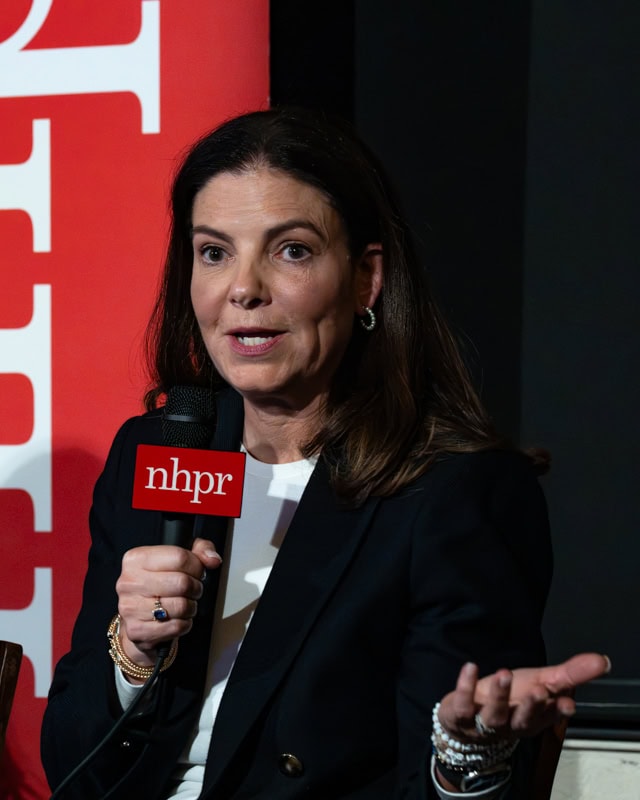
Ayotte, Warmington Tussle Over Ed Funding, Legal Weed In NHPR Debate
The divide over school funding, for example, reflects the broader divide between Democrat Cinde Warmington and Republican Gov. Kelly Ayotte.

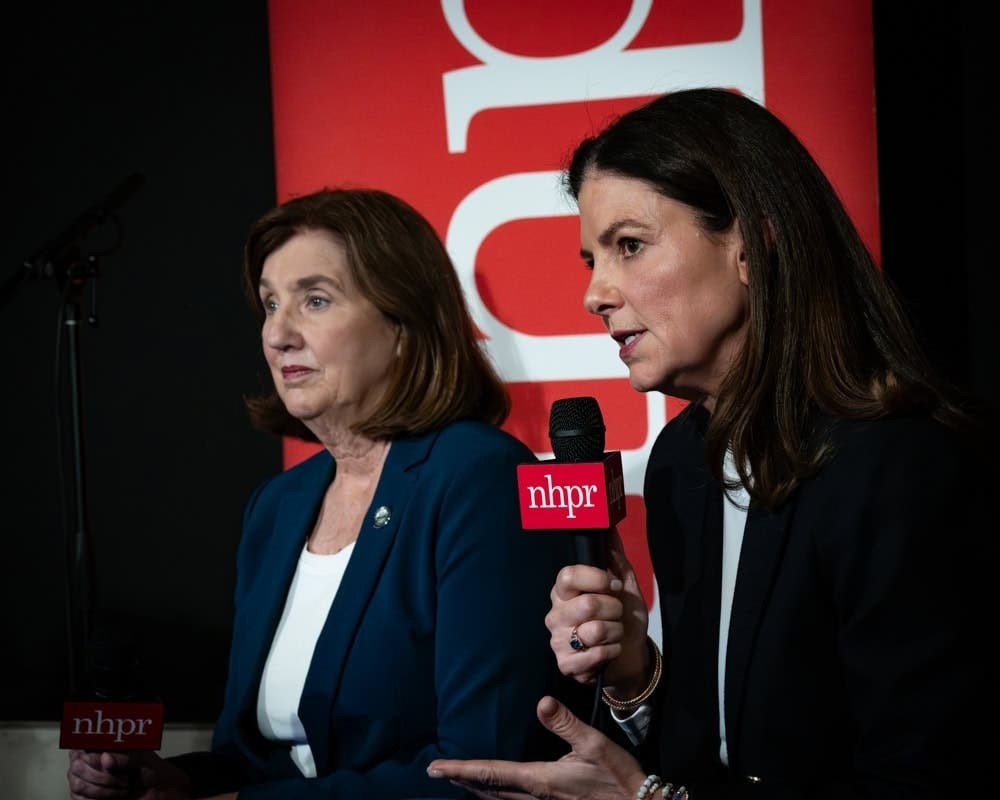
During Thursday night’s NHPR gubernatorial debate, Democrat Cinde Warmington said it was time for the state to increase its spending on local schools to comply with a judge’s order in the ConVal school funding case, which builds on the earlier Claremont decisions.
“The state is simply failing in its obligations,” Warmington said.
Find out what's happening in Concordfor free with the latest updates from Patch.
What she didn’t say, despite being asked twice by the debate moderator, is where she would get approximately $500 million in new state tax dollars every year to send to schools.
The divide on that specific issue reflects the broader divide between Warmington and Gov. Kelly Ayotte. The incumbent Republican touts what the state has done—sending record amounts of money to local communities and supporting a property tax cap—while the Democratic challenger amplifies the pain voters are feeling over high prices while generally avoiding details of solutions.
Find out what's happening in Concordfor free with the latest updates from Patch.
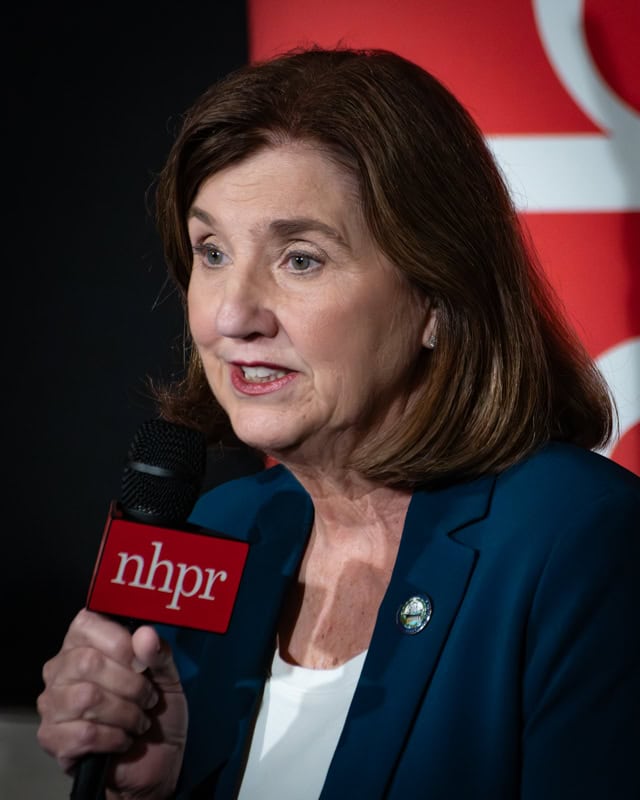
On increasing state funding for local schools, Warmington noted that New Hampshire is “one of the lowest [states] in the nation in state support for our public schools.”
But asked where the tax dollars would come from for this massive increase in state spending, she declined to answer.
“How we’re going to solve school funding is going to be on a bipartisan basis. We are never going to solve this until we get both parties together working together to solve this problem,” Warmington said.
The price tag is substantial. In ConVal, Superior Court Judge David Ruoff found in 2023 that base adequacy aid needed to be at least $7,356.01 per pupil. The state Supreme Court upheld the finding of unconstitutional underfunding in July 2025 but reversed the order requiring immediate payments at that level, leaving the legislative and executive branches to remedy the constitutional deficiency.
 (Jeffrey Hastings/Frame of Mind)
Raising base education aid to the minimum identified in the ConVal school funding litigation has been estimated to require roughly $500 million more in state funding annually — about $1 billion over a two-year budget.
Ayotte, meanwhile, defended the state’s commitment to public schools while supporting a legal challenge to the Claremont decisions underpinning its funding obligations.
“Our commitment will remain on public schools, regardless of what the courts do. And in our last budget, we’ve sent down the most money per pupil as we look at the funding for the public schools, as well as a record amount of money for special education, which is very important as well,” Ayotte said.
Many Republicans believe that Democrats want to use the Claremont rulings to put the state in a fiscal corner, one where there simply isn’t enough state revenue to cover costs and the only solution is an income or sales tax.
Warmington said again, as she did in the last debate, that she does not support a sales or income tax.
“I have taken the exact same pledge that the governor took, and that many governors for many years have taken before me. I will veto a sales or income tax if it should come to my desk,” Warmington said.
Ayotte responded by noting Warmington’s opposition to legislation that would have banned an income tax in New Hampshire. “That tells you everything you need to know,” Ayotte said.
The NHPR debate in Manchester came hours after a new Saint Anselm College Survey Center poll showed Ayotte leading Warmington 50% to 42%. The Republican incumbent’s eight-point advantage comes despite a broader environment favoring Democrats: The same survey found a 52% to 43% Democratic lead on the generic congressional ballot.
At the forum, hosted by NHPR, Manchester Ink Link and the Granite State News Collaborative, the candidates also debated another long-contested issue: legalizing recreational marijuana.
New Hampshire remains the only New England state that has not legalized recreational marijuana for adults.
Warmington supported legalization and regulated sales, arguing New Hampshire residents are traveling across state lines and generating tax revenue for neighboring states that could instead remain here.
Although Warmington identified cannabis sales as an additional state revenue source, she did not explain during the school funding exchange how she would cover the additional education costs or quantify how much marijuana revenue could contribute.
Ayotte said the potential revenue did not outweigh her concerns about young people,
 (Jeffrey Hastings/Frame of Mind)
mental health, and public safety.
“I oppose the legalization of cannabis in the state, and when I think about children, they’re at the top of my mind,” she said.
“And when you legalize something, you send a very different message to young people about the use of it.”
Ayotte argued legalization would worsen mental health problems and said states with legal marijuana have experienced more traffic deaths. She also disputed the suggestion that a regulated market would eliminate illegal sales.
Asked whether New Hampshire was missing a revenue opportunity by maintaining its position while surrounding states permit recreational marijuana, Ayotte stood firm.
“Well, I have to tell you that this revenue comes at a huge cost,” she said. “It comes at the cost of the mental health of our young people. It comes at the cost of our quality of life.”
After the debate, Christine Fajardo, a Democrat and Manchester alderman, told NHJournal she was “drawn more to what Cinde Warmington was talking about regarding energy, regarding [taxing and] legalizing cannabis.”
“I feel like our state has a revenue problem. Let’s just say it. And we have a lot of things that we need to get done,” Fajardo said.
Tyler Valila, also of Manchester, keyed in on the conversation about revenues, spending, and what that might mean for taxpayers.
“I agree in principle that raising property taxes or adding an income tax or sales tax — that’s not going to help the everyday person. We have to find those other ways to get revenue in the state, and I don’t want to see property taxes going too dramatically.”
This story was originally published by the NH Journal, an online news publication dedicated to providing fair, unbiased reporting on, and analysis of, political news of interest to New Hampshire. For more stories from the NH Journal, visit NHJournal.com.