Concord, NH|Local Classified|Other|

When a White Pine Loses Its Top, Here Is What Actually Happens Next?
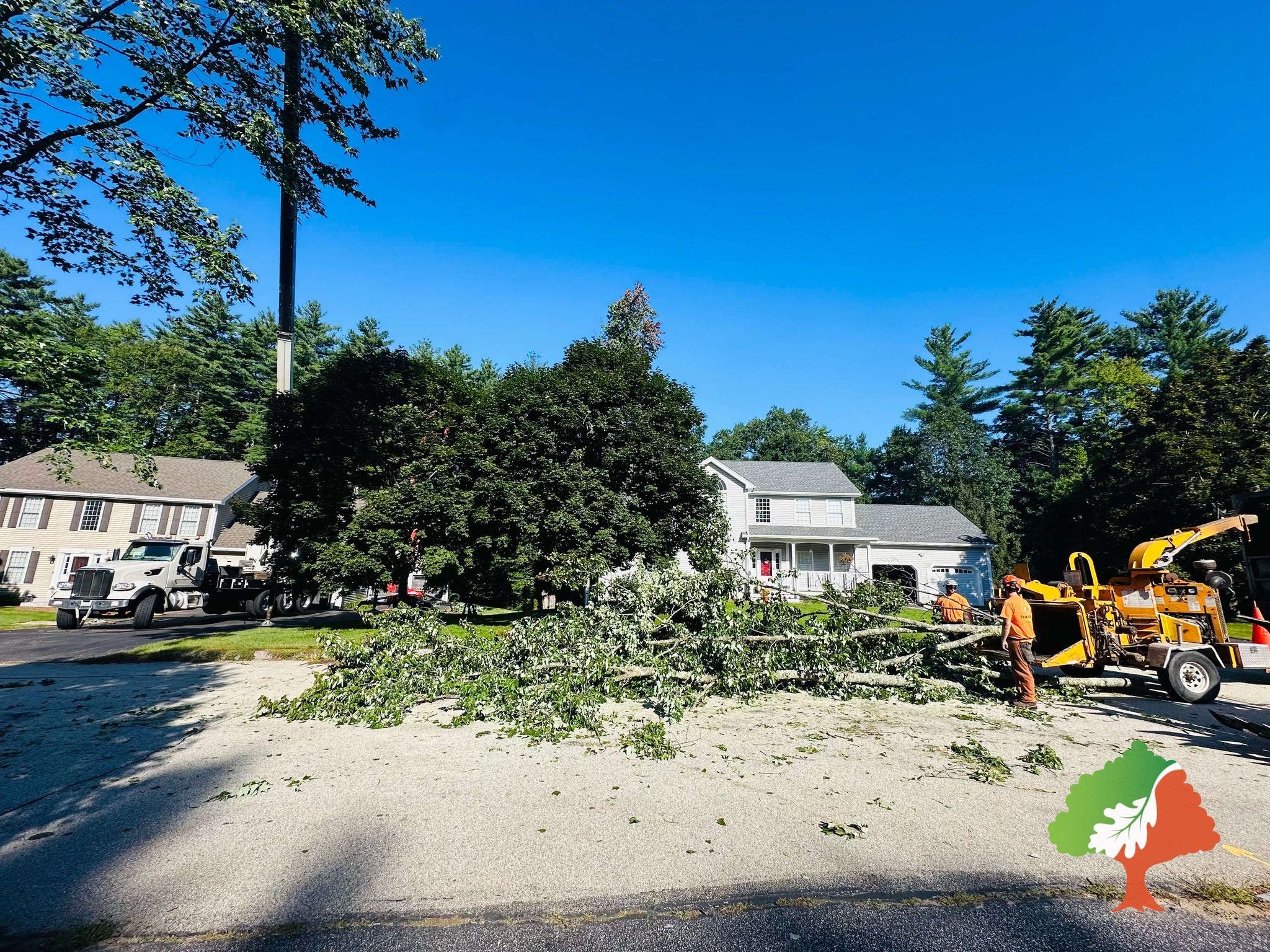
Last April, after that heavy wet snow came through and knocked out power for tens of thousands of people across the state, my phone didn't stop ringing. Most of the calls were about white pines. Tops snapped off. Large limbs split from the trunk. One homeowner near Penacook called and asked me something I get every year: "Is it done? Or can it come back?"
That question has a real answer, and it depends on a few things worth knowing.
White Pines Are Both Strong and Brittle?
White pine is the most common large tree you'll find on residential properties throughout Merrimack County. It grows fast, gets tall, and looks beautiful. It's also one of the most vulnerable trees to heavy, wet snow because of how it holds its branches. A quarter inch of ice can add 250 pounds of weight to a single limb. When a spring storm hits while the tree is still dormant and hasn't shed any foliage, that weight has nowhere to go.
The top, called the "leader," is the most exposed part of the tree. Lose that, and the tree faces a real decision about what to do next.
Can a White Pine Survive a Lost Leader?
Yes, often it can, but the outcome depends on how much of the crown remains. A tree that lost its top but still has two-thirds or more of its live branches standing has a reasonable path forward. One of the side branches near the break will often begin to grow upward over the next season or two, eventually taking over as the new leader.
A tree that lost more than half its crown is a harder case. It may survive for years, but the shape will change permanently and the tree will be more open to decay through the wound. Homeowners in Concord who want to understand what recovery or removal involves can find out more before making a decision.
What the Break Looks Like Matters?
A clean break is better than a split
A clean snap, where the top broke off at a single point, leaves a smaller wound and heals more predictably. A split, where the trunk or main branch tore downward, creates a larger opening and a rougher wound edge. Torn wood invites decay more quickly than a clean cut.
If the break left a jagged stub sticking up from the tree, that stub will not heal over. It will decay inward toward the trunk over time. Getting that stub removed with a proper cut at the right angle gives the tree its best path to closing the wound.
Signs the Tree Is Better Taken Down
- The break occurred at or very near the main trunk
- More than half the crown is gone
- The remaining branches are mostly on one side, making the tree lean noticeably
- There is soft or punky wood visible at the break point
- The tree is within reach of your house, driveway, or a utility line
That last point carries real weight around neighborhoods near areas like the I-93 corridor. A weakened white pine that is already leaning toward a structure does not get more stable over time. Property owners throughout the Concord area can learn about us and see what neighbors have said about getting these kinds of calls handled.
One Thing Worth Doing Right Now
Walk your white pines after any significant storm. Look up at the crown. If you see a raw, exposed wound at the top or a large branch torn away from the trunk, note where it is and what is within falling distance. You do not need to panic. You just need a clear picture of what you're dealing with before the next storm season arrives.
Ryan LaRoche
Owner, Tree Fellas
34 Staniels Rd Unit 2, Loudon, NH 03307
603-783-0403
https://calltreefellas.com/