Politics & Government
Nashua's Flag Censorship Leaves Taxpayers Stuck With $136K Tab
Bethany and Stephen Scaer successfully sued the city over viewpoint discrimination and were awarded $136,071.35 on Tuesday.

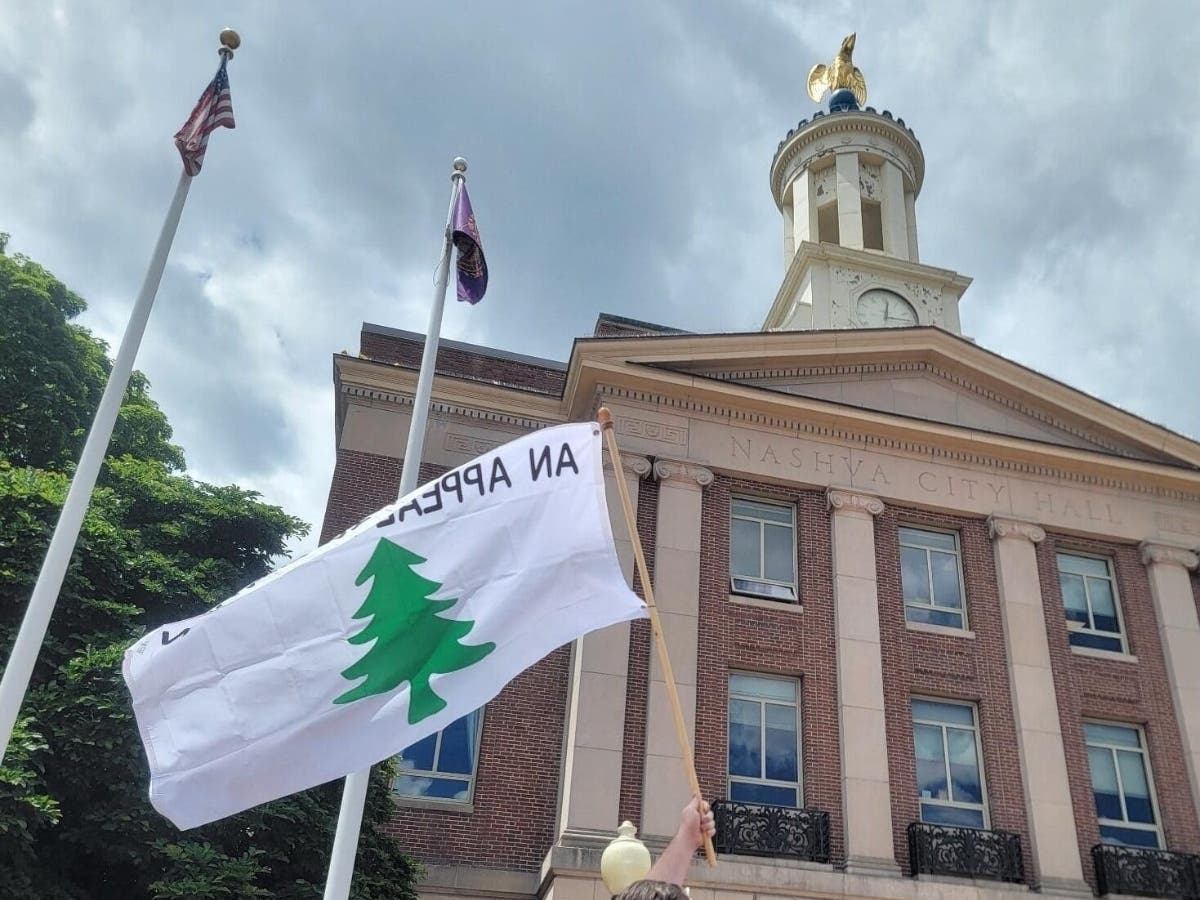
The City of Nashua’s high-flying fight against free expression came with a hefty six-figure price tag for taxpayers when a federal judge ordered the Gate City to pay up to the couple it barred from using its “Citizen Flag Pole.”
Mayor Jim Donchess and Nashua officials told Bethany and Stephen Scaer that the flags they wanted to fly sent messages that weren’t “in harmony” with the city government’s progressive culture. The couple successfully sued the city over viewpoint discrimination, and on Tuesday, U.S. District Judge Landya McCafferty issued an order requiring Nashua to pay their attorneys’ fees and other costs.
Find out what's happening in Nashuafor free with the latest updates from Patch.
Now the city must pay $136,071.35 for violating their First Amendment rights.
The dispute grew out of Nashua’s repeated rejection of the Scaers’ requests to fly flags, including a historic Pine Tree Flag commemorating the Battle of Bunker Hill.
Find out what's happening in Nashuafor free with the latest updates from Patch.
Nashua opened its Citizen Flag Pole program in 2017. Residents and organizations used it to recognize cultural events, causes, and anniversaries.
In October 2020, the city initially allowed Bethany Scaer to fly a “Save Women’s Sports” flag, then reversed its approval and removed the flag one day later after receiving complaints. Donchess upheld that decision.
The city later adopted a written policy allowing officials to reject messages they considered out of harmony with the policies and messages Nashua wished to endorse.
After the Scaers sued in 2024, the city ended the application program. The judgment entered in May requires Nashua to maintain a policy closing the City Hall flagpoles to private expression and prohibits a return to the discriminatory practices challenged in the lawsuit.
The ruling rejects Nashua’s argument that the couple’s victory didn’t count because they never achieved their original goal of flying their chosen flags outside City Hall.
Instead, McCafferty pointed to the finding that Nashua’s policy was unconstitutional, the award of nominal damages, and a permanent injunction preventing the city from reinstating the policy.
“That is sufficient,” she wrote.
The award follows a unanimous December 2025 ruling by the 1st U.S. Circuit Court of Appeals rejecting Nashua’s claim that the flagpole program constituted “government speech,” which would have allowed officials to select the messages displayed.
The appeals court concluded that the program operated as a forum for private expression. Nashua had conceded that, without its government-speech defense, its actions amounted to unconstitutional viewpoint discrimination.
But even after that ruling and a subsequent judgment permanently barring a return to the challenged practices, Nashua argued it shouldn’t have to pay the Scaers’ legal fees.
In its court filing, the city characterized the outcome as a “partial, pyrrhic victory,” arguing that closing the flagpoles to private expression fell far short of allowing the couple to raise their flags.
Nashua also challenged the attorneys’ billing rates, hours and expenses, asking the court to substantially reduce any award if it rejected the city’s request to deny fees altogether.
McCafferty rejected the argument that the Scaers hadn’t prevailed.
“These arguments are unpersuasive,” she wrote, explaining that the court’s actions had changed the legal relationship between the residents and their city and imposed enforceable restrictions on Nashua’s conduct.
Her order noted that, under federal civil rights law, fee awards for prevailing plaintiffs are “virtually obligatory.”
The final award includes $119,970.75 for Institute attorneys Nathan Ristuccia and Endel “Del” Kolde, $11,400 for local counsel Roy S. McCandless, and $4,700.60 in costs.
“Nashua could have treated all of its citizens’ flags equally,” Ristuccia said in a statement Wednesday. “Instead, it censored the messages it disliked, then defended that censorship in court. This award should remind officials everywhere that, when they trample First Amendment rights, the bill will come due.”
This story was originally published by the NH Journal, an online news publication dedicated to providing fair, unbiased reporting on, and analysis of, political news of interest to New Hampshire. For more stories from the NH Journal, visit NHJournal.com.