Community Corner
At 7 Hours Old, Howell Infant Underwent Critical Surgery; Now He's Thriving
Ryan Moser had a third of his small intestine removed because it was dying. His survival is a testament to his resilience, a doctor said.


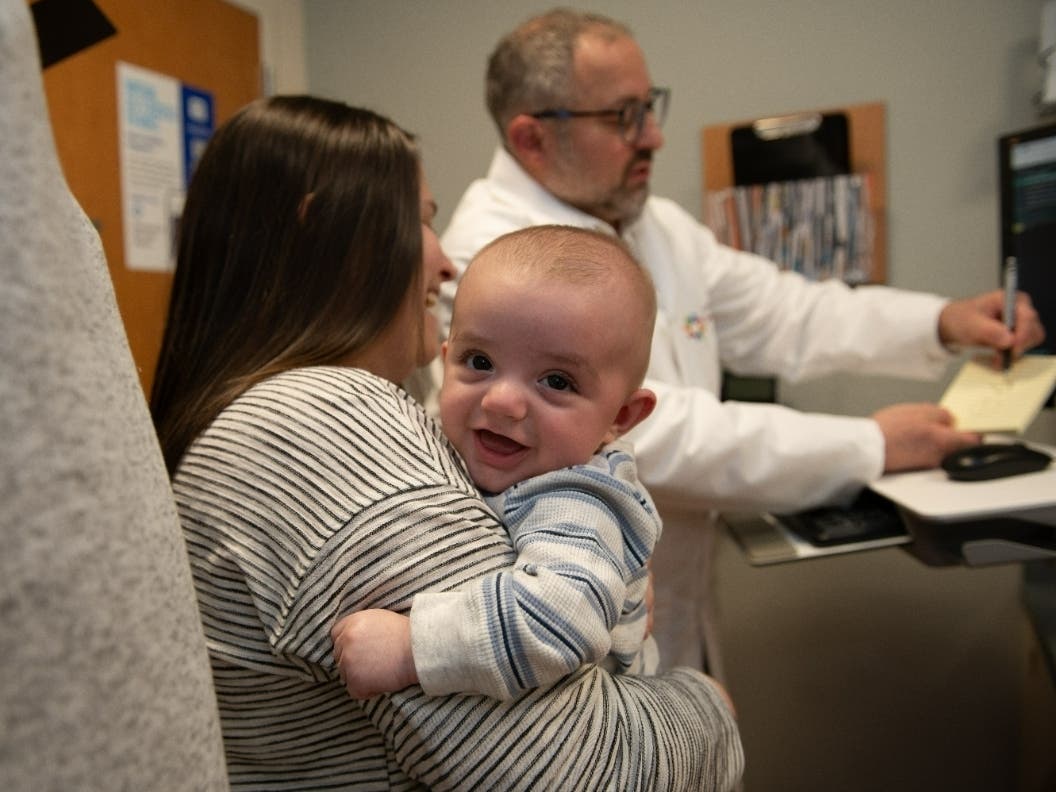
HOWELL, NJ — When Katie and Matt Moser arrived at Jersey Shore University Medical Center in early November for the birth of their second child, they knew their baby faced some challenges.
What they didn’t expect was how urgent the situation would become.
Ryan Moser was just 7½ hours old when doctors in Neptune whisked him away to perform surgery to address a problem with his intestine.
Find out what's happening in Howellfor free with the latest updates from Patch.
“It was pretty terrifying,” Katie said. “They let me give him a quick kiss before they took him away.”
Now, six months after he was born, the family is celebrating happy days as Ryan continues to hit the milestones expected of a growing baby.
Find out what's happening in Howellfor free with the latest updates from Patch.
“You never would really know everything he went through by just looking at him,” Katie said in an interview with Patch.
Ryan was born with a congenital defect of his intestine called Meckel’s diverticulum, where a little pouch grows on the wall of the small intestine. It happens in 2 to 3 percent of all babies, according to the Cleveland Clinic.
The condition is often harmless, according to the Cleveland Clinic, but in Ryan’s case, it was serious, causing a twist that cut off blood flow and caused a portion of the intestine to become gangrenous.
The Mosers were aware of a potential problem for several weeks before Ryan’s arrival.
“I had a normal anatomy scan at 20 weeks but his heart was beating an extra beat,” Katie said. It’s something that happens from time to time and they told her to come back for a follow-up two weeks later.
It was at the 22-week scan that doctors picked up on the anomaly with Ryan’s intestine, she said. Because they were only seeing it through the ultrasound, they could not tell how serious the issue was, she said.
“It could end up being nothing, it could be a blockage, it could be some kind of break in the intestine,” Katie said they told her. “They didn’t really know and weren’t going to know until he was born.”
At that point, a group of maternal-fetal specialists at Jersey Shore University Medical Center began caring for Katie through what the hospital calls its Healthy Beginnings program, monitoring her now high-risk pregnancy and making plans for their response when her baby was born.
Ryan arrived on Nov. 4, born 24 days early, by Cesarean section because Katie’s labor stalled. He wasn't breathing and needed immediate resuscitation, then was taken to the neonatal intensive care unit right away for tests to determine the severity of the issues with his intestine.
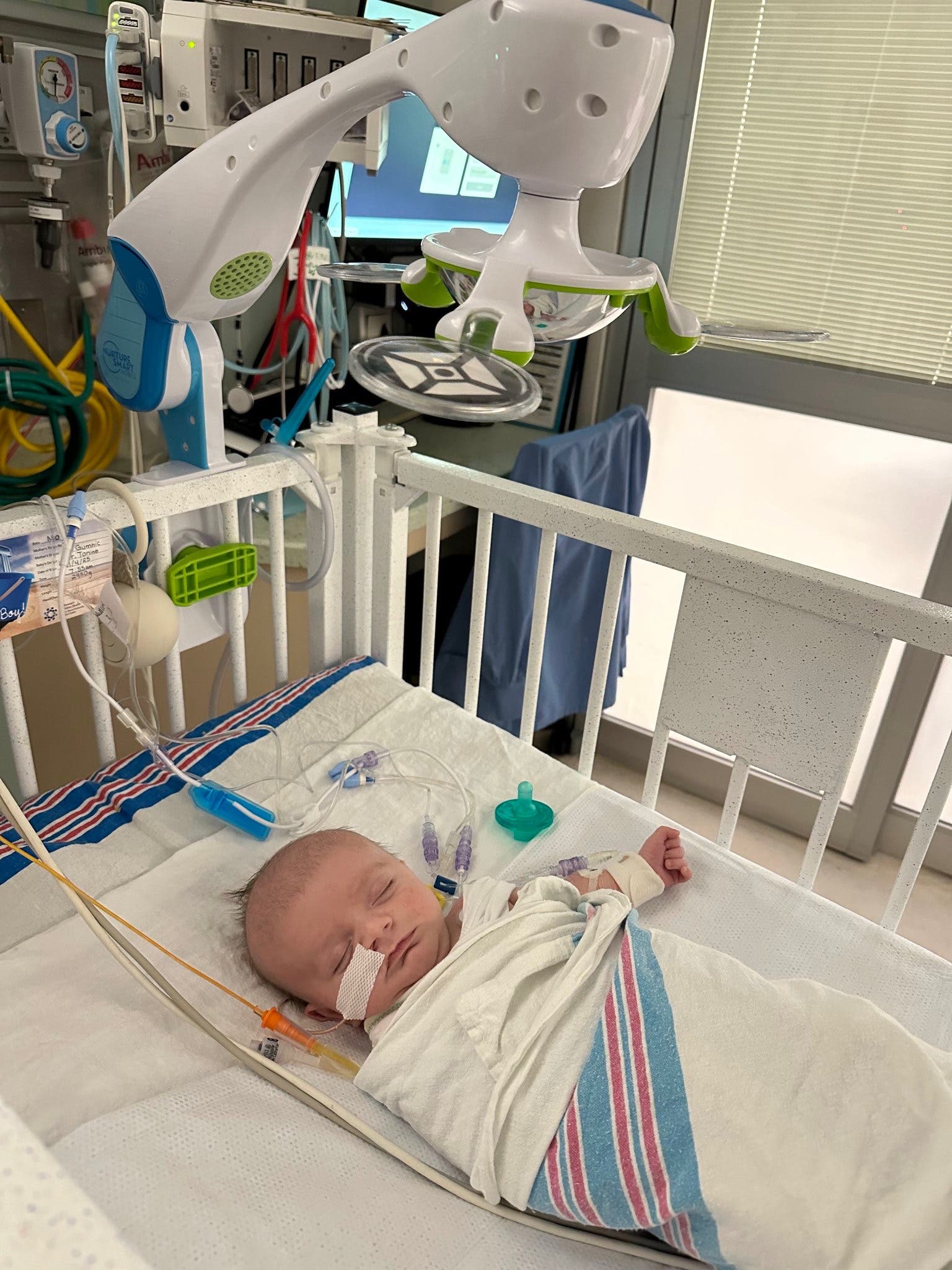
It was far more severe than the team of specialists had anticipated, said Dr. Mark Kayton, chief of pediatric surgery who was on call the day Ryan was born. The situation was life-threatening, because Ryan’s intestine was dying.
“It’s rare for it to be as involved and life-threatening as his condition was,” Kayton said, adding that it’s heartwrenching to have to tell a parent their newborn’s life is at risk and that surgery is needed immediately.
“The surgeon told us it was pretty serious,” Katie said. “He told us they were going to go in and take a closer look and that they had to get him in quick.”
“It was pretty terrifying,” she said.
“Even for people who are steeped in this kind of care, it’s unusual to operate at 7 hours of life,” said Kayton, who has performed hundreds of pediatric surgeries.
“It demanded a very rapid building of trust” between Kayton and the Mosers, he said. Because the team had discussed the possibilities with the Mosers ahead of time, they put their trust in the medical team, Katie said.
“Had he not been born at a hospital designed to care for critically ill children and infants I’m not sure he would have survived this,” Kayton said.
Katie said the hardest part for her was that because she was in recovery from the C-section, she had to rely on Matt to give her updates on Ryan’s progress.
“I couldn’t get up to go see him,” she said.
The first surgery lasted four hours, Katie said, and a third of his small intestine was removed.
“They told us it was a miracle that he had come early because his intestine was dying,” Katie said. But at 36 weeks, his lungs were developed and his heart was strong.
“It surprised me he had the strength to survive through this (the intestinal issue) to where he was born,” Kayton said. “Many babies would not have survived to term.”
Ryan’s abdomen initially was left open for two days to allow his body time to recover, and then it was surgically closed with an ostomy bag attached to his small intestine, Katie said.
“We had concerns about enabling him to be strong enough to survive not one but two surgeries in the first week,” Kayton said, “whether he would have the strength to recuperate and fight off infections, and he did all of that.”
When Ryan had a bowel movement into the ostomy bag a few days later, Katie said, that’s when they felt he was tolerating the surgery well and that his recovery was going well.
The ostomy remained in place for about five weeks before surgery on Dec. 12 to reattach his small intestine to his large intestine, a week earlier than they had initially predicted. A few days after his intestine was reattached, they began giving him formula.
“We had to kind of wait and see how he was going to tolerate feeding,” Katie said, and slowly increased the formula he was receiving in addition to the IV nutrients he’d been receiving.
“The week of Christmas is when we started to think he was going to be OK,” she said.
Ryan made such progress that he was able to go home on Dec. 27, a belated Christmas celebration for Katie, Matt and their older son Kyle, 3 — far sooner than the four- to five-month hospital stay the doctors had predicted.
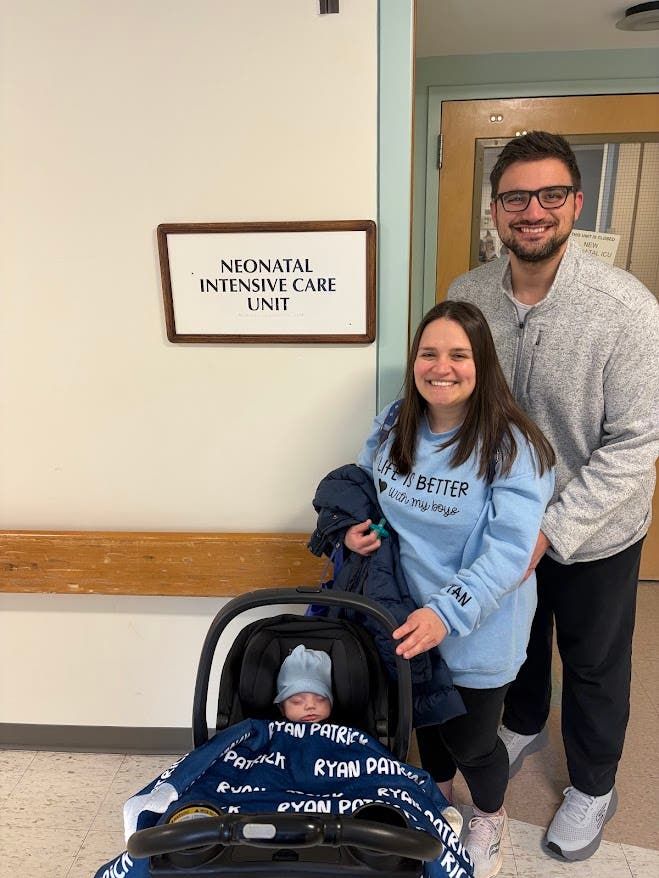
“I was confident coming out of the first operation that he had an excellent chance of recovery but we were always vigilant,” Kayton said. “When he showed the rebound 24 hours after the surgery that was a huge morale boost.”
Kayton said Ryan’s progress was a testament to both the care of the staff in the NICU at Jersey Shore and the care of his parents, who were with him constantly.
“We call our program family-centered care — there’s space in the NICU for the parents to sit with their children,” he said. “They were there pretty much around the clock.”
Katie said the care of the NICU staff, whom they had seen in action when Kyle was born and spent time in the NICU, was a huge comfort and confidence booster to them.
“Some of the nurses who took care of Ryan took care of Kyle,” Katie said. “That was definitely helpful in the sense that we knew what we giong to be dealing with. The whole team at Jersey Shore not only took care of him they good care of us.”
Ryan, who turned 6 months old on Monday, has begun to transition to solid foods. He is continuing to tolerate eating, gaining weight and hitting all his milestones, Katie said.
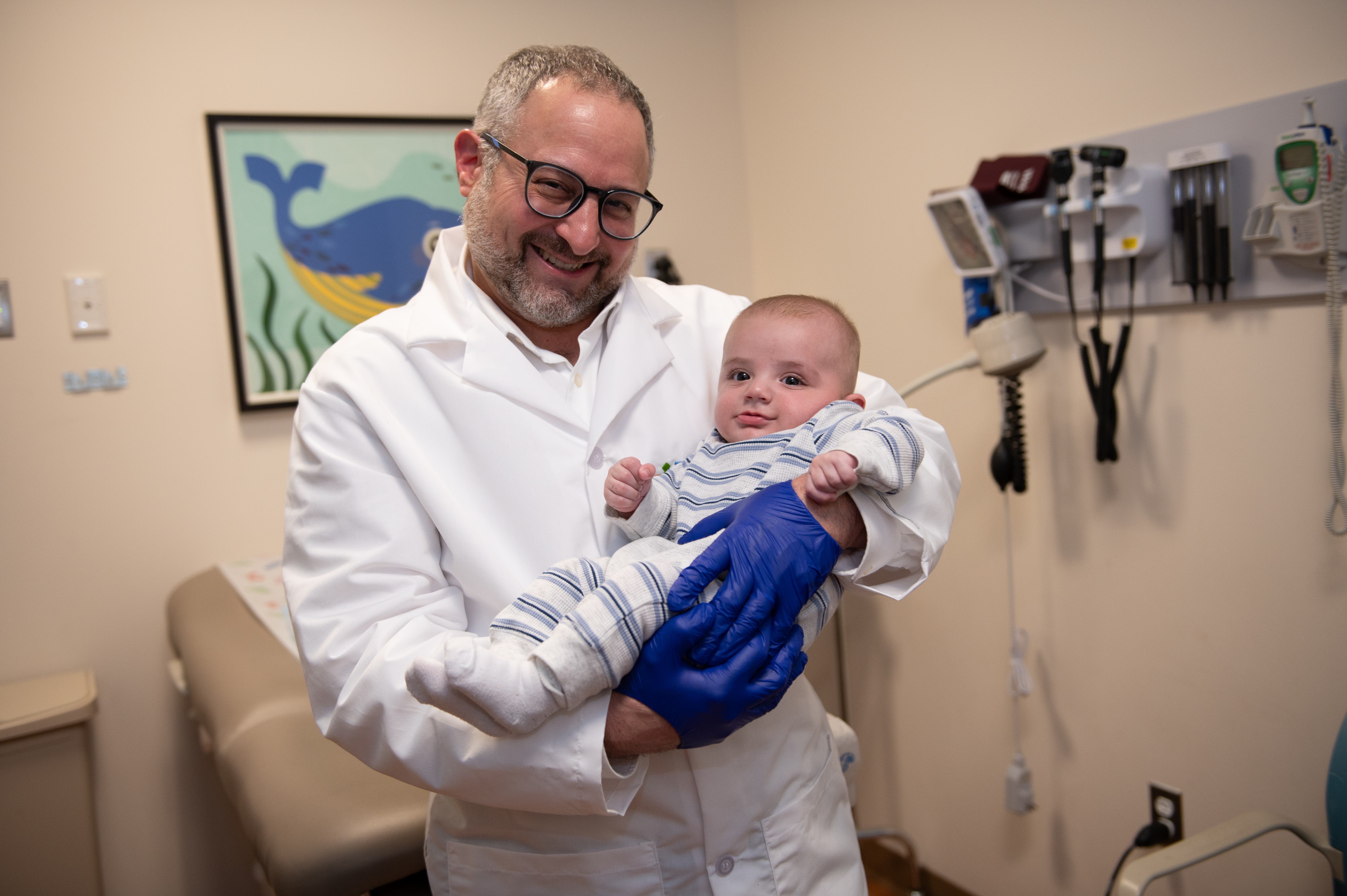
At first they were seeing Kayton every six weeks along with pediatric gastroenterologist Dr. Brittany Parlow, but he was recently released to just see Parlow every six weeks, Katie said. His intestine will continue to grow and adapt and he will still be monitored until he’s in kindergarten, but the hope is the worst of it is behind them, she said.
“Our hope is that he’s had enough surgery to last a lifetime,” Kayton said.
The Mosers and the Kayton both praised the technology that allowed the doctors to uncover Ryan’s condition in the first place.
“We have such amazing leaps in technology that allow us to know about conditions like this far in advance,” Kayton said. “This has really maximized outcomes for babies.”
“It’s natural to be fearful of all the things that can go wrong (with pregnancy), and sometimes we have very little time to prepare. With prenatal counseling parents have a chance to understand what their child is facing so they can surround themselves with doctors they can trust.”
“If I didn’t have that 22-week ultrasound, we might not have known,” Katie said. “Because they caught it so early they were able to kind of watch it, which was great.”
“I feel really fortunate and blessed to have crossed paths with the Mosers,” Kayton said. “They inspired us with their resilience, as much as we hoped to have been an inspiration to them."
Get more local news delivered straight to your inbox. Sign up for free Patch newsletters and alerts.