Politics & Government
NJ-4 Stays Red With Smith As Ocean County Democrats Sit Quiet
As Democrats turned Republican strongholds blue across the U.S., in Ocean County races sat unfilled and Rachel Peace ran on shoestrings.


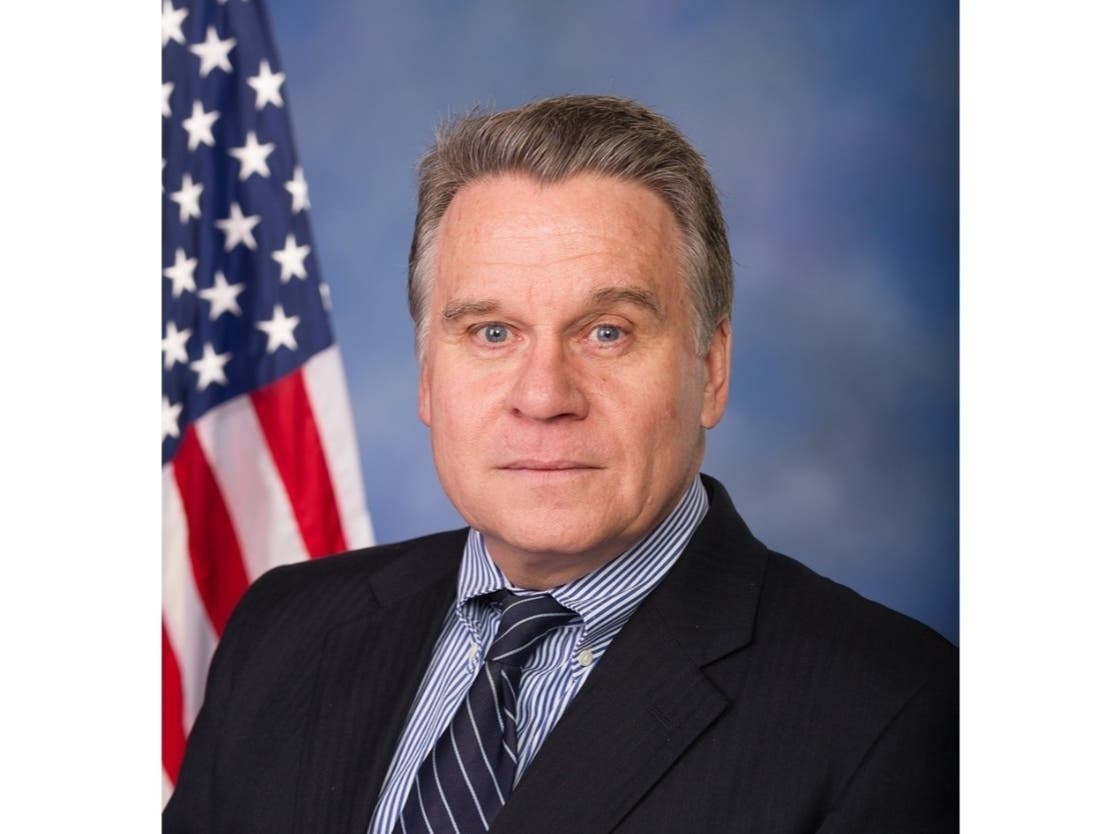
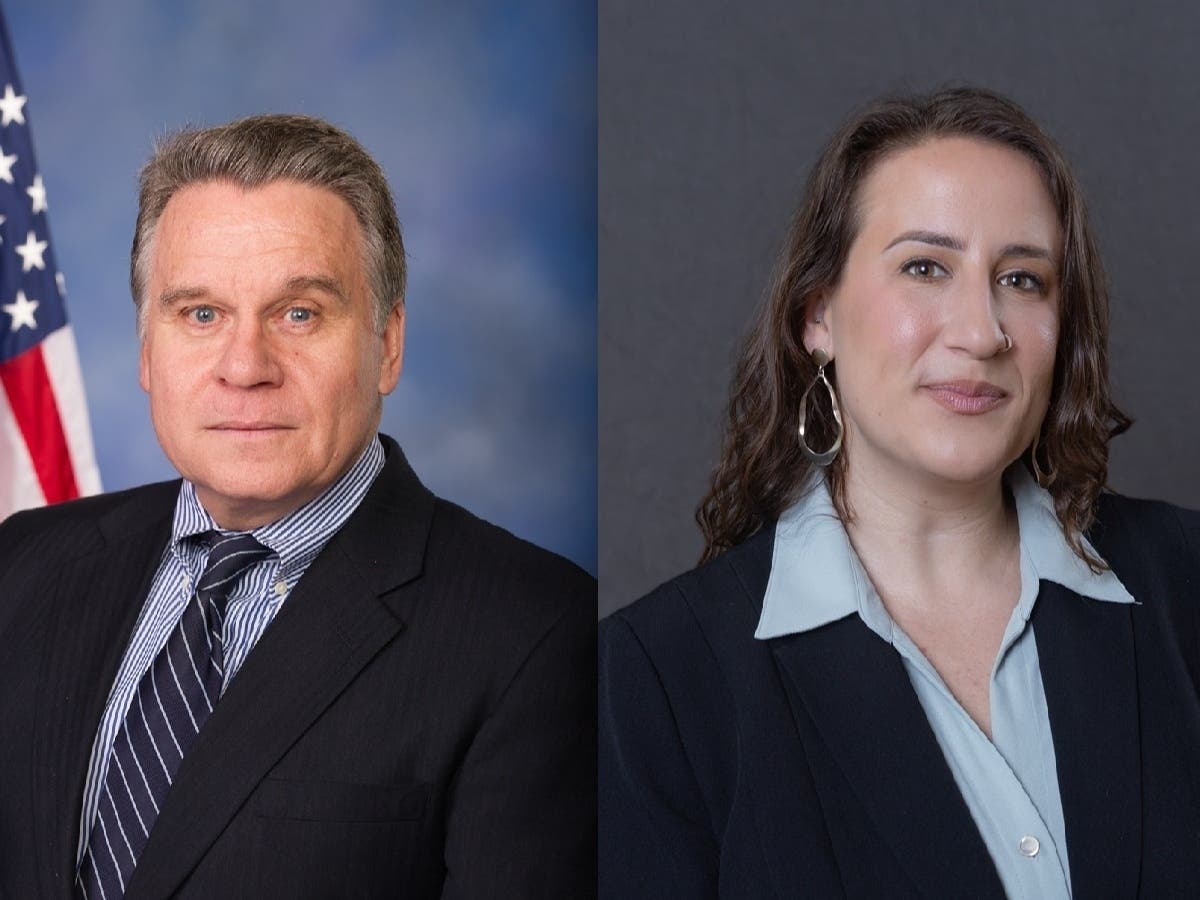
As Democrats across the country were celebrating victories in what had been Republican strongholds, flipping U.S. Senate races in southern states and winning governorships in Texas and Georgia, Chris Smith was quietly recording another victory in New Jersey.
Smith, 73, was elected to his 24th term in the House of Representatives on Tuesday, defeating Democrat Rachel Peace in New Jersey's 4th District.
On the surface, the outcome wasn't a surprise. Ocean County has been dominated by Republicans for decades. It has voted so reliably for the GOP that George Gilmore, the Ocean County Republican Club chairman, has been tapped for advisory roles at the state level — he served in Chris Christie's gubernatorial transition team — and has had some pull at the national level as well.
Find out what's happening in Manchesterfor free with the latest updates from Patch.
Unofficial results showed Smith with 154,601 votes as of Tuesday afternoon, to 106,911 for Peace across the 40 towns in Ocean and Monmouth counties that make up the 4th District. In Ocean County, where Republicans outnumber Democrats nearly 2 to 1 — there were more than 203,000 registered Republicans this year, and 103,600 registered Democrats — Smith received 104,836 votes to 62,092 for Peace.
But a closer look at the numbers — both in Smith's victory and at the county as a whole shows it's not as simple as it looks.
Find out what's happening in Manchesterfor free with the latest updates from Patch.
A closer outcome
It's easy to chalk Smith's victory up to the number of Republicans in Ocean County. The redistricting following the 2020 Census moved the 4th District into heavily Republican territory, as Ocean County has long leaned that direction.
Adding to that perception is a lack of participation by Democratic candidates in Ocean County. Of 32 municipal elections for mayors, council or committee seats, 19 had no Democratic candidates, and two others had only an independent candidate challenging the Republican candidate.
The 2026 election wasn't the only time that has been the case. In the 2022 midterm election, there were 22 races in Ocean County that had no Democratic candidates and in 2018 25 of 43 municipal races had no Democrats. The 2014 midterm election had 19 municipal races in Ocean County without Democrats running.
An email to the leadership of the Ocean County Democratic Committee asking why so many races went unfilled and what the committee is doing to attract Democrats to run in the county went unanswered as of Wednesday afternoon.
That lack of engagement has resulted in a lack of funding from Democratic Party political action committees. According to Peace's federal election campaign finance records online, she received no donations from the Ocean County Democratic Committee and only $6,000 from other Democratic PACs.
Peace, who refused to take donations from corporately funded PACs, took in about $105,000 for her campaign, between the primary election and the general election, according to federal records.
Peace, in an interview Wednesday, said the lack of funds limited what she was able to do to promote her campaign. Campaign signs were expensive, as was digital advertising and direct mail flyers.
Instead, she said, her campaign relied on word-of-mouth and meeting as many people as she could, Peace said.
The result was the highest vote total and highest vote percentage for a Democrat challenging Smith in any midterm dating back to 2014.
Peace's 62,092 as of Wednesday, 37 percent of the votes cast in the 4th District race, was nearly 20,000 votes more than Matthew Jenkins received in 2022, when he received 45,988, just over 28 percent of the vote.
In 2018, before the districts were redrawn, Smith received 66.55 percent of the vote in the 4th District, which comprised 143 voting districts at the time. Joshua Welle, the Democrat who ran that year, received 32 percent of the vote.
Peace said she knew Ocean County would be an uphill climb.
"I poured my heart into Ocean County," she said, trying to reach as many people as possible with conversations that focused not on party but on what people needed.
While she lost, "the outcome was a confirmation of what I believe," Peace said, "that people in districts that have been gerrymandered or overlooked will work very hard" to elect a candidate they support.
"Everyone was trying to figure out how they as ordinary people could contribute to something extraordinary," Peace said of the support she received. "We were on a collective mission."
"Inaction contributes to anxiety," Peace said. "Choosing to contribute gave people something to hold onto."
The response was enough that Peace is making plans to build on the momentum from this year and run again in 2028.
Fighting inaction
Peace said she hopes one of the lessons from Tuesday convinces the Democratic Party at all levels to make sure they pay attention to all of the races up and down the ballot.
"We didn't have the money to counter the volume of ads and signs" that supported Smith's campaign. Instead her campaign "was entirely district fueled, no DC outsiders or consultants."
"With the resources, the outcome might have been different," she said, noting how funds flowed into the 2nd District campaign where Zack Mullock unseated Republican incumbent Jeff Van Drew.
"There are districts that they have overlooked for far too long that deserve a second look the next time around," Peace said.
"This is a generational opportunity," said Alison Miller, chair of the Stafford Township Democratic Club and co-founder of Shore Progress, a group of Democrats looking to help build engagement with Democrats and build the party in Ocean County.
Miller grew up in New York City but moved to Ocean County several years ago. While the county has long been painted as solidly red, she believes that overlooks a key part of the county's voting population: unaffiliated voters. That group numbers nearly 171,600, more than the number of registered Democrats and almost as many as the number of registered Republicans.
She also said she believes there is work to be done to engage younger voters — the millenials and the GenZ voters — because they are the next generation that will carry the party forward.
The lack of engagement — visible in the empty party lines in towns up and down Ocean County — carries over into the apathy that surrounds the Congressional races.
Of the municipalities that had partisan elections on Tuesday, Barnegat, Lacey, Lakewood, Little Egg Harbor, Waretown, Seaside Park and South Toms River had full slates of Democratic candidates, and there was a full slate of Democrats challenging in the Ocean Gate council race.
In Barnegat Light, Beachwood, Eagleswood, Lakehurst, Lakewood, Mantoloking, Pine Beach, Ship Bottom, the Point Pleasant and Ocean Gate mayoral races, and council races in Point Pleasant Beach and Surf City, no Democrats ran at all. The council races in Bay Head, Point Pleasant, and Seaside Heights each had a single Democrat running.
With 103,000 registered Democrats in Ocean County, "You can't tell me there's no one able to run," Miller said. "It's about getting as many people engaged and stepping up as possible."
She also wants to see competitive primaries and, when they are over, support swinging behind the primary winner.
Mullock, who beat Van Drew, got a lot of engagement in his campaign because of the competitive primary that caused people to pay attention, Miller said.
The key to growing the Democratic party in Ocean County lies in recruiting voters. Miller noted that even with early voting, the number of Democrats who turned out to vote Tuesday in the county was less than 50 percent.
"You have to look at this as a marathon," Miller said. "The runners are the voters, and they haven't even run around the block in decades."
"You have to convince them it's worth it to put on their sneakers and be civically minded when it comes to elections," she said.
"That's when you start building candidates," Miller said. "You can't pluck candidates out of thin air."
Voter engagement and local neighborhood engagement is crucial, she said, and visible in the South Toms River mayoral and council election. In a town of just over 2,500 voters, more than 50 percent of whom are unaffiliated, Democrats Christina Mertz and Jacqueline Burns were leading Republicans Sandford Ross, an incumbent, and Crystal Wurst, in the council race. Burns had 449 votes, Mertz 443, Ross 399 and Wurst 380. The mayoral race between Republican Oscar Cradle and Democrat Gigi Esparza was separated by seven votes, 433 to 426.
"Telling people it's our way or the highway is why we see 20 percent voter turnout," Miller said.
"People are just accepting of the status quo," Peace said. "There has to be a better way."
Get more local news delivered straight to your inbox. Sign up for free Patch newsletters and alerts.