Neighbor News
A Housing Vote With Implications Beyond Housing
As a vote on Intro 948B nears, concerns grow that internal power plays—not policy—are shaping the City Council's housing agenda.

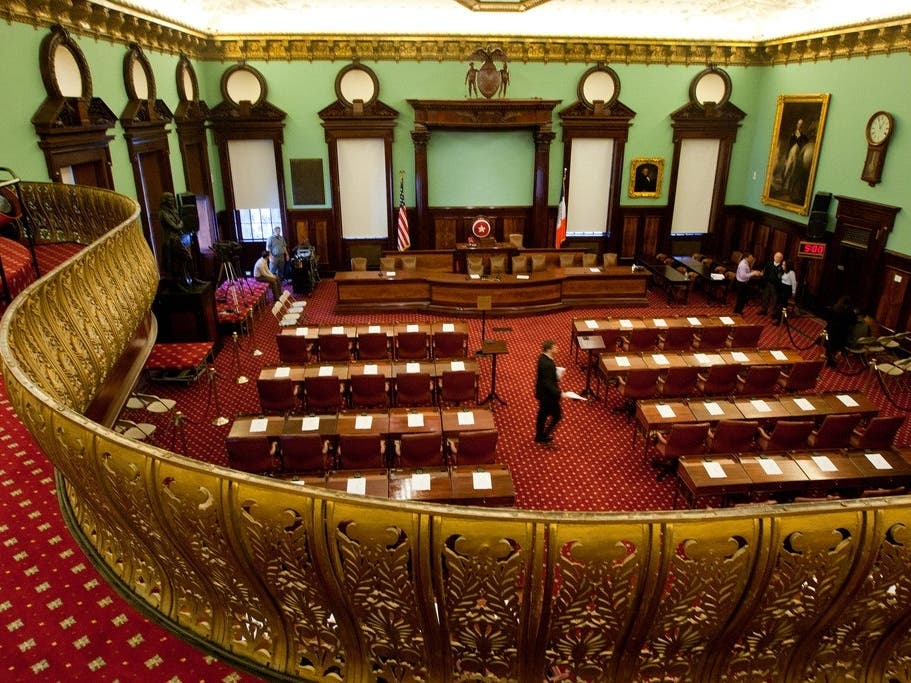
With just days remaining in the current City Council session, a housing bill scheduled for a committee vote has become a test of integrity, power, and priorities inside City Hall.
Intro 948B, a narrowly tailored correction to the enforcement of Local Law 18, is expected to come before the Council’s Housing Committee this week. The bill has been aged in—an unmistakable signal that it is a priority of the current Speaker, Adrienne Adams. Under ordinary circumstances, that would matter. Under ordinary circumstances, it would also be respected.
Instead, the final days before the vote have been marked by something far less ordinary.
Find out what's happening in Brooklynfor free with the latest updates from Patch.
According to multiple sources familiar with internal Council discussions, Julie Menin—the Council Member from District 5 and widely viewed as the incoming Speaker under the next administration—has been actively lobbying against Intro 948B in the eleventh hour. That lobbying is occurring while the current Speaker’s term is still in effect, and against legislation that directly reflects Speaker Adams’s agenda and the needs of districts most harmed by Local Law 18 enforcement.
That alone would raise eyebrows. The context makes it far more serious.
Find out what's happening in Brooklynfor free with the latest updates from Patch.
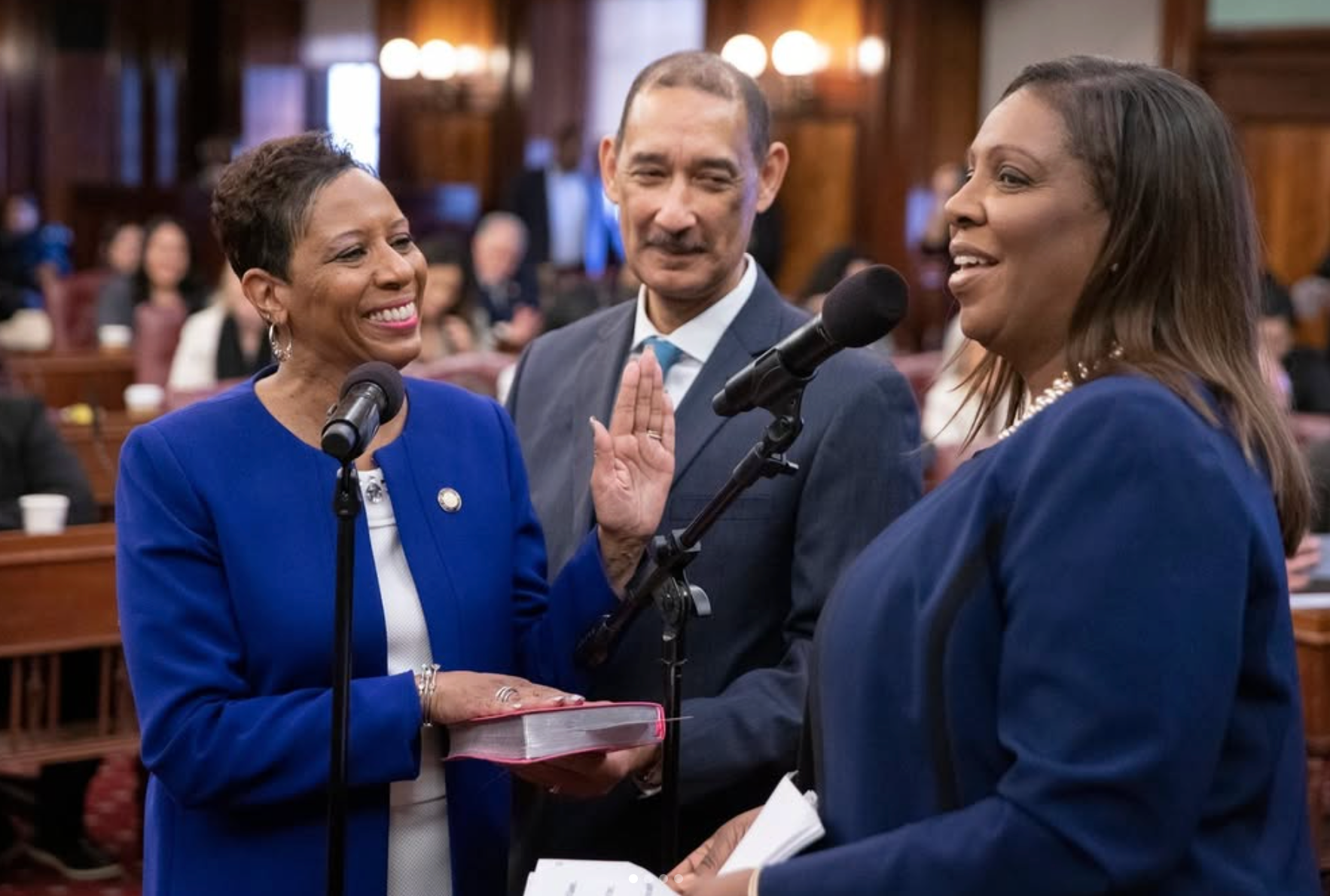
Speaker Adams, the first Black woman to hold the position, advanced Intro 948B in response to sustained harm reported by homeowners in her district and others like it—districts with some of the highest rates of Black homeownership in New York City. In those communities, Local Law 18 has not functioned as a neutral housing policy. It has operated as an enforcement regime that reclassified owner-occupied one- and two-family homes—classified under New York State law as private dwellings and private residences—as if they were commercial lodging. The result has been punitive fines, impossible compliance standards, and growing financial distress for small homeowners who were never the intended target of hotel regulation.
Intro 948B does not repeal Local Law 18. It does not weaken tenant protections. It restores boundaries that never should have been erased. It clarifies that a primary residence is not a hotel, reaffirms that homeowners retain control over their own homes, and ties enforcement to demonstrable harm rather than assumption. That is why the bill has been sponsored by Council Members whose constituents are living with the consequences of the current law.
What has made this moment especially revealing is not simply opposition to the bill, but how that opposition has been carried out.
Pushback against Intro 948A and 948B has been saturated with misinformation and factually incorrect assertions. Despite months of advocacy by the Hotel Trades Council and its proxies, not a single substantive, fact-based public argument has been made challenging the bill’s legal foundation or its consistency with state housing law. Those false claims have been corrected repeatedly, on the record.
Instead of narrowing or justifying their case, opponents escalated volume. As the narratives were debunked, the rhetoric grew louder. The apparent strategy was not to debate, but to drown—to flood the discourse so aggressively that corrective voices would be buried under repetition.
That tactic has not gone unnoticed inside City Hall—or among New Yorkers themselves. Polling and public feedback show that roughly 80 percent of New Yorkers agree that Local Law 18 has produced unfavorable outcomes and needs to be fixed, a consensus that cuts across boroughs and demographic lines. In that context, the continued reliance on misinformation reads less like confusion and more like defiance of a public that has already rendered its verdict.
Against that backdrop, Menin’s role has drawn intensified scrutiny.
Menin has opposed narrowly tailored relief for small, owner-occupied homeowners engaged in short-term rentals in New York City. At the same time, she and her husband are investors in luxury real estate projects elsewhere in the country that are explicitly designed around short-term rental and hospitality-oriented business models.
Menin is married to Bruce Menin, a managing principal of Crescent Heights (Wikipedia), a real estate firm known for large-scale luxury condominium and mixed-use developments. As reported by Wired in “Luxury Airbnb High-Rises Are Reshaping Miami’s Skyline” and The Real Deal, Crescent Heights has been involved in projects such as the Airbnb-branded Natiivo tower in downtown Miami, a luxury condo-hotel designed so individual owners can rent units through platforms like Airbnb
– Wired: https://www.wired.com/story/luxury-airbnb-high-rises-are-reshaping-miamis-skyline/
– The Real Deal: https://therealdeal.com/miami/2019/06/18/downtown-miami-airbnb-branded-hotel-condo-project-launches-sales/
Those projects are legal and operate outside New York City. But they rely on the same short-term rental market dynamics that New York policymakers have aggressively restricted for small, owner-occupied homeowners here.
What has sharpened concern is the double standard this exposes. Investor-driven, luxury short-term rental models—like those Menin is invested in—continue to expand elsewhere with little stigma, while New York City’s enforcement apparatus has focused overwhelmingly on small private homeowners. Critics of Local Law 18 have long argued that its practical effect has not been the elimination of short-term rentals, but their consolidation—clearing modest homeowners out of the market while leaving larger, wealthier, and more institutional players untouched.
Within that context, Menin’s eleventh-hour opposition to Intro 948B demands explanation. It raises a fundamental question of consistency and accountability: why short-term rental activity is treated as acceptable—even profitable—when structured through luxury, investor-driven developments, but framed as harmful when it involves working homeowners trying to stay afloat in New York City.
The timing only deepens the concern. All current sponsors and co-sponsors of Intro 948B publicly supported Menin for Speaker. Individuals who work closely with the Council, speaking on condition of anonymity out of fear of retaliation, say the prospect of a Speaker-in-waiting lobbying against a sitting Speaker’s agenda has created real unease—particularly given the incoming Speaker’s control over committee assignments, legislative priorities, and political visibility.

Menin is widely described by those same observers as exceptionally politically savvy and forward-thinking. This is not offered as praise, but as context. One source described her as someone who thinks several moves ahead while others focus on the immediate step. Another said that some inside City Hall believe her ambition for the Speakership dates back to her first campaign—an assessment that now feels less speculative than prescient.
What is now being openly questioned in the districts most harmed by Local Law 18 is not abstract politics, but trust. Black and Brown homeowners—particularly in districts with some of the highest rates of Black homeownership—are asking how Council Members who represent them could support Menin for Speaker while she actively works to undermine legislation meant to provide relief to their constituents. That question has only intensified as her opposition places her not just at odds with their priorities, but in direct conflict with the agenda of the sitting Speaker of the City Council—a Black woman who has been actively fighting for her own district, among others, where Black homeowners are disproportionately suffering under the weight of the law’s failures.
For many, this is no longer about internal Council maneuvering. It is about whether support for Menin was grounded in shared commitments to those communities, or whether those commitments are now being subordinated to power consolidation and legacy-building. In neighborhoods where homeowners are struggling to keep their footing, that distinction is not political—it is personal.
This is why the moment matters.
The City Council is not meant to operate through anticipation and pressure. Authority transfers through formal processes, not informal dominance. When future power begins shaping present outcomes—particularly through misinformation, silence, or leverage—it undermines trust in the institution itself.
With the false narratives around Intro 948B already exposed and its legal foundation unchallenged, support for or opposition to the bill now functions as a form of disclosure. It reveals whose interests are being prioritized, whose constituents are being protected, and how power is being exercised before it is formally conferred.
The vote may be days away. The record is already clear.