Real Estate
What Went Wrong Before Brooklyn's Deadly Building Collapse
Past NYC building collapses reveal how excavation can threaten neighboring structures, as investigators search for answers in Flatbush.


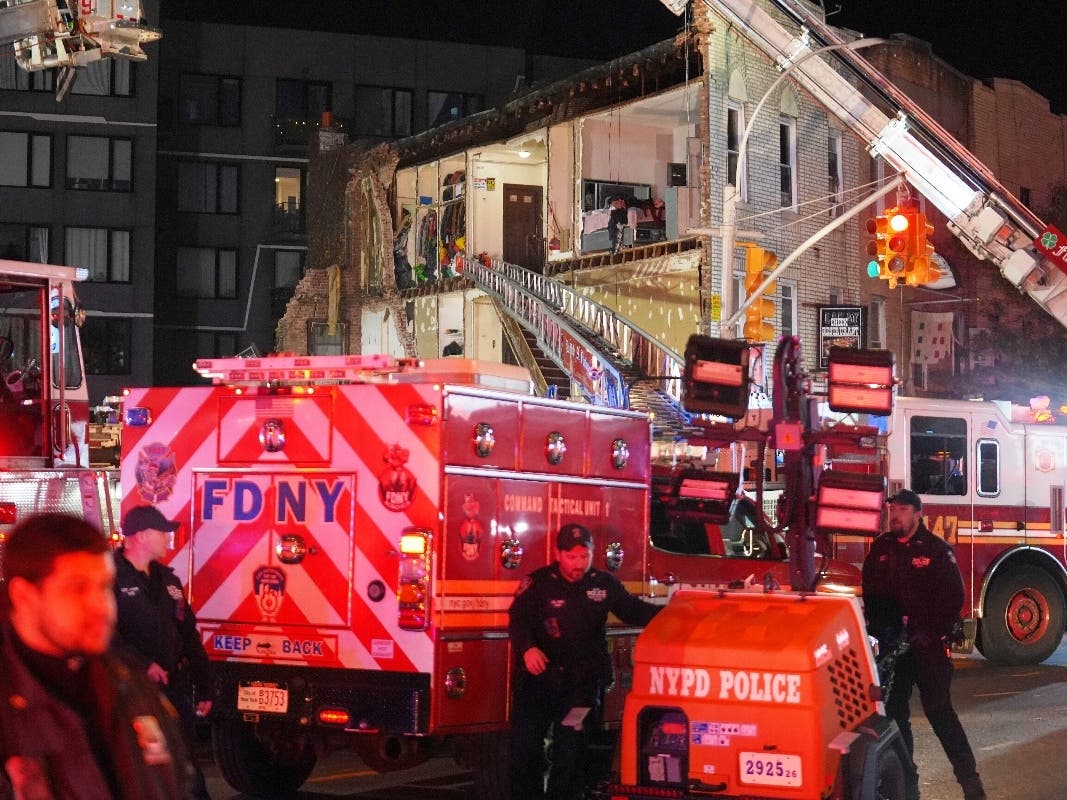
BROOKLYN, NY — The excavation of a neighboring property, the stability of older buildings and the City's oversight of construction sites are among the questions facing investigators after a fatal building collapse in Flatbush.
The Department of Buildings and law enforcement are investigating the collapse of a three-story building at 1321 Flatbush Ave., near Bedford Avenue and Foster Avenue, which killed eight people and injured several others.
“A tragedy of this magnitude demands a comprehensive and thorough investigation that includes both the construction site and the building which collapsed,” Mayor Zohran Mamdani said Thursday. “We will find out what happened, and we will share that information with New Yorkers.”
Find out what's happening in Brooklynfor free with the latest updates from Patch.
The investigation comes amid questions about the construction site next door, at 2625 Bedford Ave., where developers had been preparing the property for a proposed nine-story mixed-use building.
A Department of Buildings violation initially attributed the collapse to unsafe construction operations at the Bedford Avenue site.
Find out what's happening in Brooklynfor free with the latest updates from Patch.
The agency quickly removed that language, telling Crain’s the description had been entered prematurely and was inaccurate.
The revised record cited a full stop-work order because of the collapse.
DOB reported investigators had not determined what caused the building to fall.
The construction site had received two earlier violations.
On March 20, inspectors issued a stop-work order after finding demolition underway without required overhead protection for neighboring properties.
When inspectors returned April 23, they found demolition had continued despite the order and issued a second violation.
The violations carried fines of $2,500 and $10,000, both of which were paid. DOB lifted the stop-work order May 8 after the violations were addressed.
The earlier violations involved overhead protection, such as construction sheds and netting, rather than the structural supports used during excavation. There is no indication they contributed to the collapse.
There had been no prior 311 complaints related to the construction site, Mamdani said.
The Brooklyn district attorney's office is working with DOB and law enforcement to determine whether criminal conduct played a role.
Asked whether anyone could face criminal charges, Mamdani said it was too early to make that determination.
DOB identified five main entities associated with the Bedford Avenue project that were connected to approximately 100 other construction sites across the City. The department began inspecting those properties for potential safety problems, Mamdani said.
How Can Excavation Affect Neighboring Buildings?
Excavation involves removing soil to prepare a site for construction.
When crews dig beside an existing building, they must take precautions to prevent the surrounding soil from shifting the neighboring structure's foundation.
New York City has a history of structural failures involving excavation and construction beside existing buildings.
In several cases, investigators identified inadequate support for neighboring structures as a contributing factor.
In 2020, a partial collapse at 211 E. 34th St. in Manhattan followed excavation for a development at the neighboring property, 509 Third Ave.
DOB identified failures to properly shore and brace the adjoining building, monitor structural movement and evaluate the neighboring structure as contributing factors.
Workers noticed movement in the wall before the collapse and moved away from the danger. Nobody was injured.
A 2015 collapse at 656 Myrtle Ave., between Franklin Avenue and Skillman Street in Bedford-Stuyvesant, killed an 18-year-old construction worker and injured two others.
Construction crews were excavating beside an existing building while developing a neighboring property when part of the existing structure collapsed. The case resulted in a criminal prosecution and a conviction in 2019.
Construction accident attorney Christopher J. Gorayeb, who represents clients in building collapse and construction injury cases, is involved in pending civil litigation stemming from the Myrtle Avenue collapse.
He described excavation beside existing buildings as a recurring source of structural danger.
“It's excavation next to an existing building without certain precautions taken, like shoring, underpinning,” Gorayeb said.
Shoring uses temporary supports to stabilize soil and nearby structures during construction. Underpinning strengthens or extends an existing building's foundation, helping it maintain support when excavation threatens the surrounding ground.
Gorayeb said communication between neighboring property owners can be difficult, particularly when absentee landlords may not know about construction taking place next door.
That can leave City inspectors responsible for identifying potential problems and enforcing safety requirements.
“But the City has limited resources when it comes to inspections and crews,” he said.
The Department of Buildings recorded 432 construction-related incidents in 2025, down from 638 in 2024. Construction-related fatalities, however, increased from seven to 10 during the same period, according to the agency's annual construction safety report. The figures include a range of construction accidents, not just building collapses.
Branden Polk, a Brooklyn homeowner, said he and seven other unit owners in his building had been forced to collectively pay for structural problems they inherited from a contractor's faulty work, passing the costs on to first-time homebuyers like himself.
"Contractors and developers are able to get away with bloody murder on the backs of everybody else, so they can make a whole lot of money," Polk said. "It's so infuriating to try to make your life as full as profitable as it can be as a person living in this city. I hope that there's some accountability."
How Are Changes To Development Rules Affecting Oversight?
The collapse also comes as New York City changes how certain development proposals move through the land-use approval process.
Voters approved a series of City Charter amendments in November 2025 that changed aspects of the city's land-use review system.
One amendment limits the City Council's ability to block certain rezonings in the 12 community districts with the lowest housing production over a designated five-year period.
The changes affect the political process for approving development proposals, potentially reducing the influence of some local officials over projects.
They do not eliminate building-code requirements, construction permits or the Department of Buildings' responsibility to inspect sites and enforce safety rules.
Investigators have not established whether excavation, inadequate structural support or another factor caused the Flatbush collapse.\
Get more local news delivered straight to your inbox. Sign up for free Patch newsletters and alerts.