Community Corner
Shaping our Communities: Fresh Perspectives on Local Land Use
Panelists discuss how communities can evolve while preserving the qualities that residents value most
By Rina Beder
As Westchester communities look toward the future, questions surrounding housing, redevelopment, downtown vitality, and community character are becoming increasingly important. The Larchmont-Mamaroneck Local Summit’s May 12th program brought together experienced leaders in planning, government, and development to explore what thoughtful growth could and should look like in the years ahead. Drawing on decades of professional experience, the panelists discussed practical strategies, emerging opportunities, and a broader vision for how communities such as Larchmont and Mamaroneck can evolve while preserving the qualities that residents value most.
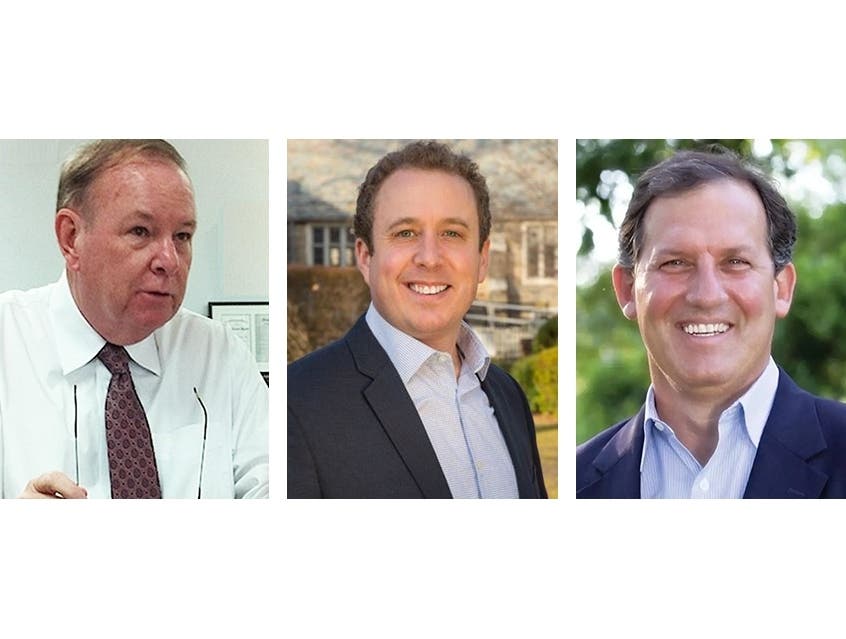
Panelists included Chance Mullen, Mayor of the Village of Pelham and Executive Director of the Municipal Officials Association of New York; planner Bob Galvin, who has served as planner for numerous New York municipalities, including Mamaroneck, and is a board member of the Washingtonville Housing Alliance; and John Verni, a developer and attorney specializing in real estate and land use and former Chair of the Mamaroneck Planning Board. Together, they explored how Westchester communities can address changing housing needs, strengthen downtowns, encourage thoughtful redevelopment, and create opportunities for residents at every stage of life while maintaining the character and sense of place that define the region.
Find out what's happening in Larchmont-Mamaroneckfor free with the latest updates from Patch.
A central theme of the discussion was that many local municipalities are already largely built out, leaving little undeveloped land for major expansion. As a result, future growth is likely to come through redevelopment, adaptive reuse, transit-oriented development, and smaller incremental projects rather than large-scale new construction.
“Everything that we’re doing is redeveloping items that already had something,” Mullen explained, describing Pelham as “99 percent built out.” Many recent redevelopment projects, he noted, involved former gas station sites that no longer fit the needs of the community.
Find out what's happening in Larchmont-Mamaroneckfor free with the latest updates from Patch.
Mullen emphasized the value of creative public-private partnerships that combine housing, commercial uses, municipal facilities, parking, and open space within a single project. He highlighted Pelham’s recently completed municipal center project, where the village sold publicly owned land to a developer in exchange for a new municipal complex housing the fire department, police department, village hall, and public parking within a residential development.
The arrangement, Mullen said, allowed the village to modernize aging public facilities without significant tax increases.
Panelists also stressed that communities must think strategically about the types of housing they lack. Mullen noted that housing needs have changed significantly over time. Rather than remaining in one home for life, many residents now move through multiple stages of housing as their needs evolve.
Communities, he argued, need a broader range of housing options — from apartments for young adults starting careers, to homes for growing families, to downsized housing for seniors hoping to remain in the community.
“If we’re going to be communities where people actually stick around for a while, then we have to have options for people,” Mullen said.
Verni focused on preserving vibrant downtowns and neighborhood character while accommodating growth. He discussed the role of “incremental housing” and adaptive reuse projects in meeting housing needs without dramatically changing the scale of local communities.
“There are incremental things we can do,” Verni said. “You don’t have to just wait for one big project to solve all of our housing problems.”
He pointed to projects converting former churches, office buildings, and underutilized properties into housing, including affordable housing. Verni also highlighted the growing movement toward transit-oriented development and walkable downtowns, themes promoted by the Congress for the New Urbanism.
Verni noted that villages such as Larchmont and Mamaroneck are fortunate to have strong downtowns, small businesses, walkability, and historic character — qualities residents strongly value. At the same time, he cautioned against creating places where every downtown begins to look the same.
Accessory dwelling units (ADUs), sometimes called “granny flats” or garage apartments, were discussed as another potential tool for gently increasing housing supply. Galvin explained that while ADUs alone are unlikely to dramatically expand housing availability, zoning changes can make it easier for homeowners to create second units on existing properties.
Adaptive reuse emerged as another major theme. Verni described projects in which former churches were converted into housing while preserving historic architecture and community character. Galvin similarly discussed efforts to repurpose older office buildings and industrial areas for residential and mixed-use development.
Throughout the discussion, panelists returned to the challenge of balancing growth with preservation. While surrounding cities such as New Rochelle, White Plains, and Yonkers are experiencing substantial redevelopment and increasing density, villages like Larchmont and Mamaroneck face the challenge of accommodating change with a paucity of open land while preserving the small-scale character and sense of community residents value.
Participants acknowledged there are no easy solutions. However, they expressed optimism that creative planning, adaptive reuse, zoning flexibility, and incremental development can help communities evolve while protecting the qualities that make them distinctive.
The Larchmont-Mamaroneck Local Summit is an informal community council that seeks to make a better life for the community by keeping it informed of major issues of concern. For more information: https.//www.localsummitlm.org/. To view recorded programs on LMC Media: https.//lmcmedia.org/.