New York City, NY|Featured Classified|Gigs & Services|
Merchant Cash Advance Lawsuits Surge in New York Courts as State Cracks Down on "Disguised Loans"
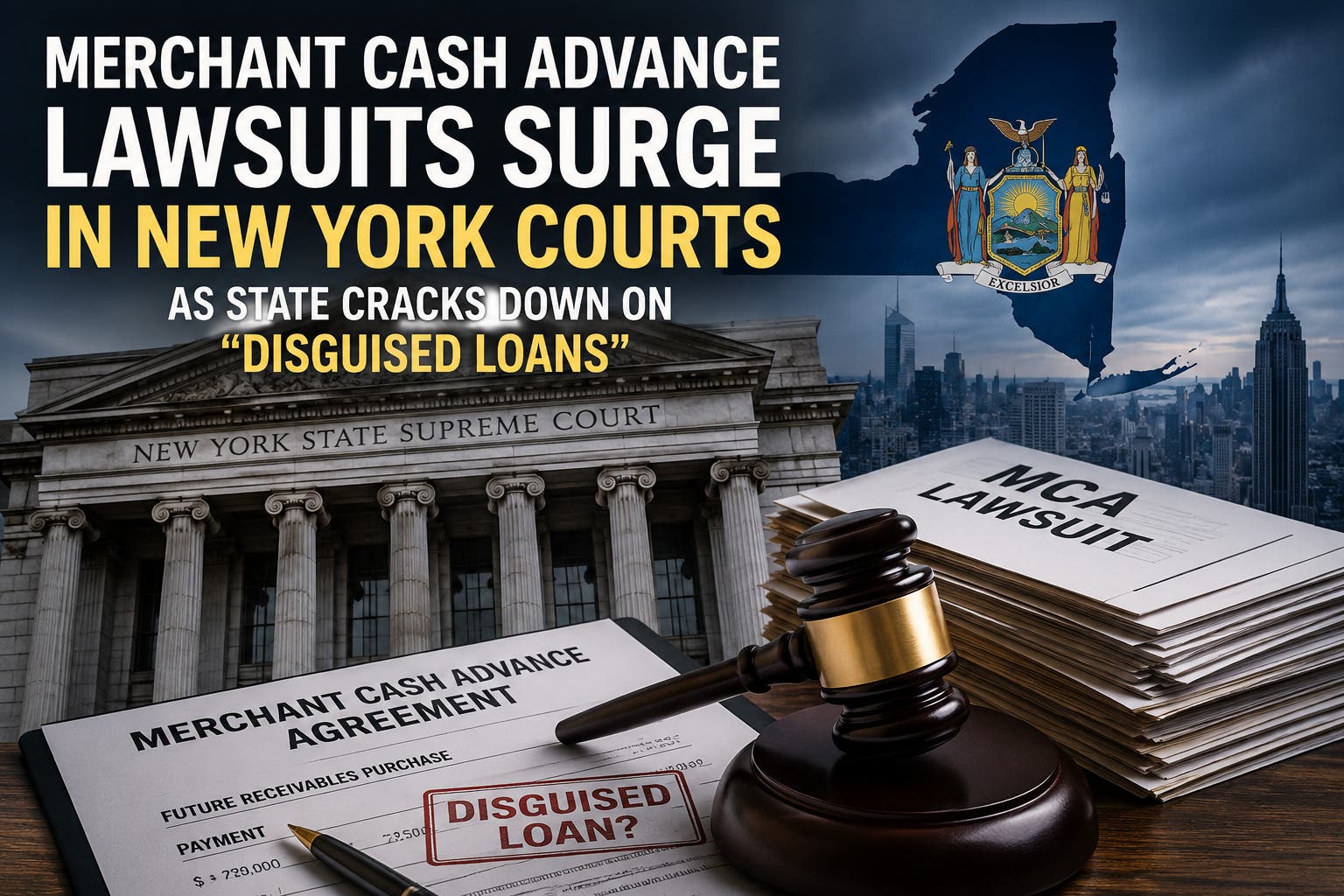
Merchant Cash Advance Litigation Accelerates Across New York as Courts Examine Alleged Disguised Loan Agreements
New York remains the epicenter of merchant cash advance litigation — and 2025's landmark enforcement action is reshaping what defenses are available to business owners.
NEW YORK — Small business owners across the five boroughs are facing a wave of merchant cash advance (MCA) collection actions, and many are being sued in New York courts even when their businesses operate hundreds of miles away.
The reason is structural. Most MCA agreements contain New York forum-selection clauses buried in the fine print, funneling disputes into state Supreme Court regardless of where the business is located. Once a funder files, the timeline moves fast: New York gives defendants roughly 20 to 30 days to respond, and missing that window can result in a default judgment — followed by frozen bank accounts and restraining notices served directly on institutions like Chase and TD Bank.
What has shifted is the legal landscape underneath these cases. In 2025, the New York Attorney General's settlement with Yellowstone Capital resulted in more than a billion dollars in debt cancellation and confirmed what defense attorneys had argued for years: that many MCA products marketed as "purchases of future receivables" functioned as illegal, disguised loans.
New York courts now weigh three factors to determine whether an MCA is a true receivables purchase or a loan subject to usury limits — whether the contract contains a genuine reconciliation provision, whether the funder retains recourse if the business fails, and whether the funder bears any real risk. Where daily payments never adjust to actual revenue, courts have increasingly recharacterized the agreement as a loan, potentially triggering New York's criminal usury cap under Penal Law § 190.40.
Business owners also have procedural tools. A default judgment entered through improper service or an out-of-state Confession of Judgment — a practice New York restricted in 2019 — can often be challenged with a motion to vacate under CPLR § 5015.
The practical takeaway for New York business owners: the earliest stage of an MCA dispute is when the most options exist. Once a judgment is entered and accounts are frozen, defenses narrow quickly.
Business owners in New York City who have been served with an MCA lawsuit, received a summons, or had a bank account frozen can review their options and connect with an experienced MCA defense attorney through CredibleLaw's New York network at crediblelaw.com/mca-lawyer-nyc/
Credible Law is a national legal resource and referral network. It is not a law firm and does not provide legal advice.