Traffic & Transit
NYC Trash Bins To Replace Nearly 30,000 Parking Spaces
Brooklyn residents have a decision to make before a key deadline. Here's what the City's next cleanup phase means for your block.


NEW YORK, NY— New York City is moving ahead with one of the largest changes to curbside sanitation in decades, and revealed the plan will eventually convert nearly 30,000 street parking spaces into permanent trash container locations.
Additionally, the Department of Sanitation opened registration Wednesday for residential buildings with 10 or more units in Brooklyn Community District 2, the next neighborhood slated for full trash containerization.
The district includes Downtown Brooklyn, Boerum Hill, Brooklyn Heights, DUMBO, Vinegar Hill, Fort Greene, Clinton Hill, Fulton Ferry and the Brooklyn Navy Yard.
Find out what's happening in New York Cityfor free with the latest updates from Patch.
Building owners and managers have until July 31 to register.
The rollout marks the second community district in the City to receive Empire Bins after a yearlong pilot in West Harlem.
Find out what's happening in New York Cityfor free with the latest updates from Patch.
What Are Empire Bins?
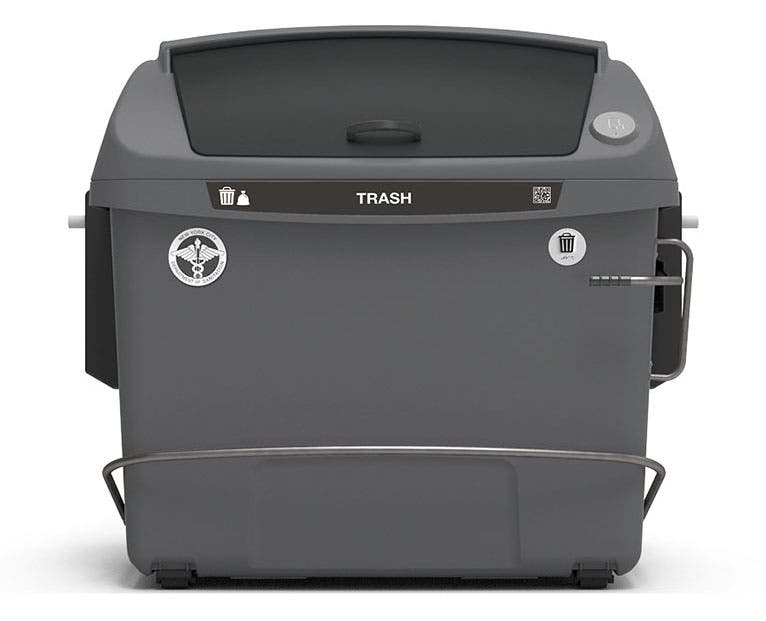
Empire Bins are locked, curbside trash containers assigned primarily to larger apartment buildings.
Building staff use key cards to access the containers, which automated side-loading sanitation trucks empty on collection days
. The system replaces piles of garbage bags on sidewalks with sealed containers designed to keep trash contained, reduce odors and limit rodents' access to waste.
Why Are Parking Spots Affected?
Mayor Zohran Mamdani committed funding to expand the program into six more community districts next year, with citywide implementation planned by 2032.
The City estimates it will install about 66,000 Empire Bins across the five boroughs, replacing 29,842 legal street parking spaces, or about 1.52 percent of New York City's roughly 1.96 million on-street parking spaces.
The Department of Sanitation argues the tradeoff will eliminate the familiar rows of garbage bags lining sidewalks before collection, reduce food sources for rats and improve street cleanliness.
"In the wealthiest city in the wealthiest nation in the history of the world, no New Yorker should have their sidewalks covered in garbage," Mamdani said during an April news conference promoting the initiative. "By finishing the job on containerization, we will ensure New York City's streets remain the envy of the world."
The effects will vary by neighborhood.
Where Will Parking Be Lost?
Manhattan will see the largest impact, with more than 6 percent of its approximately 157,000 legal street parking spaces converted for Empire Bins.
On some blocks, the changes will be more noticeable.
The environmental study found a section of East 76th Street near Second Avenue could lose about 20 percent of its curbside parking to accommodate the containers.
The Upper East Side and Upper West Side could each lose roughly 1,500 parking spaces, or about 10 percent of existing curbside parking.
The study estimates some drivers in those neighborhoods could pay an additional $270 per month for off-street parking.
Outer borough neighborhoods would see fewer changes.
The study projects Sheepshead Bay and Marine Park would lose 569 of their 40,880 parking spaces, while Staten Island would lose 285 spaces boroughwide.
What Happens Next?
For Brooklyn Community District 2, the transition will begin this fall.
Buildings with more than 30 units will receive assigned Empire Bins that only authorized building staff can access with key cards. Buildings with 10 to 30 units can choose between an assigned Empire Bin or the smaller wheeled trash containers already required for buildings with one to nine units.
Sanitation crews will begin visiting eligible buildings to determine where bins will be placed.
"Residents and building managers in West Harlem have found Empire Bins to be clean and convenient, allowing building supers to take trash out at any hour, any day, while freeing up space once occupied by trash inside the building and on the sidewalk," Sanitation Commissioner Gregory Anderson said. "We are thrilled to be bringing Empire Bins and cleaner streets to Brooklyn, and we expect them to be just as popular here and across the city."
The department also plans to test shared Empire Bins in Brooklyn for the first time, allowing multiple smaller buildings on the same block to use one container under certain conditions.
The environmental study, however, rejects broader plans for shared public bins after early testing found people frequently left trash beside the containers, creating additional cleanup work for sanitation crews. Instead, the city will continue using a system that limits access to authorized building staff.
The Empire Bins work with automated side-loading garbage trucks developed through a partnership between American and Italian manufacturers. The trucks have operated in West Harlem since April.
After Brooklyn Community District 2, the city plans to expand Empire Bins into six additional community districts in 2027:
- Bronx Community District 2, including Hunts Point and Longwood.
- Bronx Community District 5, including University Heights, Mount Hope, Morris Heights and Fordham Heights.
- Queens Community District 2, including Sunnyside, Hunters Point and Woodside.
- Manhattan Community District 2, including Greenwich Village, SoHo, Little Italy, Nolita and the West Village.
- Brooklyn Community District 8, including Prospect Heights, Crown Heights and Weeksville.
- Staten Island Community District 1 on the North Shore.
The draft environmental impact statement now enters the City's public review process.
A public hearing is scheduled for July 28 before officials move forward with the broader expansion.
Get more local news delivered straight to your inbox. Sign up for free Patch newsletters and alerts.