Neighbor News
When The Funding Disappeared, The Work Didn't: Silent Voices United Fight For Accountability in Harlem
The $10,000 disappeared. The fight for transparency and accountability did not.

For Silent Voices United Inc., the withdrawal of a $10,000 New York City Council allocation became about far more than money. It raised questions about transparency, communication and accountability in a discretionary-funding system that many grassroots organizations depend upon to serve their communities.
THE ALLOCATION
Official New York City Council FY2026 budget records listed Silent Voices United Inc. for $10,000 through DSS/HRA under the Domestic Violence and Empowerment (DoVE) Initiative, at the recommendation of Council Member Yusef Salaam.
The funding was designated to provide services addressing and combating domestic violence in Council District 9.
Find out what's happening in New York Cityfor free with the latest updates from Patch.
This was not simply a funding request awaiting approval. Silent Voices United appeared in the City Council’s official Schedule C as an organization awarded $10,000.
On September 15, 2025, Silent Voices United received an email from Rebecca Fernandez, MS, DoVE Initiative Director, Community and Digital Services, explaining that the DoVE Initiative directs City Council discretionary funding to community-based organizations addressing domestic violence and that Safe Horizon would administer the contracts on behalf of the City Council.
Find out what's happening in New York Cityfor free with the latest updates from Patch.
Silent Voices United therefore had every reason to believe its approved allocation was moving forward.
It wasn’t.
THE FUNDING WAS WITHDRAWN—BUT WHO TOLD SILENT VOICES UNITED?
A subsequent official City Council budget action removed $10,000 from Silent Voices United and allocated $10,000 to the Department of Social Services.
Yet according to Silent Voices United, Council Member Salaam’s District 9 office never directly notified the organization that its funding had been withdrawn.
Instead, on October 6, 2025, Silent Voices United learned through communication connected to the DoVE administrative process that it had been defunded by the Council member.
That became one of the central issues in the controversy.
Grassroots organizations make program decisions based on government funding awards. When an approved allocation is withdrawn, timely notification can mean the difference between adjusting a program responsibly and suddenly scrambling to replace resources.
For Silent Voices United, the question became simple:
Why was an organization officially awarded $10,000 not directly informed by the Council office when that decision changed?
FROM FUNDING DISPUTE TO PUBLIC ACCOUNTABILITY
Executive Director Tiffany Fulton says she attempted to obtain answers from Council Member Salaam’s office before taking the dispute public.
Silent Voices United ultimately characterized the withdrawal as retaliation and publicly challenged the decision.
The distinction between allegation and documented fact is important: City Council records confirm the $10,000 allocation and its subsequent removal. Those records do not establish why the funding was withdrawn.
According to Silent Voices United, it did not see the Council office’s explanation until October 22, 2025, when a response to the controversy appeared on social-media accounts associated with Council Member Salaam and the District 9 office.
For the organization, that created another accountability question: why should a community organization learn that its funding was withdrawn through a third party and then encounter the Council office’s explanation on social media rather than through direct communication?
OCTOBER 23: SILENT VOICES UNITED TAKES ITS CASE TO HARLEM
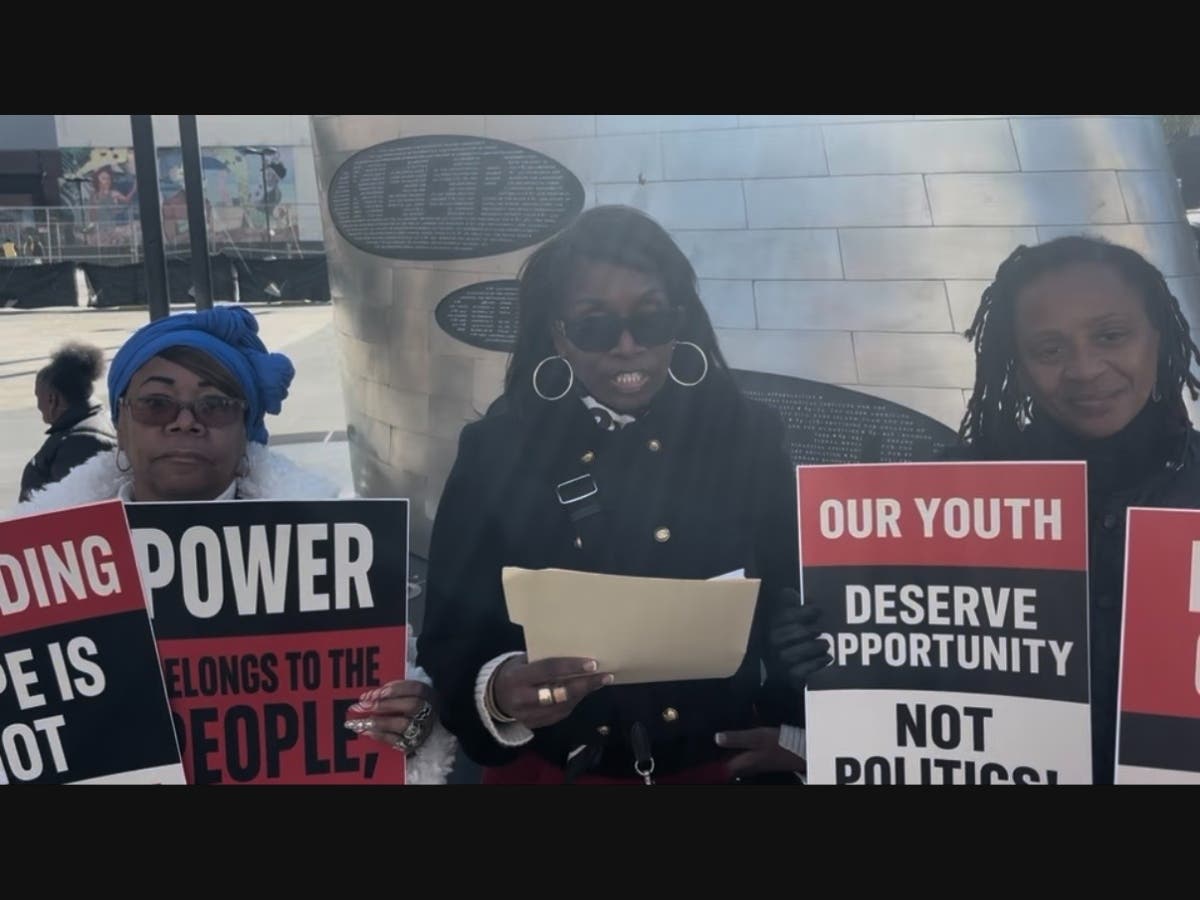
On October 23, 2025, Silent Voices United held a protest and press conference outside the Adam Clayton Powell Jr. State Office Building in Harlem, calling for transparency and accountability.
By then, the issue had grown beyond one nonprofit and one $10,000 allocation.
Silent Voices United argued that discretionary funding is public money—not the personal money of an elected official. Council members have significant influence over which organizations receive discretionary awards, but those dollars come from taxpayers and are intended to benefit the public.
With that authority should come transparency.
Grassroots organizations should be able to question government decisions without fearing that speaking up could jeopardize their relationship with elected officials or their ability to compete for future public funding.
A PUBLIC RECORD THAT STILL RAISES QUESTIONS
Nearly a year later, an important contradiction remains.
As of September 2026, Council Member Salaam’s official District 9 FY26 budget webpage still lists:
Silent Voices United Inc. — $10,000 — DSS/HRA — Domestic Violence and Empowerment Initiative (DoVE).
Yet a subsequent official City Council budget record documents a ($10,000) adjustment for Silent Voices United and a corresponding $10,000 allocation to the Department of Social Services.
That discrepancy matters.
A member of the public viewing the District 9 budget webpage could reasonably believe Silent Voices United ultimately received the $10,000.
The later Council record shows otherwise.
For an issue centered on transparency, the conflicting public information underscores precisely why clear government communication matters.
WHY $10,000 MATTERS
Ten thousand dollars may seem small within New York City’s enormous budget. For a grassroots nonprofit, it can fund workshops, outreach, transportation, supplies, facilitators, volunteer support and direct services for residents.
Smaller organizations often operate without large development departments, professional lobbyists or multimillion-dollar budgets. Yet they are frequently among the organizations closest to the communities government funding is intended to reach.
That makes transparency in discretionary funding particularly important.
Community organizations must be accountable for every public dollar they receive.
Government should be equally accountable for how those dollars are awarded, changed and withdrawn.
THE FUNDING DISAPPEARED. THE MISSION DIDN’T.
Silent Voices United did not receive the anticipated $10,000.
But the organization continued working.
Programs continued. Community outreach continued. Advocacy continued.
That may be the most important outcome of the controversy.
Government funding can strengthen grassroots organizations and expand their reach, but it should never determine whether they have the freedom to question government decisions.
The official record establishes that Silent Voices United was awarded $10,000 through the FY2026 DoVE Initiative and that the allocation was later reversed. Silent Voices United maintains that it was not directly notified by the Council member’s office and has characterized the decision as retaliation. The public budget records document the financial reversal, but they do not establish its motive.
What they do establish is enough to warrant an important conversation.
When taxpayer dollars are allocated, withdrawn or redirected, the communities and organizations affected deserve to know what happened and why.
Silent Voices United lost $10,000.
It did not lose its independence.
It did not stop serving.
And it did not remain silent.
You can withdraw an allocation.
You cannot withdraw a community’s right to ask why.