New City|Featured Event
Dame Dash Calls BET’s OG Stories “My Paid In Full”—Harlem Holiday Calls It Unauthorized

Event Details
FOR IMMEDIATE RELEASE
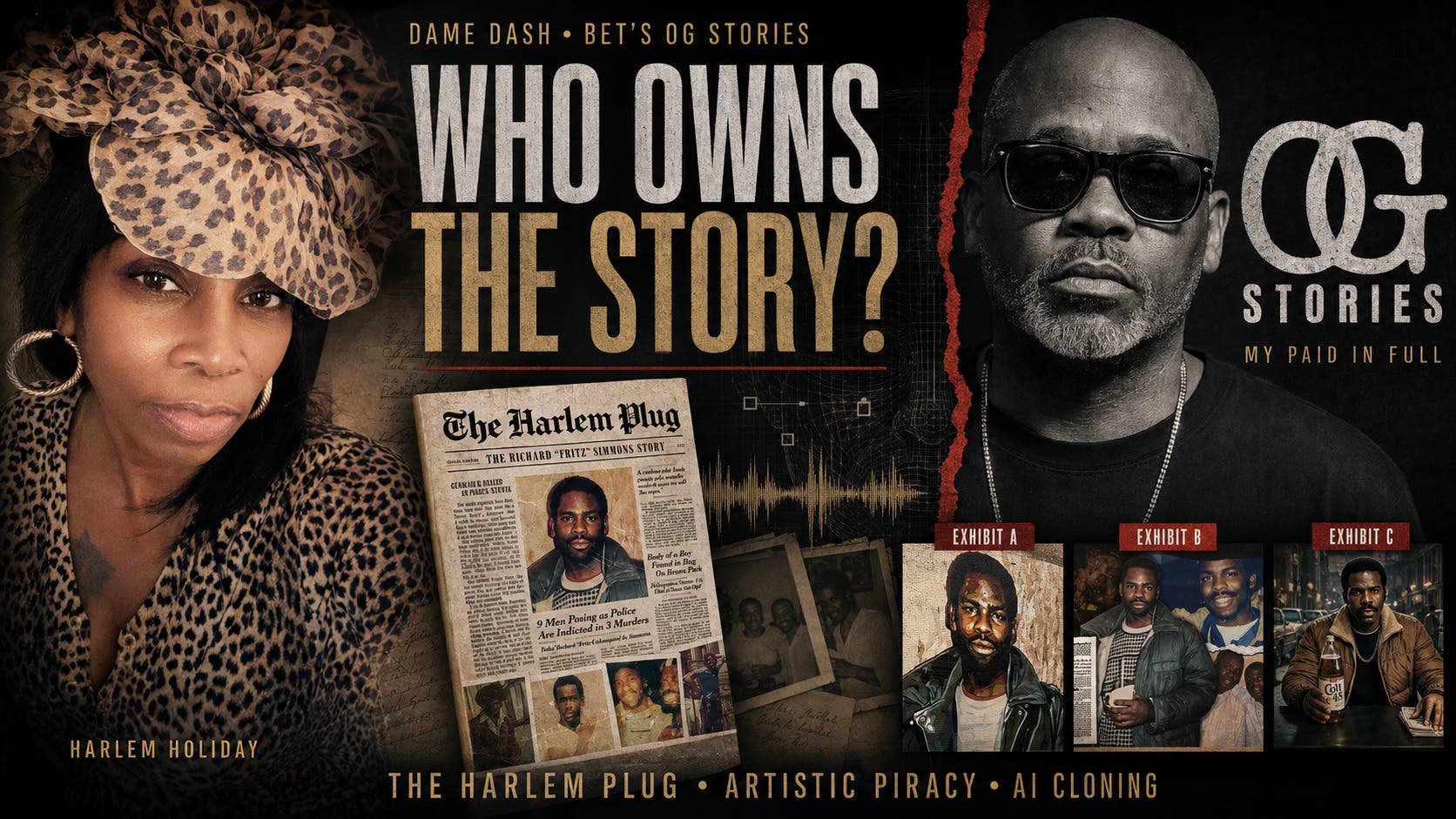
DAME DASH CALLS BET’S OG STORIES “MY PAID IN FULL”—BUT HARLEM HOLIDAY SAYS HER WORK WAS USED WITHOUT PERMISSION, PAYMENT OR CREDIT
Harlem author presents Exhibits A–C documenting alleged reuse of her book, interviews, photographs and research—and raises concerns about AI-generated images and audio involving Richard “Fritz” Simmons
NEW YORK, NY — August 29, 2026 — Harlem author and publisher Tiffany Simone Fulton, professionally known as Harlem Holiday, is calling for accountability over what she describes as the unauthorized use and repackaging of material connected to her book, The Harlem Plug: The Richard “Fritz” Simmons Story.
EXHIBIT A: BET’S OG STORIES
Fulton says the cover of The Harlem Plug and personal photographs of the late Richard “Fritz” Simmons and his family appeared in Michelle Smalls Queen of Harlem – OG Stories (Season 1, Episode 1) without authorization, attribution or compensation.
OG Stories is a five-part documentary series created and hosted by music and film mogul Damon “Dame” Dash. It premiered on BET on June 17, 2026, as the first installment of Dash’s My Paid in Full franchise.
“I appreciated hearing Michelle Smalls share her journey, but I could not ignore seeing my book cover and our family photographs used without anyone contacting me or the Simmons family,” Fulton said. “Dame Dash calls the franchise My Paid in Full, but Harlem Holiday was not paid, credited or even asked.”
Fulton is requesting acknowledgment, an explanation of how the material was obtained and used, and a response from Dame Dash, BET and the producers of OG Stories.
EXHIBIT B: FROM FAMILY HISTORY TO CLICKBAIT
Before Fulton published her research, she says no detailed account of Fritz’s life was readily available online. His sisters, Sheila and Evelyn, approached her and entrusted her with their memories, photographs and family history. Fulton interviewed people who knew Fritz, traveled to Barbados twice to speak with his right-hand man, Ace, and created a body of work through her book, a related Don Diva Magazine article, video interviews, YouTube content and social-media posts.
Fulton says portions of that work later appeared in online videos, articles and posts without proper acknowledgment. She describes some as clickbait that repackaged details, images and ideas as though others had independently uncovered them.
Fritz’s cultural significance was recognized before the recent wave of online content. Nas paid tribute to him by naming him among New York street legends in “Get Down,” from his 2002 album, God’s Son. For Fulton, preserving Fritz’s legacy was never about glorifying street life. It was about presenting the brother, the man and the Harlem figure his family wanted remembered.
“This was never clickbait,” Fulton said. “It was his legacy, his family’s truth and a story entrusted to me.”
EXHIBIT C: ARTISTIC PIRACY IN THE AI ERA
Fulton says the problem has expanded beyond copying photographs and written material. She has identified online content that appears to use artificial intelligence to recreate or alter Fritz’s likeness and generate audio narratives drawn from, or closely resembling, material documented in The Harlem Plug.
She argues that AI enables content creators to transform an author’s research and a deceased person’s identity into monetized content without consent, verification or credit. She is calling for stronger laws, better enforcement of intellectual-property protections and clear standards governing books, photographs, family archives, voice simulations and AI-generated likenesses.
“When deceased loved ones are involved, their images and legacies should be handled with dignity,” Fulton said. “Recognition costs nothing, but it means everything to the person who did the work. Our stories have value, and our permission should matter.”
Fulton believes the issue reflects a larger entertainment-industry imbalance: independent creators often lack the resources to challenge networks, production companies and high-traffic digital platforms. She urges producers and content creators to identify original sources, obtain written clearance and compensate creators when their work contributes to commercial content.
The Harlem Plug: The Richard “Fritz” Simmons Story is available in hardcover, paperback, Kindle and audiobook formats through Amazon, Audible and other major booksellers.
ABOUT HARLEM HOLIDAY
Tiffany Simone Fulton, professionally known as Harlem Holiday, is an Amazon bestselling author, filmmaker and founder of Harlem Westside Publishing LLC. Her work documents Harlem’s history, culture and community figures while preserving stories that might otherwise be forgotten.
MEDIA CONTACT
Tiffany Simone Fulton / Harlem Holiday
Harlem Westside Publishing LLC
harlemwestsidepublishingllc@gmail.com