Health & Fitness
Spotted Lanternflies Swarm Long Island: What To Know
The spotted lanternflies are popping up in great numbers on Long Island, with high concentrations on the East End, experts say.


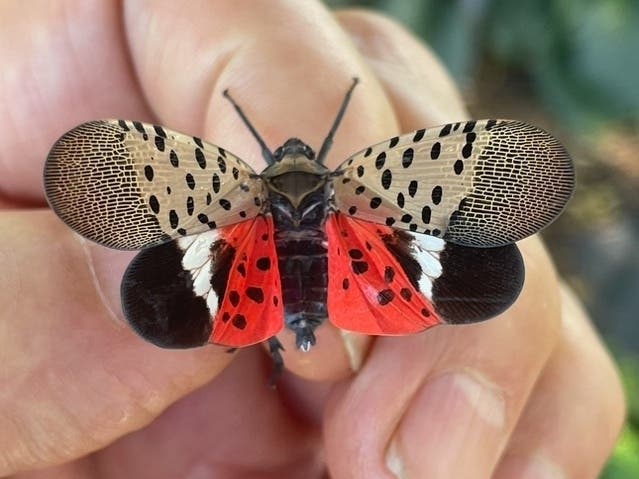
LONG ISLAND, NY — Spotted lanternflies are swarming Long Island, with residents reportedly seeing greater numbers of the invasive species than in past years.
According to the United States Department of Agriculture's Animal and Plant Health Inspection Service, the spotted lanternfly, or Lycorma delicatula, " is an invasive planthopper that feeds on a wide range of plants, including grapevines, hops, stone fruit trees, and hardwood trees. When the spotted lanternfly feeds, it excretes a sticky, sugary fluid that promotes sooty mold growth, which can further damage plants. Its preferred host is tree-of-heaven (Ailanthus altissima), and today 19 states and the District of Columbia have some degree of infestation."
And now, the spotted lanternflies are popping up in great numbers on Long Island, with high concentrations on the East End.
Find out what's happening in North Forkfor free with the latest updates from Patch.
"There are a few reasons why the numbers are high," said Dan Gilrein, Extension entomologist, Cornell Cooperative Extension of Suffolk County. "The nymphs were present earlier this spring and summer in large numbers, often unrecognized — although some people did notice them — and now have grown to the adult stage that is more obvious (larger, mobile, sometimes land on people or structures, aggregate on plants, etc.). So more people are now seeing them."
He added: "The spotted lanternfly is an invasive pest, of course, not native to the United States, and arrived here without its usual complement of natural enemies — biological controls— that normally keep the populations in check in its native range. Landing in new areas like the U.S., it is now mostly free of these and that is another reason why the numbers are so high. "
Find out what's happening in North Forkfor free with the latest updates from Patch.
There were many reports about very high numbers of spotted lanternflies in the New York City area a few years ago, Gilrein told Patch. "Spotted lanternflies have gradually been moving eastward — and in other directions— into new areas from where they were first found near Reading, PA in 2014. Eastern Long Island is now next on their agenda as the populations expand into the area."
Gilrein said he first started seeing the spotted lanternflies in Riverhead just three years ago, in very low numbers. "And now the population has increased considerably from the initial pioneers and probably also from new migrants moving in from areas west," he said.
Discussing environmental impacts, Gilrein said: "For the most part landscape plants seem to tolerate even surprisingly large numbers of them, though occasionally, some trees may have reduced growth or show flagging branches — early fall color, occasionally some dieback."
That information, he said, is based upon reports and observations from colleagues and others in Pennsylvania where the insect has been present much longer.
"People will probably notice that the insects favor certain trees more than others — tree-of-heaven, willow, birch, red and silver maples, and walnut are among their favorite hosts, though they will feed on many more," he said.
He added that the the immature stages feed on those, and even more non-woody plants, too.
"Grape is also a favorite host and something of an exception: very large numbers of the adult lanternflies feeding on them can reduce growth and yields the following year and possibly even kill the vines," Gilrein said.
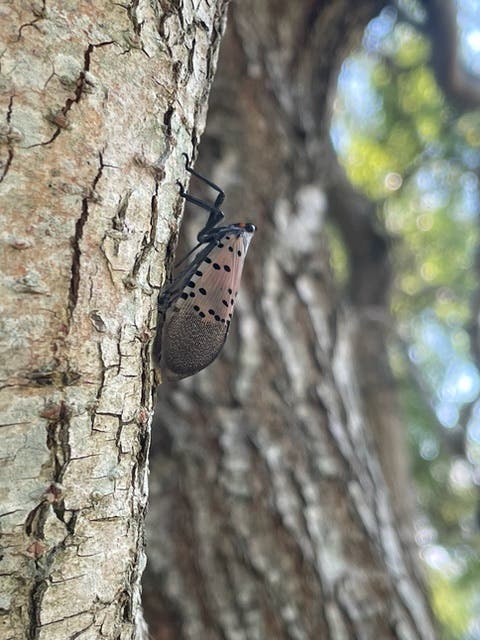
The adults, Gilrein said, generate lots of sticky, sugary honeydew from feeding on the sap of these host trees. Sooty mold can grow, leaving objects with black residue, he said.
"Both can be annoying on walkways, plants, and objects beneath where they feed and the honeydew also attracts some flies — and stinging insects — that can be an annoyance," Gilrein said. "In such cases where they become intolerable, I suggest people try removing them with a shop vacuum."
Gilrein said the cooler weather should bring relief.
"The numbers of lanternflies will be dropping as we get further into fall and the majority killed by the first hard freeze — they don’t survive the winter. The eggs will remain and those can be scraped off into a bag or crushed in place with a wood dowel or twig."
He added: "It’s good to reassure people that spotted lanternflies, though annoying at times, don’t bite and don’t damage homes or other structures, and they don’t establish indoors, either — they can’t survive long away from their host plants."
Also, he said in areas such as Pennsylvania, where they’ve been present for years, "it appears the numbers decline significantly after surging, perhaps because existing predators, such as birds, recognize them as a new food source."
And, Gilrein added: "There is more good news: Next year it appears a new biocontrol specific to spotted lanternfly may be released — so help it seems is on the way. "
Get more local news delivered straight to your inbox. Sign up for free Patch newsletters and alerts.