Politics & Government
Job Training But No Guaranteed Jobs: Why Pa.'S Investment In Pre-Apprenticeships Is Complicated
A statewide effort looks to expand pre-apprenticeships, which provide job training to high school students and recent graduates.

July 7, 2026
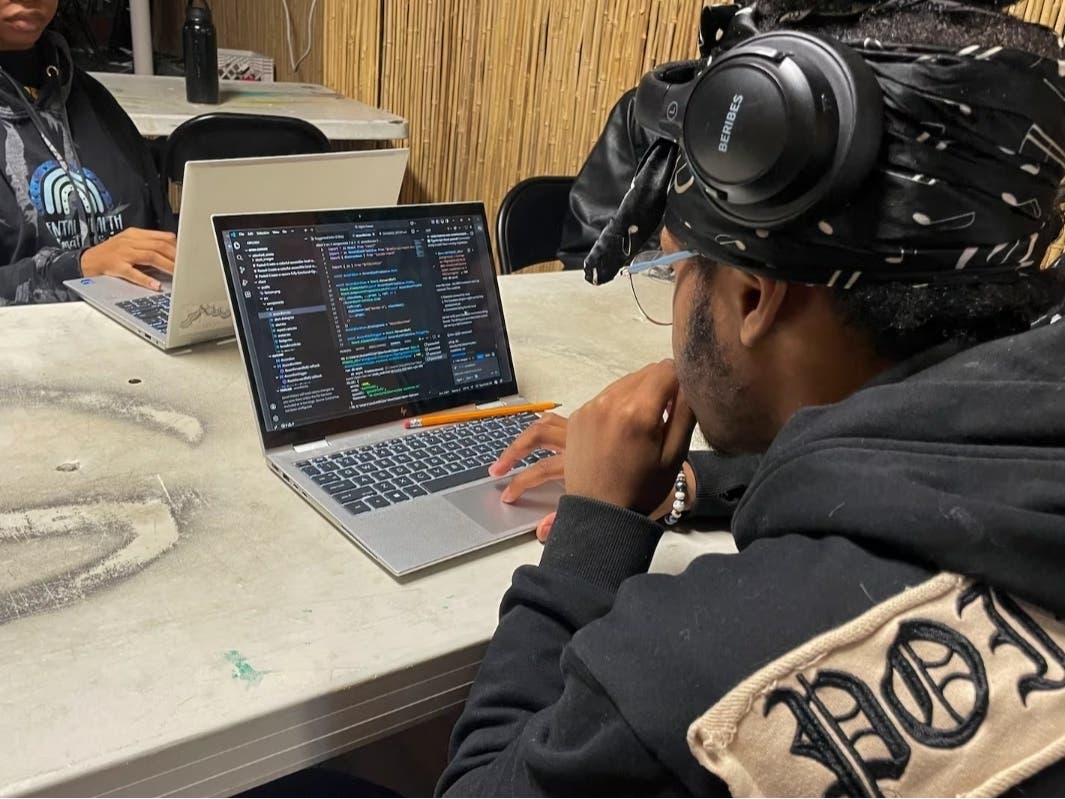
In a rehabbed shipping container in West Philadelphia, Nakiah Walker leaned over her friend’s Chromebook to take a peek at logo ideas.
Find out what's happening in Across Pennsylvaniafor free with the latest updates from Patch.
Walker, 20, was among a group of high school students and recent graduates trying to apply the tips and tricks they’d learned during a semester-long digital marketing program.
She joined the program because she was interested in learning more about marketing. But more than anything, she said she’s glad to have the opportunity to explore different career options.
Find out what's happening in Across Pennsylvaniafor free with the latest updates from Patch.
“They don’t really offer that in school,” said Walker. “In school, they just tell you to get your work done, graduate, then go to college. They don’t really tell you there are other things to pursue, and you can have a career doing things that you actually want.”
The program, launched in 2023 by the Philadelphia nonprofit We Love Philly, is part of a recent statewide effort to expand what’s known as pre-apprenticeships, which provide job training to high school students and recent graduates in a variety of fields. Pre-apprenticeships must be connected to apprenticeships, which are often connected with employers. The idea is that the pipeline can help ensure programs actually connect young people to jobs. But there isn’t comprehensive data yet to show whether that’s working.
Last year in Pennsylvania, there were nearly 150 pre-apprenticeship programs with around 3,200 active participants, according to state data. That’s three times the number of participants compared with two years prior, and a large portion are concentrated in the Philadelphia area. Gov. Josh Shapiro has proposed doubling the state’s investment in pre-apprenticeships and other career training programs for students to $7 million next fiscal year.

Student book bags in the Philadelphia school district. (Photo by Caroline Gutman for Chalkbeat)
The investment comes as the number of students in Philly and statewide who opt out of going to college directly after high school has grown. In Philadelphia, around half of high school graduates in the Class of 2025 did not matriculate, according to district data. The rate was slightly higher for Black students like Walker. State officials are backing pre-apprenticeships as a way to help fill high-demand jobs and connect students to career pathways that don’t require a college degree. Still, those pathways remain rare, and college is still the surest bet for expanding economic opportunity. Experts and educators say students need more support for pre-apprenticeships to ultimately lead to real jobs.
“We talk a big game about, ‘You don’t have to go to college,’” said Taylor White, director of the Postsecondary Pathways for Youth program at New America, a think tank. “But there are very, very few other ways, and they’re really inaccessible and hard to find.”
Several other states have worked to expand apprenticeship opportunities for young people in recent years. And studies of some programs show they can help connect youth to careers, especially if students also take coursework in the same area. But the field is still fairly new in most states, said White.
Pennsylvania doesn’t publish any data on pre-apprenticeship participants’ outcomes. A spokesperson for the Department of Labor and Industry said in an email that the department has only recently begun collecting data on pre-apprenticeships “so the information we have at this stage is still somewhat incomplete and is not yet ready to share with confidence.”
Patricia Blumenauer, deputy secretary for workforce development at the Pennsylvania Department of Labor & Industry, said the pre-apprenticeships goal is broad: connect more young people with industries looking to fill jobs and help them get relevant skills. Even if a student doesn’t continue in their pre-apprenticeship field, she said she still sees it as a win if the experience gives a young person a better sense of what they want to do.
“Really getting that experience and making a decision either way for us feels like a success,” Blumenauer said. That’s partly why the state wants to keep expanding pre-apprenticeship opportunities and get more employers on board to work with young people, she said.
When Walker graduated high school in 2024, she felt stumped about what to do next.
She thought about going to college, but didn’t want to pay for it before she knew what she wanted to study. But coming up with another long-term plan for her future felt impossible, she said.
After graduation, she spent a year working a mix of jobs. Then she got a call from someone she considered to be a mentor, telling her about the pre-apprenticeship. She was skeptical at first, and felt that it was risky to leave her job to start the short-term program. But she agreed to check it out.
Soon, Walker was showing up four days a week and earning a stipend of $12 per hour. She built a portfolio and earned a certification from Google in digital marketing. The team at We Love Philly also helped her format a resume and update her LinkedIn profile.
“I was at a point in time when I was stuck, until I got recommended here,” said Walker.
Walker was one of thousands of Philly students in her year who did not go to college the following fall. Of those who matriculated, around one-quarter dropped out after a year.
Research shows going to college remains the surest way for young people to access economic opportunities and move out of poverty.
At the same time, members of Gov. Josh Shapiro’s administration have repeated that alternatives to college — like military training, apprenticeships, and trade school — are valuable options for Pennsylvania’s young people.
“We need to respect each and every pathway the same,” Shapiro said at a rally earlier this year as part of his reelection campaign.
Blumenauer said many Pennsylvania students are looking for options other than college, even if they understand the relative value of higher education. She hopes pre-apprenticeships will help those students and help fill jobs in the state.
“We are constantly hearing from businesses that they are concerned about the future and where their pipeline of workers going forward is going to come from,” said Blumenauer.
Still, it’s unclear if the approach is working. Many states, including Pennsylvania, have set their own definitions of what an apprenticeship for young people should look like and standards for what it should accomplish. Data on outcomes of students after they leave the programs is also hard to come by.
The tension between college and careers comes up frequently in Philadelphia. Even groups working on helping students access college say they see lots of value in expanding career-oriented opportunities.
But some worry the push for career-related opportunities has eclipsed support for kids looking to go to college. Farah Jimenez, CEO of the Philadelphia Education Fund, which works with Philly high schoolers to access college and career training, said it’s useful to expose young people to different careers. But she worries the emphasis on career-related paths perpetuates the belief that college is expensive, likely to result in debt, and out of reach for many.
The question kids hear all the time now, she said, is: “Why would you go to college?”
After Walker finished her pre-apprenticeship in digital marketing, she said she was hopeful and excited about what might come next for her professionally. She felt her resume, experience, and credentials would help her get noticed by employers, and she’s been able to find work since the program ended.
But that work isn’t in digital marketing. These days, she’s working at a hospital and considering applying for college in a year or two. She still isn’t sure if she wants to go into marketing, but in her free time, she enjoys using some of the skills she learned to help friends design websites and is preparing to launch her own jewelry business.
“It’s not just like we’re learning a skill — it’s also like we’re learning other things that goes into being an adult, being a good worker and just having and maintaining a career,” she said.
Josiah Miller, another recent pre-apprentice at We Love Philly, participated in the organization’s cybersecurity training program. He learned about and got into a paid two-year program to train recent graduates for tech-related jobs. He now plans to go into tech, and he attributes that to his time in the pre-apprenticeship.
His pre-apprenticeship motivated him “to learn new skills, put myself out there more,” Miller said.
At We Love Philly, directing students to jobs isn’t the only goal. The organization dedicates a portion of each day to social-emotional learning to help students build trust and prepare for the professional world.
“We have to create an environment where they want to be and are comfortable enough to take risks without feeling embarrassed or angry because, you know, they messed up or didn’t do something right,” said Cory Zoblin, who runs the cybersecurity pre-apprenticeship.
As with schools, workforce training programs can’t provide all the answers, Zoblin said. “But they can make learning and curiosity more integral, so that kids want to keep going.”
The Pennsylvania Capital-Star, a nonpartisan, nonprofit news site, delivers honest and aggressive coverage of state government, politics and policy. Since launching in February 2019, the Capital-Star has emerged as a go-to source for in-depth original reporting, explainers on complex topics, features that ground policy debates, and progressive commentary on a range of issues. The Capital-Star is part of States Newsroom, a national 501(c)(3) nonprofit supported by grants and a coalition of donors and readers.