Neighbor News
Solving the Nursing Shortage: How Nursing Schools Flipped the Script from Scarcity to Success.
New AICUP report, two years in the marking, shows how nursing schools' plans paid off for Pennsylvania
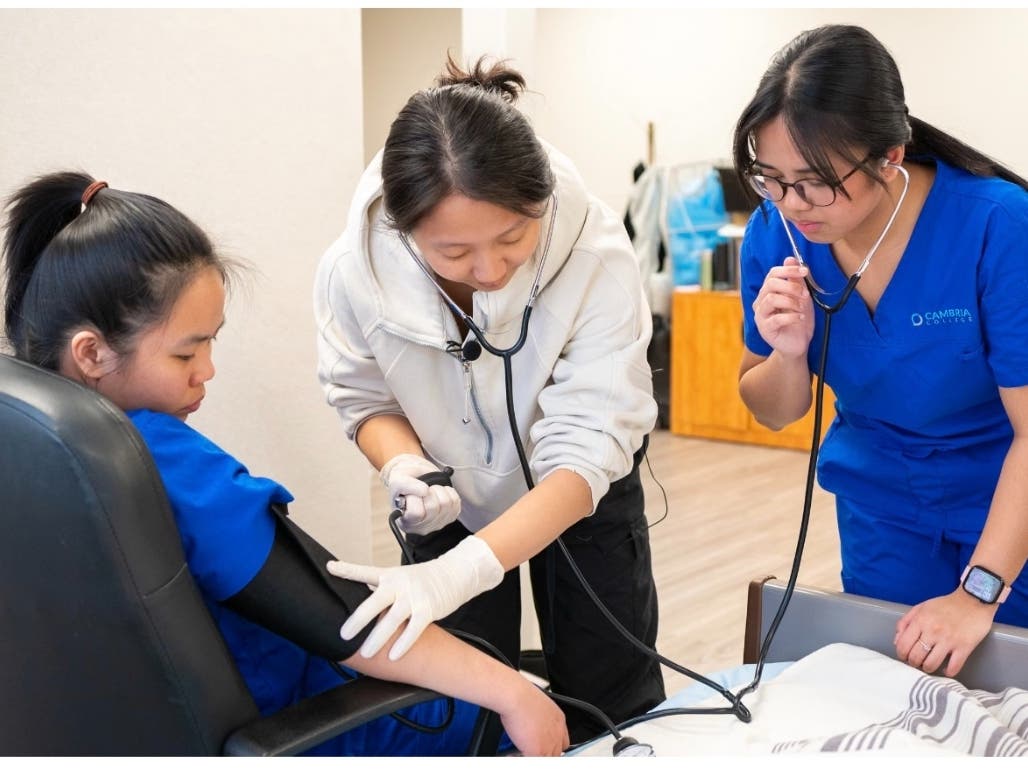
Solving the Nursing Shortage: How 43 Nursing Schools Helped Flip the Script from Scarcity to Success.
In 2024, Pennsylvania was predicted to have the worst nursing shortage among 50 states within two years. Two years later, by 2026, that still hasn’t happened. This is thanks in part to the 43 nursing schools that helped change a dire prediction of doom into a manageable challenge. Schools worked together, worked with industry partners, and worked with legislators to find creative solutions. Here are lessons other states can learn from this model.
In August 2024, the Association of Independent Colleges and Universities of Pennsylvania (AICUP) surveyed its 43 nursing schools to find out what they were doing to meet Pennsylvania’s critical need for nurses. Leading to that, predictions about a larger, looming nursing shortage were circulated by local news outlets, citing a report from Mercer, a consulting firm that predicted by 2026, “The largest projected shortages of nursing talent will be in Pennsylvania.”
Find out what's happening in Harrisburgfor free with the latest updates from Patch.
However, the prediction that Pennsylvania would have “the worst nursing shortage in the nation by 2026” simply didn’t materialize. To be sure, Pennsylvania’s nursing shortage is still critical and real today, and Pennsylvania’s nursing shortage is even dramatized for a national audience on the HBO series, The Pitt. But several reports in the last year offer reasons for optimism about the direction of nursing in Pennsylvania. A January 2026 report by RegisteredNursing.org named Pennsylvania 6th in states with the most new registered nurse positions. A September 2025 report by NurseJournal found that Pennsylvania is 12th best in the nation with a Nurse-to-State Population Ratio of 11.23 nurses per 1,000 population. In fact, even Mercer’s 2024 projections, which launched the original news stories predicting PA would have the worst shortage in the US by 2026, also predicted that Pennsylvania would have the second-highest surplus in the nation of Registered Nurses (RNs) by 2028. And among reports that point to a nursing shortage, Pennsylvania ranks 5th among states with the largest nursing shortages according to a May 2026 report by Research.com (citing data from 2025) -- and while that certainly isn’t ideal, it also doesn’t match up with the news predictions from 2024. In fact, independent reports indicate that Pennsylvania’s health system is ranked among the nation’s best.
So, what happened? How did Pennsylvania, which was positioned to suffer the worst nursing shortage in the nation by 2026, manage to avert disaster and inch its way forward in the rankings? We’ll explore the answer in this report by sharing insights about these three assets: Schools, Partnerships, and Legislative Support. In no small part, AICUP nursing schools clearly played a key role in addressing the nursing shortage. These schools took decisive action in 2024 to meet workforce needs by creating bold, new, and innovative programs, and we’re still seeing the benefits of that work today in 2026.
Find out what's happening in Harrisburgfor free with the latest updates from Patch.
“We needed more nurses, it’s as simple as that. Two years ago, we were looking at a potentially life-threatening logistical nightmare for local hospitals. The AICUP nursing schools stepped up when Pennsylvania needed them,” said AICUP President Tom Foley. “We have more work to do, but we can still take a moment to celebrate this astonishing success, and share what worked.”
Schools
Pennsylvania has 43 independent nonprofit nursing schools (“AICUP”) that play an undeniable and instrumental part in increasing the supply of qualified nurses. That’s because these schools account for a whopping 69% of all four-year nursing degrees issued in Pennsylvania, larger than any state or state-related school system. Among minorities, that number jumps to 75%, meaning that 3 in 4 ethnic minority nursing students pursuing a four-year degree in Pennsylvania are learning at an AICUP school. These schools are part of the reason why Pennsylvania consistently ranks among the top 5 states with the most nursing programs. What’s more, in economic terms, the impact of the AICUP sector is profound. An independent analysis found that the AICUP schools alone generate $29 billion for the Pennsylvania economy each year, but when also considering the affiliated college hospital systems (called “eds and meds”), that figure balloons to an incredible annual impact of $65 billion, or nearly 7% of the Pennsylvania economy.
AICUP’s 2024 report about the nursing shortage and nursing school survey highlighted how the 43 AICUP nursing schools were engaging in bold and innovative programs and new partnerships to train more nurses, grouped within four categories:
1. Encourage new age groups to consider a career in nursing (including K-12 and retirees).
2. Scale up facilities, increase offerings, and build new spaces for more nursing students.
3. Expedite graduation time, through new dual enrollment and accelerated programs.
4. Assist students in making nursing school affordable and accessible through new transfer agreements and increased institutional aid and grants.
When news reports about the nursing shortage in 2023-2024 expressed concern that some schools were turning away qualified applicants, and that in order to increase the supply of new nurses, schools would need to expand their programs, AICUP schools responded, and expanded in a big way. Between 2023-2024 alone, at least 6 new nursing programs and nursing school expansions were announced by the AICUP schools, including a new, 55,000-square-foot facility in Reading with a hospital simulation center. AICUP schools experimented with ways to expedite the time to graduate without sacrificing the quality of learning. Examples included traditional dual enrollment as well as college classes for high school students. Working nurses with an associate’s degree were given the option of an accelerated bachelor’s degree in 12 months. And people switching careers can pursue an accelerated nursing degree if they already earned a bachelor’s degree in a non-nursing field.
Students from non-traditional paths were encouraged to consider nursing, and AICUP schools even promoted outreach programs at K-12 schools. Also in 2024, one AICUP university created a Nurse Emeritus Program that supports retired nurses when they reenter the workforce and mentor new nurses.
AICUP nursing schools kept education affordable and accessible through increased institutional grants and multiple transfer agreements. In 2024 alone, two AICUP nursing schools announced tuition reductions, and one even announced a no tuition program for eligible Pennsylvania students from families earning less than $70,000 annually. In the time since then, AICUP’s commitment to affordability received national recognition, when the Washington Post found that 94% of free tuition programs in Pennsylvania are at AICUP schools (still, that figure misses several AICUP schools, including a new tuition-free program announced in May 2026). AICUP itself sponsors the McLean Scholarship for Nursing and Physician Assistant Majors.
This statewide, collaborative effort of the AICUP nursing schools in 2024 to help solve the anticipated nursing shortage was highlighted across Pennsylvania in news stories (“Independent schools in Pa. working to counter nurse shortage”) and editorials (“Closing the nursing shortage, one program at a time”).
Partnerships
In addition to industry partnerships, AICUP’s unique “umbrella” provided a space for schools to partner as well; schools that otherwise were competitors worked together and collaborated to meet critical hospital staffing needs. For example, a physician pipeline was even created between The University of Scranton and Geisinger College of Health Sciences, in which students are supported by both schools while they transfer from undergraduate to graduate studies. Geisinger’s Abigail Scholars work in an accelerated program, are paid a stipend while training, and have a job after graduation at a Geisinger hospital. For another example, Seton Hill University and the Lake Erie College of Osteopathic Medicine (LECOM) partnered to bring a LECOM medical school branch to Seton Hill’s campus in Greensburg, PA, offering students accelerated dual-degree pathways in medicine.
There are multiple pipelines of talent between Pennsylvania healthcare centers and Pennsylvania’s 43 independent nonprofit nursing schools. These ties are cultivated by the schools’ career centers and industry relations staff, who find and formalize partnerships with local employers. AICUP nursing schools offer nursing-specific career fairs that bring dozens of community health partners to campus, helping to tear down the silos separating students and employers – examples include Villanova University, Penn, and Lebanon Valley College, just to name a few.
AICUP nursing schools function as “feeder schools” supplying their local hospitals with trained healthcare staff. For one example, a small liberal arts college, Mount Aloysius College in Cambria County, supplies new nurses to no less than three local hospitals, even offering employment to graduates through the school’s partnership with UPMC hospitals in Altoona, Bedford, and Somerset.
“I saw first-hand how Pennsylvania’s nursing schools work with industry and government to build a pipeline of talent that goes from the classroom to your local hospital,” said AICUP President Tom Foley, who served as president of a college and nursing school, and is a former Pennsylvania Secretary of Labor and Industry. “My school, which had more students enrolled than there were residents in our town, was a feeder school for three major hospitals, which shows you that even small schools make a big impact on their community by serving this critical need and producing more nurses.”
A cross-section of industry, government, and higher education worked together to address the nursing shortage in PA. For one example, LeadingAge PA, which helps connect nurses and allied healthcare workers with care communities, partners with at least eight AICUP schools through their Higher Education Partnership Program (also known as the Career Growth Partners program), which helps facilitate education and career development tailored to the health services sector. And collaborative events across PA brought together a patchwork of professionals from different sectors to discuss solutions to PA’s healthcare shortages, with recent healthcare workforce summits hosted by statewide organizations like the Hospital and Healthsystem Association of Pennsylvania, PA Chamber of Business and Industry, and the Center for Rural Pennsylvania.
Legislative Support
Nobody wants a nursing shortage, and no legislator wants their local hospital to be understaffed. The need to solve the nursing shortage is an issue on which both Democrats and Republicans can agree, and in “Purple Pennsylvania,” where neither party holds a solid majority across all state elected offices, Republicans and Democrats reached across the aisle and worked together to support our nursing schools and help us expand our work in nursing education.
For example, State Senator Rosemary Brown introduced Senate Bill 998, to, quote, “expand nursing education and relieve workforce shortage.” The Nurse Education Capacity Expansion Grant Program is intended to increase the number of qualified nursing students by providing targeted support to accredited nursing schools across Pennsylvania. Under the bill, the Department of Community and Economic Development would administer grants to eligible nursing education programs. In April 2026, Brown’s bill passed the Senate and headed to the House with bipartisan support. State Senator Maria Collett, a former nurse, is a co-sponsor of SB 998, and she has proposed additional legislation to support and expand Pennsylvania's nursing education and nursing workforce.
For another example, Pennsylvania introduced the Nurse Shortage Assistance Program in 2025, which is intended to support additional partnerships between hospitals and nursing schools. Through these partnerships, hospitals would repay a large portion of student loans for people who commit to working for three years in Pennsylvania hospitals after graduation. Administrated through the Pennsylvania Higher Education Assistance Agency (PHEAA), the program was only made possible thanks to bipartisan support in the legislature.
And for yet another example, Governor Shapiro’s 2025-26 budget proposal supported workforce initiatives to educate, train, and recruit nursing professionals, and supported the creation of PHEAA’s Nurse Shortage Assistance Program. “By expanding education programs, providing tuition assistance, and strengthening workforce pipelines, we can ensure hospitals have the skilled professionals they need to deliver high-quality patient care,” the Governor’s office stated in a 2025 news release, expressing the Administration’s support for expanding nursing education.
“We hope our peers in other states can learn from the Pennsylvania model, and see what worked for us,” said AICUP President Tom Foley. “Legislators, employers, and education leaders need to be working together if we’re going to meet workforce needs. This is no time for silos or egos.”
Resources:
2026 AICUP nursing survey and news release:
aicup.org/wp-content/uploads/2026/07/Nursing-shortage-to-success-_-AICUP-news-release-2026.pdf
2024 AICUP nursing survey and nursing shortage report:
https://aicup.org/wp-content/uploads/2024/08/Nursing-Annotated-with-Links-8.26.pdf
AICUP Economic Impact Report:
https://aicup.org/wp-content/uploads/2025/07/Economic-Impact-Report-2025.pdf
Map and list of all 80+ AICUP member colleges and universities:
https://aicup.org/about-us/members/
The 43 AICUP nursing programs are located at:
Alvernia University, Carlow University, Cedar Crest College, Chatham University, Chestnut Hill College, DeSales University, Drexel University, Duquesne University, Eastern University, Elizabethtown College, Gannon University, Geneva College, Gwynedd Mercy University, Harrisburg University of Science & Technology, Holy Family University, Immaculata University, King’s College, La Roche University, La Salle University, Lackawanna College, Lebanon Valley College, Marywood University, Mercyhurst University, Messiah University, Misericordia University, Moravian University, Mount Aloysius College, Neumann University, Robert Morris University, Saint Francis University, Saint Joseph’s University, Seton Hill University, Thiel College, Thomas Jefferson University, University of Pennsylvania, University of Scranton, Villanova University, Waynesburg University, Westminster College, Widener University, Wilkes University, Wilson College, York College of Pennsylvania.