Community Corner
Campaign To Recognize Newtown's John Janney A Story Of Passion, Perseverance
Read about one woman's quest to recognize a Newtown man who provided a lifeline home for soldiers serving overseas during WWII.


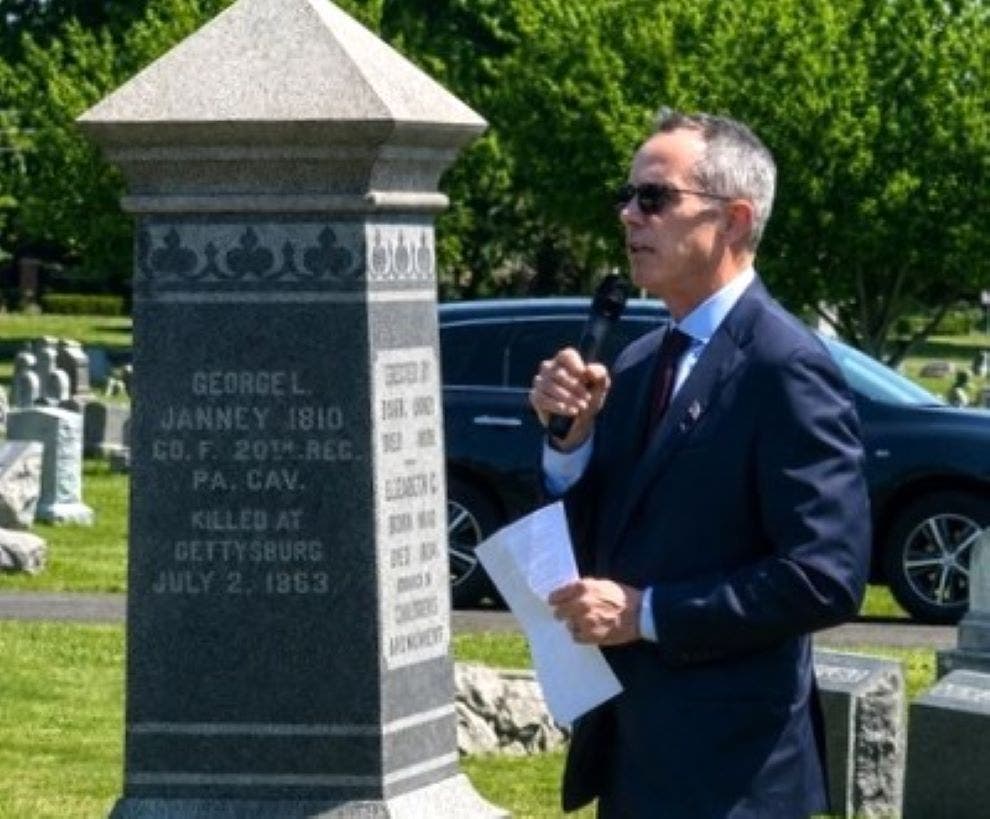
NEWTOWN, PA — The effort to honor John Janney with a meaningful tribute became a story of perseverance, timing, and the belief that some goals are worth pursuing no matter how unlikely they may seem.
While planning a special ceremony recognizing Janney and the impact he had on Newtown-area World War II veterans, organizer Nancy Webster wanted every detail to feel personal and heartfelt. One idea stood above the rest — obtaining a letter for Janney from Helen Ayres Patton, granddaughter of General George S. Patton Jr. and founder and chairman of The Patton Foundation.
“It felt like shooting for the moon,” Webster said.
Find out what's happening in Newtownfor free with the latest updates from Patch.
For nearly two months, Webster worked to establish contact with Patton, who lives in France and travels extensively around the world attending veteran commemorations and military history events. When the two finally connected about a month before the ceremony, Webster shared Janney’s remarkable story and explained why she believed he deserved long-overdue recognition.
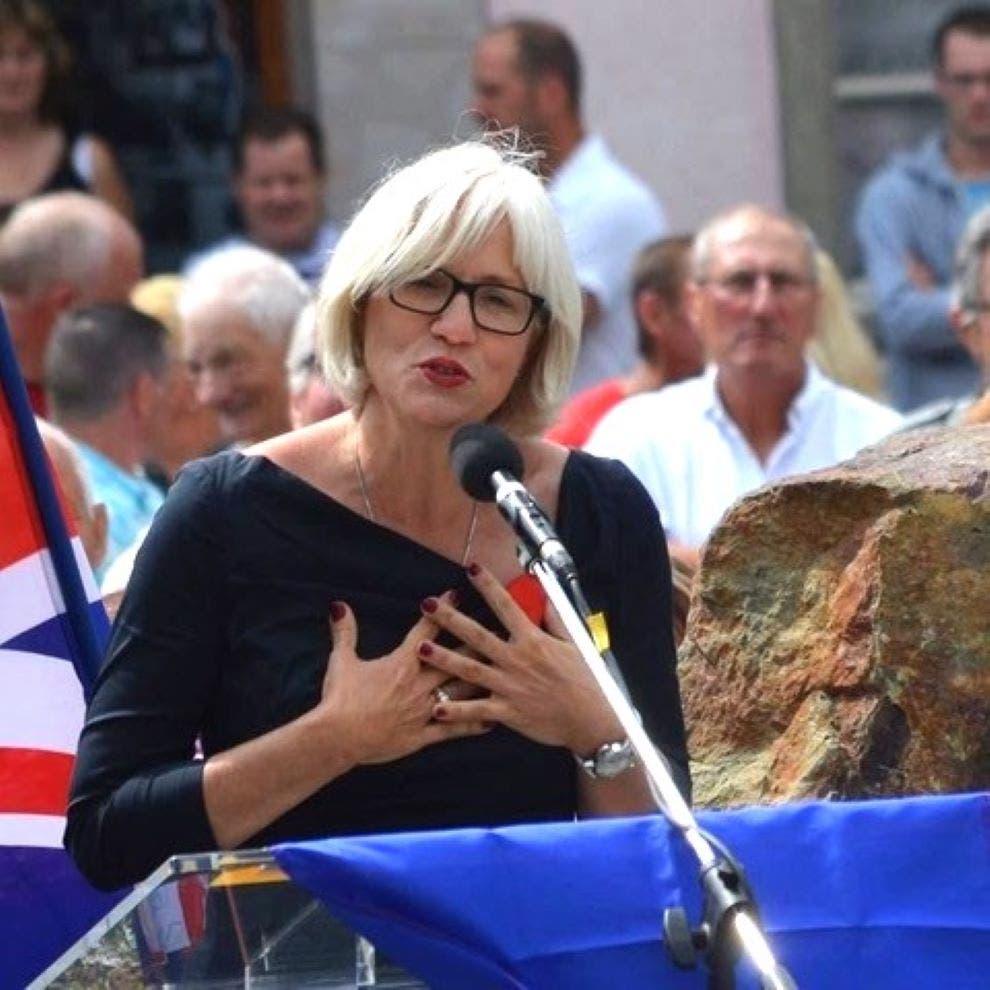
Helen Ayer Patton, granddaughter of General George S. Patton. (Courtesy of Helen Patton)
Find out what's happening in Newtownfor free with the latest updates from Patch.
What ultimately convinced Patton to participate, Webster believes, was the deeply personal nature of the ceremony itself, which included prayers, a proclamation, a poem written for the occasion and other remembrances held at Janney's grave in the Newtown Cemetery.
Every aspect of the event had been carefully designed to honor Janney and his generation in a meaningful way.
Guests to the ceremony received handwritten thank-you notes pinned with American flags — a tribute to the countless handwritten letters Janney himself had written during the war years to local soldiers serving overseas.
Award-winning Council Rock North student and poet Morgan Marshall prepared a poem just for the event.
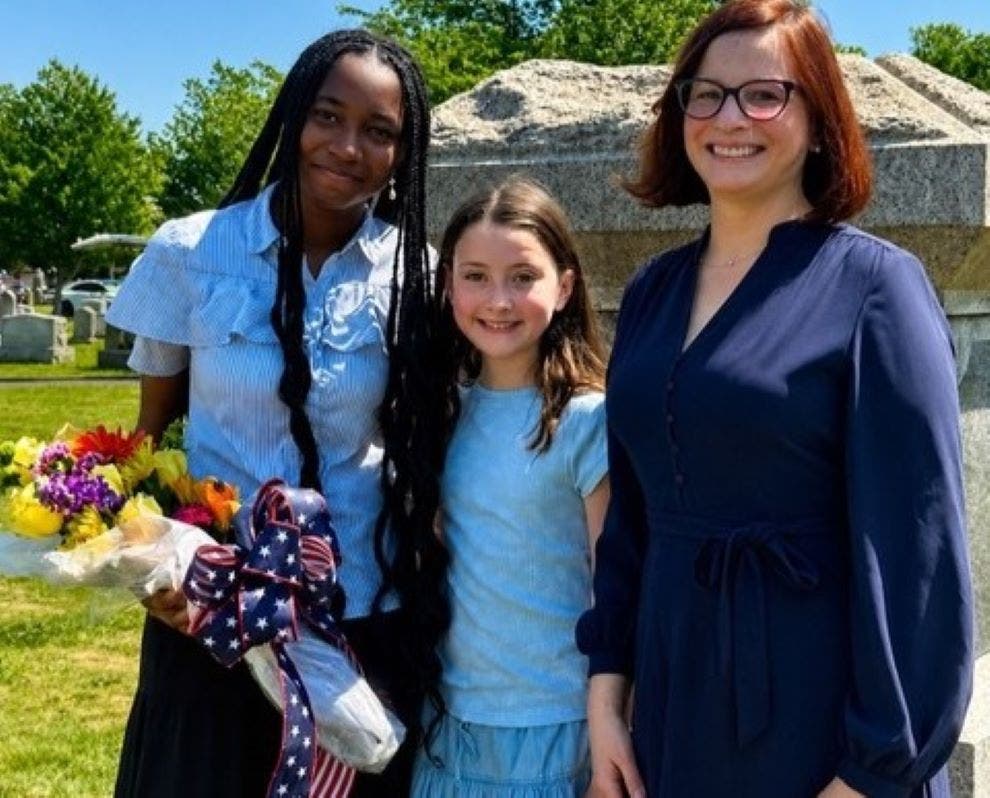
Poet Morgan Marshall, Jr., Layla Leuthy-Peck, and Newtown Borough Mayor Tara Grunde-McLaughlin.
"Many are unaware of General Patton's love for poetry, and in fact, Helen informed me about a book published with a collection of his own poems called 'The Poems of General George S. Patton, Jr.: Lines of Fire,'" relates Webster.
“Details mattered to Helen just as much as they mattered to her grandfather,” Webster said.
As the ceremony date approached, however, the letter had still not arrived. Then, on the night before the event, Webster received an unexpected audio call notification on her phone.
“It said it was Helen Ayres Patton calling,” Webster recalled. “I literally had to sit down because I was afraid I’d hit the wrong button and disconnect the call.”
The two spoke for 27 minutes, discussing the importance of recognizing unsung heroes and finding meaningful ways to inspire younger generations to learn about World War II history.
Patton apologized for the delay, explaining that her demanding schedule had left her sleeping only a few hours each night. Though she was not feeling well, she promised Webster the letter would arrive in time.
.jpg)
An illustration of John Janney writing letters to soldiers serving overseas.
On the morning of the ceremony, with Webster preparing to leave for the cemetery, the letter still had not appeared. Then, moments before departing, she refreshed her computer one final time.
A notification appeared: “New Mail.”
The letter from Patton had arrived.
According to Webster, Patton later explained that despite feeling ill during the night, she suddenly rose from bed and went directly to her writing table.
Wanting the tribute to carry authentic emotion, she chose to write the message as though it came directly from her grandfather himself. Drawing from years of family history and extensive study of General Patton’s words and writings, she crafted what Webster described as a powerful and deeply personal tribute.
Because of his packed schedule, Sen. Santarsiero arrived as the event was about to begin. Only moments before he was scheduled to speak did Webster hand him the letter.
“I was fully prepared for him to say no,” she said. “He had no time to prepare. He had never seen the letter or even met me before. Now he was being asked to read it while cameras were rolling!”
Instead, the senator immediately agreed.
“He simply said it would be an honor.”
As Santarsiero addressed the crowd, he began by reflecting on stories his own father had shared about the importance of receiving letters and messages from home while serving overseas. He also spoke about his father’s World War II service, including his role in the Battle of the Bulge and his connection to General Patton’s command.
When Santarsiero revealed that the letter in his hand that he was about to read had been written by Patton’s granddaughter, an audible reaction spread through the audience.
The reading itself brought both emotion and laughter. Several times, Santarsiero paused to jokingly remind listeners that the colorful language contained in portions of the tribute reflected General Patton’s famously blunt personality — not his own words.
By the conclusion of the reading, Webster said the senator appeared deeply moved.
“I think he was imagining that maybe his father and General Patton were standing together watching that moment. I’m sure they were,” she said.
For Webster, the chain of events — connecting with Helen Patton, receiving the letter moments before the ceremony, her printer actually working, and having it read by a senator of choice who would understand its importance — became its own lesson in perseverance.
“It proves people should still dream big, keep believing, and keep working,” she said. “The chances of it all coming together were incredibly slim, but something kept pushing me forward. I truly believe John’s pen pals were behind it.”
Since the ceremony, Patton has expressed interest in collaborating with Webster on future historical and veteran-related projects — an invitation Webster enthusiastically accepted.
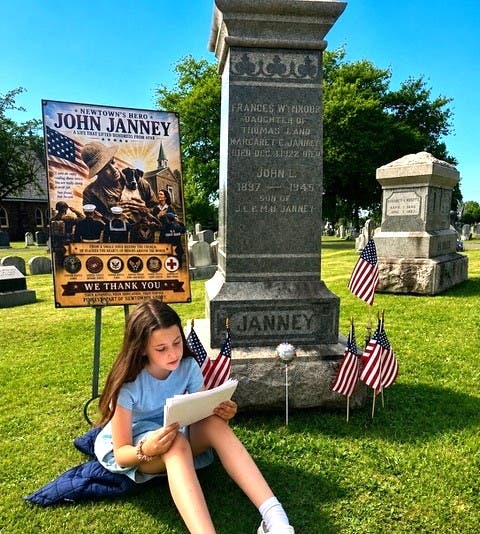
Jr. Helper, Saint Andrew’s 3rd grade student Layla Leuthy-Peck, reading the letters from John’s pen pals. Layla’s great-grandfather Ray Leuthy was in the Battle of the Bulge as a paratrooper in the 82nd Airborne and he was also chosen to drive General Patton.
A Hero Whose Story Was Nearly Forgotten
During World War II, while young men from Newtown fought across Europe and the Pacific, one local man quietly became their lifeline to home.
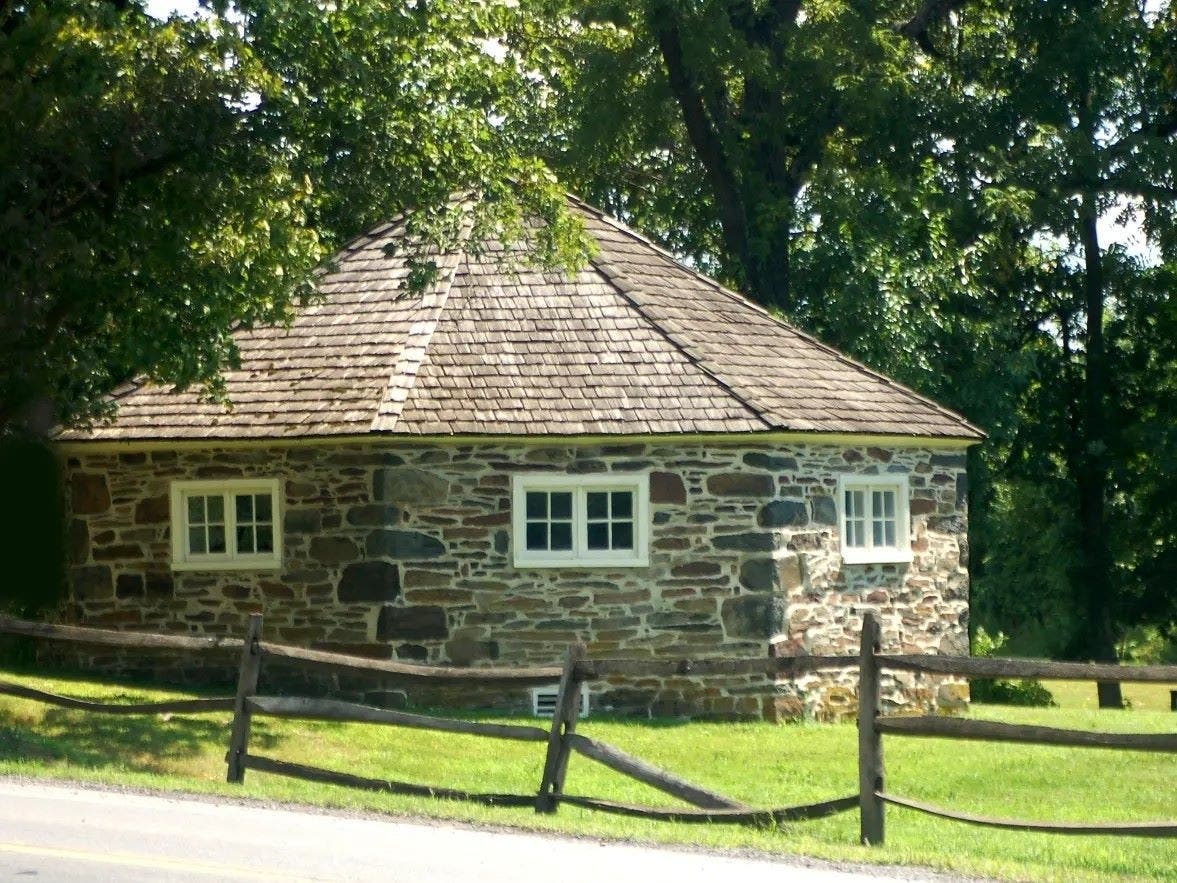
From a small shed behind the Newtown Presbyterian Church where he worked as caretaker, John Janney spent nearly every evening and entire weekends writing hundreds of letters to Newtown servicemen stationed around the world. Whether soldiers were crossing the Rhine in Germany, recovering in military hospitals in the Pacific, training stateside, or serving on distant islands, John’s letters somehow always managed to find them.
For many servicemen, those letters became far more than correspondence.
They became hope.
The soldiers wrote to John about fear, homesickness, exhaustion, and uncertainty. They also shared stories of humanity discovered during wartime — the kindness of families overseas, the resilience of civilians living through war, and the realization that people everywhere valued family, friendship, and home.
John became Newtown’s connection to its soldiers — and the soldiers’ connection back home.
He updated them on local news, family farms, hometown businesses, baseball scores, and mutual friends. He comforted them after devastating losses, including the deaths of fellow Newtown servicemen. He mailed newspapers, books, jokes, encouragement, and reminders that they had not been forgotten.
When servicemen wanted updates about one another, John found a solution. He arranged for many of the soldiers’ letters to be published in the Newtown Enterprise newspaper, allowing troops stationed around the world to follow each other’s experiences while staying connected to their hometown community.
Even amid constant troop movement and active combat zones, John’s letters often arrived waiting on a soldier’s cot after unimaginably difficult days.
For many, those letters lifted spirits during the darkest moments of war.
Despite the extraordinary impact John Janney had on Newtown’s servicemen, no formal recognition was ever held after the war.
Shortly after WWII ended, John became seriously ill and passed away in 1949 at only 51 years old. Over time, his remarkable contribution faded into old newspaper archives and family memories.
Get more local news delivered straight to your inbox. Sign up for free Patch newsletters and alerts.