Politics & Government
Newtown Supervisors Come Up Short On 2027 Budget Vote
The five-member board of supervisors couldn't muster enough votes Wednesday night to advertise next year's budget.


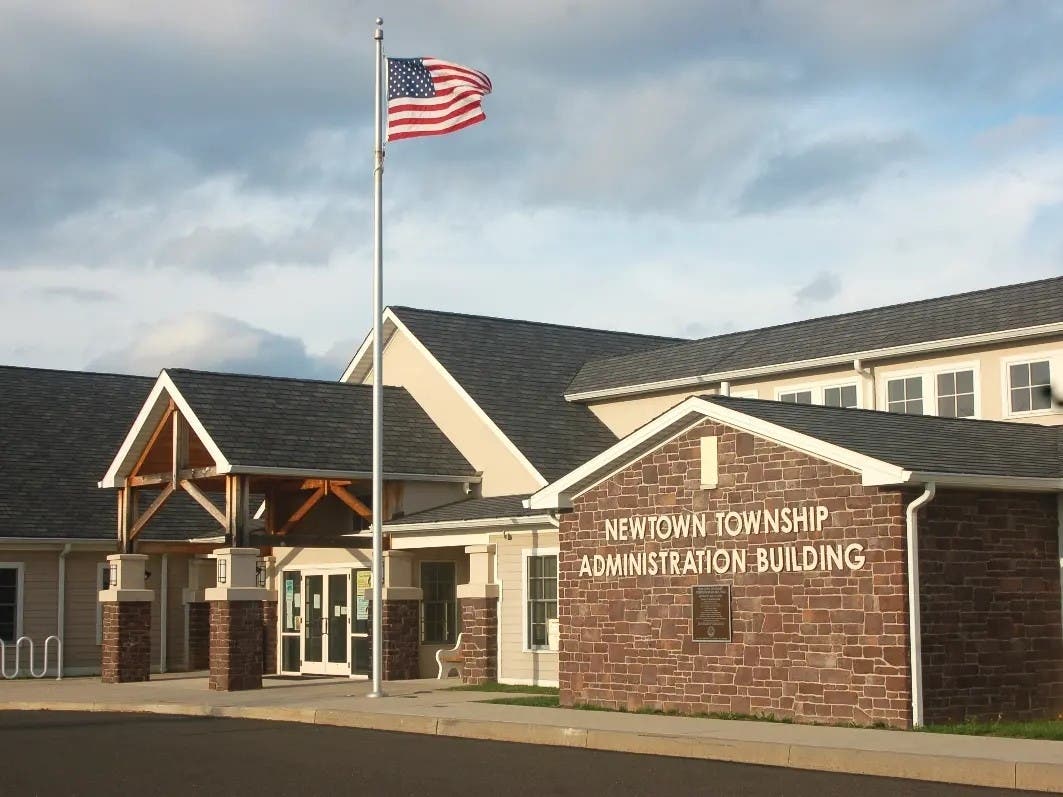
NEWTOWN TOWNSHIP, PA — The board of supervisors on Wednesday couldn’t muster enough votes to pass a preliminary budget.
So they’ll go back to the drawing board, take another look at the administration’s spending plan and try again at its next meeting on Tuesday, Nov. 10.
“We have varying opinions on it. We need to see if we can come up with a consensus and determine what the right approach is,” said chairman Edward Merriman, after the meeting.
Find out what's happening in Newtownfor free with the latest updates from Patch.
Taxes are projected to increase by 2.6 mills under the administration’s recommended 2027 budget presented by township manager Micah Lewis earlier this month.
The proposed spending plan is projecting a 2.635 mill increase, which equates to $103 more a year in municipal taxes on the average assessed residential unit.
Find out what's happening in Newtownfor free with the latest updates from Patch.
Driving the increase is a three mill boost in spending for fire protection and capital purchases, which is offset by a .6 mill decrease in the township’s debt service.
The three mill increase would bring millage for fire protection up to 10 mills, the maximum allowed under state law.
On Wednesday night, supervisor Phil Calabro again advocated for taking $700,000 out of the budget’s $5.1 million fund balance to eliminate the projected tax increase.
“This is the best way to use this money,” he argued. “We’d be using the money wisely, maintaining a 6.5 percent balance of the general fund and saving the people two more mills. These are hard economic times. Prices just keep going up.”
But Merriman said if the board doesn’t increase taxes and continues dipping into its fund balance, at some point it will run out of money.
He cited increased costs across the board for wages, healthcare, emergency services and utilities and the projected loss of $400,000 in earned income tax revenue if neighboring Lower Makefield adopts an EIT.
Supervisor Melissa Merk also raised concerns with Calabro’s proposal.
“I understand that thinking, but I have concerns. We are in a pattern of spending more money than we take in. We are chipping away at that general fund at a rate that is not sustainable,” she said.
“With that said, I do agree that some of the money should be given back to the people but in the form of a one time investment in important programs such as our roads program and not as a Band-Aid to cover the ongoing increases in operational costs of the fire department.”
Merk said she supports the increased millage for the emergency services. She’d also like to see more being spent to fix township roads.
“We’re budgeting $800,000 for our roads program” while township’s of comparable size are budgeting more than a million for roads. “I believe we need more money for our roads,” she said.
Merk also said she supports increased investment into the township’s public spaces, including funding in the budget for new play equipment at Roberts Ridge and plans to upgrade parks and trails.
Merk said she’s also concerned that the township’s salaries are falling behind regional benchmarks. “That puts us at risk of losing good people, losing their institutional knowledge and gaps in service. None of that fits my definition of fiscal responsibility.”
According to township manager Micah Lewis, local enabling taxes continue to be the predominant source of revenue for the township, which is projected to bring in $8.6 million in 2027.
Total revenues are budgeted at $19.1 million for 2027, including a projected fund balance of $5.1 million.
The spending plan is contemplating the hiring of a full-time zoning and code enforcement director next year with the assistant manager continuing to oversee the finance department in the absence of a finance director.
On the expense side of the ledger, Lewis said salaries and benefits have been budgeted under their contractual obligations. The general fund, he said, continues to maintain a $350,000 line item for highway construction and budgets a 10 percent across the board increase for insurance costs.
A tax increase is not proposed for the general fund, which pays for most of the township’s operations, including personnel, materials and insurance. However, Lewis said to offset the trend in deficit spending, the general fund will need to be addressed in the future as additional resources become necessary when the fund balance is depleted.
In other township funds, the budget continues to allocate two mills for the rescue squad, proposes a slight increase in its fire hydrant fund from .615 to .815 mills to offset the increased cost of maintenance, and budgets a .67 decrease in its debt service.
Under capital purchases, the spending plan sets aside $736,730 for the following purchases:
- Computer and software updates
- Hire an architect consultant to develop detailed plans and cost estimates for new police and fire buildings
- 4 new police vehicles
- 2 portable radios
- 8 ballistic vests
- A diagnostic scan tool and state emissions tool to allow in-house state inspection of township vehicles.
Under Parks and Recreation, the budget allocated $100,000 to develop a master plan for Helen Randal Park and $300,000 to replace aging play equipment at Robert’s Ridge Park.
The budget also allocated $850,000 for the township’s 2026 road program.
Get more local news delivered straight to your inbox. Sign up for free Patch newsletters and alerts.