Crime & Safety
COLUMN: The Anatomy Of A Journalism Scandal
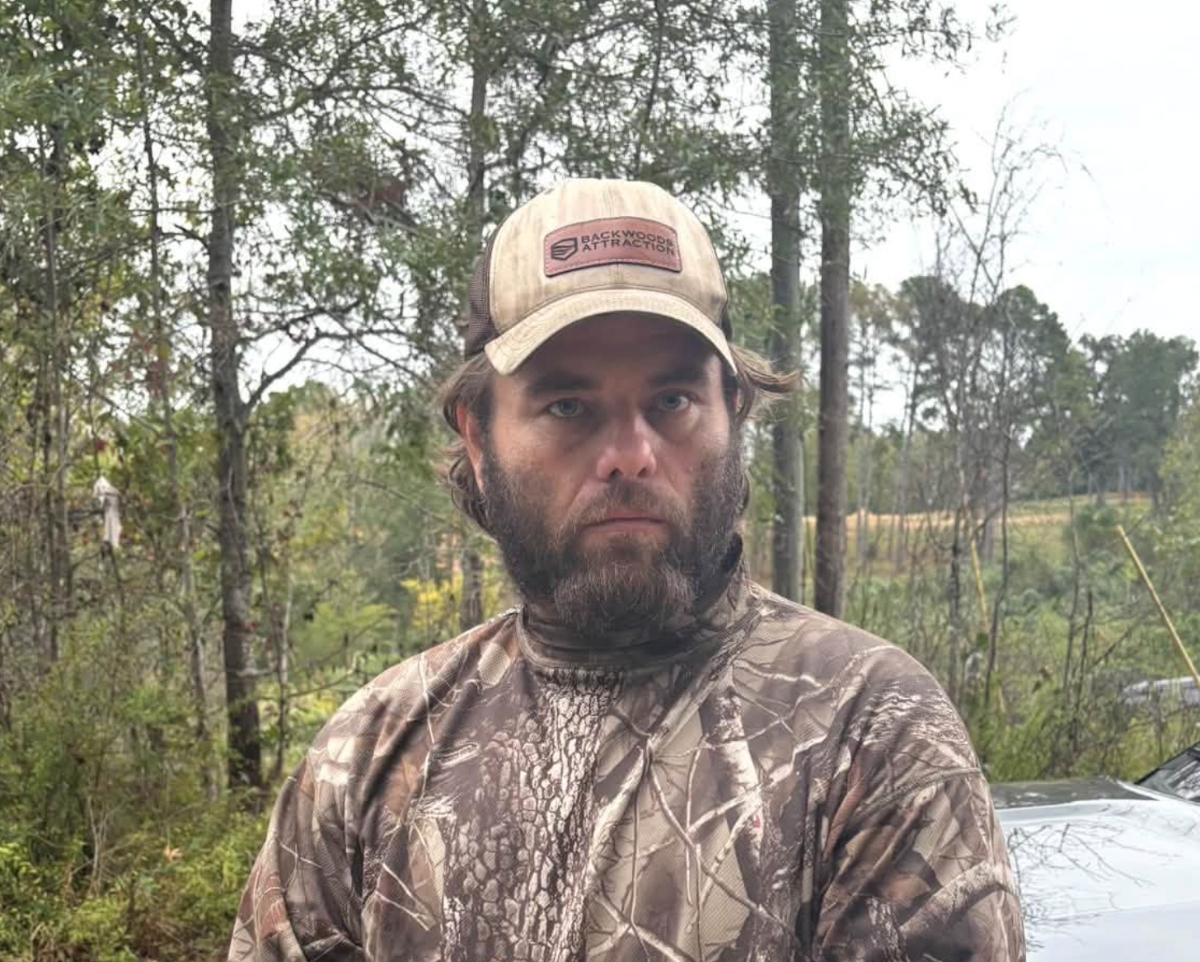
Tuscaloosa Patch founder Ryan Phillips dumps out his notebooks and gives his personal insight and thoughts after the high-profile trial.


*This is an opinion column*
TUSCALOOSA, AL — Tuscaloosa attorney Matt Glover's lips quivered and he rubbed the bridge of his nose fighting off tears as U.S. District Court Judge Annemarie Carney Axon calmly went over the verdict forms on Thursday.
Click here to subscribe to our free daily newsletter and breaking news alerts.
Find out what's happening in Tuscaloosafor free with the latest updates from Patch.
"As Judge Axon was reading the verdict, tears began to stream down my face with every 'yes,'" Glover told me Saturday morning, after having a couple of days to process the landmark ruling. "It was such an emotional answer hearing the community vindicate Kai Spears."
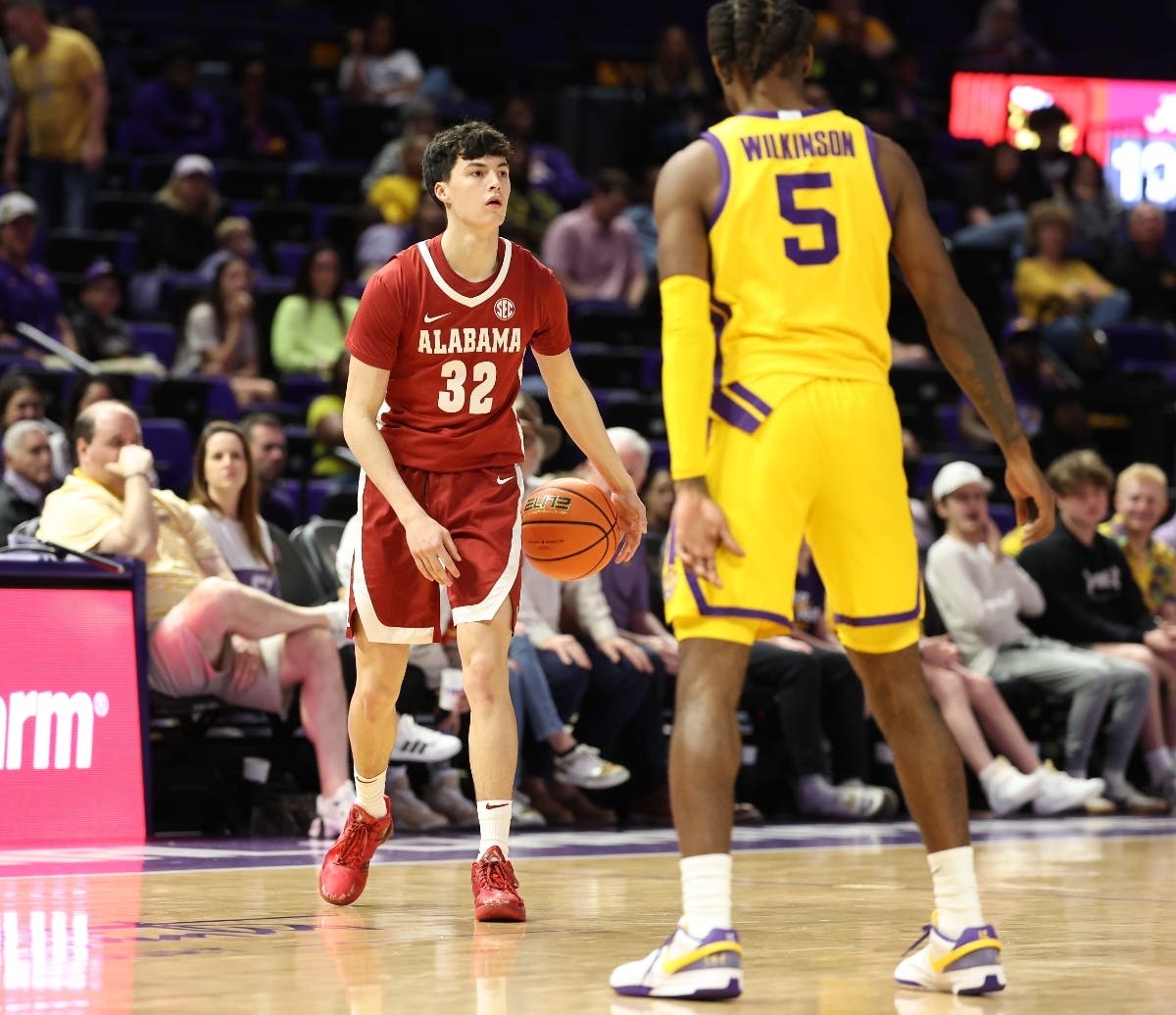
As Patch previously reported, the jury on Thursday awarded total damages in the amount of $9.25 million to Spears, a former Alabama basketball player, which followed three long years of tedious and contentious litigation with the New York Times after the newspaper doubled down on an erroneous story written by reporter Billy Witz placing Spears at the scene of a fatal shooting in 2023.
Find out what's happening in Tuscaloosafor free with the latest updates from Patch.
For a high-profile case exclusively focused on journalistic ethics and standards, the courtroom was noticeably devoid of news media over the last couple of weeks, including in-person representation from the very outlet at the center of the controversy.
I could understand fall football camp at the University of Alabama taking the priority for local reporters but was more than surprised to find myself as the only ink-stained wretch in the federal courthouse for the better part of two weeks — especially when one reflects back on the suffocating deluge of national media attention this entire saga received when its earliest chapters were written following that fateful morning on Jan. 15, 2023.
"It was never about making history," Glover said. "But this jury made it a landmark moment that will change journalism forever."
Along with Tuscaloosa attorney Ginger Buck, West Virginia attorney Stephen P. New was a key part of Spears' small but tenacious legal team and told me about the challenges of taking on one of the most influential media outlets on the planet.
By contrast, the defense table for the Times on the opposite side of the courtroom was crowded with numerous well-compensated lawyers.
The Times relied mostly on Michael L. Bell, a folksy attorney from Birmingham, to do the lion's share of the talking to the jury, along with Emmy Parsons, a razor-sharp K Street lawyer from Washington, D.C.
All the while, New York Times Senior Counsel Dana Green, probably the most successful attorney I've ever been in the presence of, sat off to the side and never spoke a word in open court.
"The uphill battle was based upon being outnumbered and out-gunned against a defendant who was dug in and who had unlimited resources," New said. "On paper, there was no way we should’ve been in a position to win this case. It’s like when Marshall football goes on the road to take on a Notre Dame. It’s a foregone conclusion we will lose. Matt, Ginger and I just persisted. We hung in there through discovery, through the Alabama Supreme Court process and then we got our day in front of a jury."
The decision was indeed a historic one that grabbed headlines around the world in outlets as far away as the Times of India.
It also marked, in the newspaper's own words, the first time it had lost a defamation case in over half a century. It should be pointed out here that the case the NYT is likely referencing, Times v. Sullivan (1964), was ultimately overturned by a precedent-setting U.S. Supreme Court decision and is a far-cry away from the substance in the Spears case.
At one point during the last two weeks of proceedings, however, quiet chatter abounded in the courtroom that the last time the Times lost such a case and had to pay out to a plaintiff without a higher court taking its side was actually in the late 1800s.
But who can say for sure?
"We're disappointed the jury found The Times liable for an honest mistake," Times spokesperson Charlie Stadtlander said in a statement following the verdict. "We thank the jury for its service, but believe the verdict and award of damages are contrary to law and not supported by the evidence."
The term "honest mistake" was used throughout the trial by the New York Times' legal team, including Bell during his closing arguments Thursday when he also used his hand to tap the rhythm of "The Star-Spangled Banner" on the lectern when explaining hindsight bias to a jury that had to have been left dumbstruck by the theatrics.
This brief musical demonstration also came after Bell spent roughly half an hour reminding the jury of evidence about the unrelated criminal case as opposed to focusing this invaluable time underscoring his team's quite-valid argument that Spears did not suffer damages to his reputation that rose to the monetary demand for millions in compensatory damages requested of the jury by the Spears' camp.
Indeed, the largest part of the $9.25 million judgement — roughly $7.5 million — came in punitive damages aimed at deterring the newspaper from similar actions in the future.
To Bell's point, though, "honest mistakes" are not uncommon in this line of work I've dedicated my life to.
For example, when I was the executive editor of the Starkville Daily News in Mississippi, I once worked a stretch of what felt like a couple of months straight without a day off.
In an exhausted push to put the paper to bed after an exceedingly long day, I accidentally published a print headline that said a Mississippi State University student had received a non-existent "Trump Scholarship" instead of the very real and quite prestigious "Truman Scholarship."
The erroneous headline appeared in bold black print above a small brief buried deep inside of the paper.
Nevertheless, after receiving an angry phone call from the student's mother the next morning where she rightfully called me everything but a child of God, and in an effort to rectify the situation, I made what I thought was a prudent decision to reprint the story with the correct headline on the front page of the following day's paper — full-color picture and everything.
I offer that anecdote to show nobody bats 1.000 in this business, including the author of this column, so I have deep empathy when I see the unwashed masses pile on journalists for something as simple as a typo.
Honest mistakes do indeed happen and all we can do as professionals is work in good faith to fix them.
But an eight-person jury decided Thursday that the New York Times failed to do so when it published a story on March 15, 2023, which relied on one tragically misinformed anonymous source.
The story in question reported Spears was in the vehicle with former Alabama basketball star Brandon Miller when the latter's car was struck twice by gunfire in a shootout near the Tuscaloosa Strip that left a young mother dead.
Its original headline was eventually changed from "A Fourth Alabama Player Was at a Deadly Shooting, in a Car Hit by Bullets," to "A Shooting That Ensnared Alabama Players Could Have Been Deadlier."
Witz — who was not among the throng of reporters present at the preliminary hearing for capital murder suspects Michael Lynn Davis and Darius Miles, a former Alabama basketball player, on Feb. 21, 2023 — testified that he was initially shown a transcript of the hearing by an anonymous source.
This led him to reach the conclusion that someone else was in Brandon Miller's car.
I'll never forget how bad my feet hurt after having to stand in cowboy boots for the entire three-hour hearing in that cramped courtroom inside the Tuscaloosa County Jail on a cold day where they had the thermostat inside so high that everyone was clearly in sweaty agony.
I'll also never forget shivering in the cold January twilight a few weeks earlier as Davis and Miles were perp-walked in handcuffs out of the Tuscaloosa County Sheriff's Office just hours after the shooting.
This is where context is so important.
With Tuscaloosa Violent Crimes Unit investigator Branden Culpepper on the stand that day in the county jail, I immediately keyed in on the fact that another individual was in Miller's car when he first mentioned it.
I also took special note that he said he couldn't remember the name of the other person in the vehicle, which set the tone for how I would handle the follow-up.
The difference here is that after working a few sources, as I'm sure other local reporters did, it became clear pretty quick that the other individual was an Alabama basketball manager who had been cleared by police of any wrongdoing — not someone whose name I'd have ever put in print.
But I also didn't have an axe to grind against the basketball program at my alma mater to make me want to think otherwise.
Indeed, I was taken aback to see the initial New York Times story about Kai Spears being widely circulated on social media a little less than a month after that preliminary hearing. The following day, I reached out to Witz in a good-faith effort to get his side of the story, while also providing any professional context from my own reporting to lend my insight into how I thought his source might have gotten it wrong.
In a phone conversation between two journalists that I expressed I wanted to be completely off of the record, I offered my theories and even went so far as to truthfully tell Witz I'd also heard the Spears' rumor from a close source in the athletic department but didn't feel confident enough in it to print.
So, dear reader, I'm sure you'll understand the pure rage this career newsman felt when I was told Witz had taken notes of our conversation that were then included in his deposition ahead of the trial — notes that mentioned me by name.
After feeling my own mix of embarrassment and betrayal at the hands of a fellow professional by being unjustly pulled into a story that had nothing to do with me, I spent the next three years ignoring emails from the New York Times legal team wanting to speak with me about the case.
But let's fast-forward to the trial when Witz took the stand last week, where he maintained that he and his editor, Oskar Garcia, had done their due diligence and followed the New York Times' guidelines to the letter as they relate to the use of anonymous sources.
It should be underscored here that, early on in his testimony, Witz said the illustrious newspaper had yet to engage the Crimson Tide basketball program in any way during its historic 2022-23 season prior to the postseason and well after the fatal shooting on Grace Street that drew media attention from around the globe.
"I think what we wanted to do was, because we hadn't written anything on this, we wanted to sort of lay out the scene to our readers who are not necessarily sports fans and just kind of give an overview of 'how is a basketball team sort of coping with this?' They have these great ambitions of winning a national championship and then also one of their teammates is sitting in jail on capital murder charges."
Billy Witz - Aug. 13, 2026
Amid the Crimson Tide basketball team's unprecedented run that season and in the wake of 23-year-old Jamea Harris' death, Witz made the trip to Alabama to cover the team's NCAA Men's Basketball Tournament opener against Texas A&M-Corpus Christi at Legacy Arena in Birmingham, scheduled for March 16, 2023.
The Tide trounced the Islanders 96-75 to advance in the tournament but not before the New York Times published its story about Spears the previous evening, which came after Witz had allegedly threatened UA athletic staff.
Indeed, the jury was played audio of an indignant Witz, who had already attempted to speak with Spears and Miller during an open locker room media availability the afternoon before the story was published.
As Witz testified, he'd met with the lone anonymous source who informed his erroneous story — exclusively known in court proceedings as "Source A" — for about an hour in their Tuscaloosa office that morning.
After another anonymous source, referred to as "Source B," first pointed out to Witz in the preliminary hearing transcript that an investigator had mentioned a passenger in Miller's car during the shooting, it was Source A who told Witz that the passenger was Spears.
Jurors were also shown video deposition testimony from Witz's supervisor, Oskar Garcia, that confirmed a "soft" or "artificial" deadline, depending on which side you ask, was set for Witz to write some kind of story on the Alabama basketball team that contextualized the shooting on the eve of its NCAA Tournament opener.
It came out during testimony, including from Spears himself when he took the stand, that the Crimson Tide basketball team had received media training about not commenting on any aspects of the ongoing criminal case relating to the shooting.
ALSO READ: 'Life Can Be Cruel': Kai Spears Testifies As New Details Surface In NYT Defamation Trial
And this is the moment where it appears Witz's ego, coupled with his misplaced confidence in his lone anonymous source, might have gotten the best of him, superseding any concerns about the potential consequences if his facts were wrong.
As Glover put it during his closing arguments, which stood out as some of the most compelling courtroom oratory this reporter has heard in nearly two decades, "They were chasing a headline at the expense of a child."
Following his attempts to speak with Spears and Miller in a Birmingham locker room that was described as being roughly the size of the jury box in Judge Axon's courtroom, Witz then approached UA athletic staffers to ask for a private meeting with Crimson Tide basketball coach Nate Oats to discuss "sensitive" information.
Without elaborating on what the aforementioned sensitive information was, the jury heard an audio recording of Witz being rebuffed and going on to seemingly threaten the staffers, saying he could just ask Oats about it during a nationally televised press conference following Alabama's game the next day if he couldn't have a private sit-down with the coach the night before the team's tournament opener.
Witz did email his questions to the UA athletic department but UA Deputy Director of Athletics for External Affairs Jessica Paré testified early on in the trial that staff was actively working on drafting responses to his inquiry when the story was published later that evening.
Witz also testified that he never received responses to follow-up inquiries after denials about Spears' involvement were released in the immediate aftermath of the story's publication.
The New York Times published the story at 7:10 p.m. that evening, a time that was mentioned ad nauseam during the trial amid debates over the admissibility of "post-publication" evidence that the jury was ultimately shielded from.
Witz and others also testified that the publication of the story came after additional failed attempts to reach Spears' father on a busy Thursday as he worked as the athletic director of Marshall University.
Then additional issues, which would later be admitted as evidence to the Alabama jury, began to cascade after the story was published to the newspaper's tens of millions of online followers and innumerable print readers.
To quote an email exchange shown to the jury from NYT Associate Managing Editor for Standards Philip B. Corbett to former Times Sports Editor Randal Archibold about the story, "To state the painfully obvious, I hope we're right on this."
Chief among the post-publication issues was the Times' reluctance to issue a correction or retraction when it became immediately clear that Witz's anonymous source had been wrong in their assertion that Spears was in Miller's car during the shooting.
The jury heard lengthy testimony about how the newspaper published "updates" in the form of "Editor's Notes" to the online story to reflect each new denial coming from the University of Alabama, UA Director of Athletics Greg Byrne, Spears' father, and then the Alabama walk-on himself in an Instagram post.
Apart from the updates, which the Times argued were tantamount to a correction when applying Alabama law to the evidence, the story remained unchanged until an official correction was eventually published by the New York Times on June 3, 2023.
A little more than three years later, an apology to Spears was wrenched from Witz by attorney Stephen P. New as the reporter's testimony began, which also came after a previous apology in court from NYT Deputy Editor for Trust Mike Abrams.
Still, the newspaper at every turn seemed to place the onus on its anonymous source for the story being inaccurate as opposed to admitting any failure to follow its supposedly industry-leading policies and standards.
To underscore its view that the newspaper failed to follow its own black and white standards, the legal team for Spears enlisted the expertise of award-winning journalist and longtime University of Alabama journalism instructor Mark Mayfield as its industry expert to provide scrutiny of the newspaper's practices during this story's development.
A former graduate school classmate of mine and compared by a mutual friend to the Most Interesting Man In The World from the Dos Equis beer commercials, Mayfield has forgotten more about journalism than I'll likely ever retain.
Mayfield's qualifying experience, however, is thanks in large part to his time reporting for prestigious outlets like USA Today and United Press International (UPI) during the halcyon days of print journalism. This included his extensive coverage of the Atlanta Child Murders in the 1970s-80s and the trial of its eventually convicted suspect Wayne Williams.
While the New York Times worked to impeach Mayfield's testimony by citing his own reliance on anonymous sources covering the ghoulish killing spree, the seasoned reporter expressed nothing but praise for the newspaper's standards when they are practiced as written.
"As a journalist, former editor and teacher, I’ve always had great respect for the Times and I’m certainly not alone in that," Mayfield told me. "I’ve also referred to their ethical journalism guidelines in every media ethics class I’ve taught over the past 13 years. But the Times repeatedly violated those guidelines as well as other accepted professional journalism standards in the reporting and publication of the Kai Spears story. It should never have been published."
Amid the scrum of public attention following the verdict, though, there was also much debate in the social media abyss regarding public/private figures, the potential negative impacts on the First Amendment's protection of journalism and the structural integrity of the case ruled upon by the jury.
EXPERTS WEIGH IN
As I previously mentioned, the Times has prided itself on the decades that have passed since it last lost a defamation case.
This can almost certainly be traced back to the precedent-setting decision in the early 1960s Times v. Sullivan case, which, ironically, also originated in Alabama.
For perspective I could trust in drawing distinctions between the Spears case and Sullivan, I leaned on University of Alabama journalism professor Dianne Bragg, a woman who is like a second mother to me and who just so happened to be my journalism history professor in graduate school many years ago.
"The Sullivan ruling was about protection from errors in an advertisement," Bragg said. "But the Supreme Court of the United States ruling gave us the standard that public officials like [Montgomery Police Commissioner L. B. Sullivan] had to prove "actual malice"... that the New York Times either knew it was false or they had 'reckless disregard for the truth.'"
She then said actual malice wasn't proven in the landmark case, so Sullivan lost.
"Per the advertisement ... media generally can't be held accountable for errors in an ad," Bragg told me. "It's a difference between writing a story about a new drug as opposed to selling ad space to a drug company."
Bragg went on to point out a more relevant case familiar to many in this part of the country, Curtis Publishing Co. v. Butts, which also originated in Alabama.
Indeed, with legendary Alabama football coach Paul W. "Bear" Bryant at its center, the landmark case resulted in the actual malice standard being extended to cases involving public figures.
In that case, which ultimately spelled the end for the Saturday Evening Post after a jury ruled in favor of Bryant, University of Georgia Athletic Director Wally Butts was accused in a story of conspiring with Bryant to fix a game over the telephone.
"The Story of A College Football Fix" was published on March 23, 1963 by the Saturday Evening Post and, much like the Spears story, relied on a lone source who claimed to have been on a telephone party line when he accidentally dropped in on a conversation between Bryant and Butts, who were longtime friends.
Eavesdropping on this call, the source for the story alleged Butts provided the iconic Alabama football coach with valuable insight into the Bulldogs' plays and tactics for an upcoming game that the Crimson Tide won in a blowout.
Both of the men sued Curtis Publishing Co. for defamation in the wake of the story's publication and each requested $10 million in damages before Bryant settled for $300,000.
Bryant famously went so far as to take a polygraph test to prove his innocence, while Butts saw his individual case go to the Supreme Court and was eventually awarded $460,000.
"We can debate if Spears is a public figure, but it's a moot point," Bragg said. "His side proved the New York Times acted with actual malice and didn't do a timely correction. The amount may be an issue and it would be hard to prove that Spears was financially damaged in some way."
Pulitzer Prize-winning journalist and longtime New York Times investigative reporter Jeff Gerth, whom I've spoken with at length over the last couple of weeks as he's followed the Spears trial, has written extensively about the media's use of anonymous sources.
This includes an expansive treatise for the Columbia Journalism Review, titled "The press versus the president," which analyzes and scrutinizes the use of anonymous sources during the "Russiagate" controversy in President Donald Trump's first term.
Regardless of where you or I might stand in our personal believes, I'm a ravenous believer in my profession being held accountable when it comes to our standards. As I've told my college journalism students, civic clubs on the rubber chicken circuit and my own family, I answer only to my readers.
After all, my readers are the sole reason I have the privilege of working in this business, so those supportive people will always be the tail that wags this dog.
In the fourth installment of this series, though, Gerth delves into the use of the catchphrase “people (or person) familiar with” — a term he points out is widely used by many journalists when providing confidentiality to their sources.
It was also a qualifier mentioned at several turns by the New York Times legal team when describing the "Source A" used by Witz in the Spears story.
While the term "highly placed" was the preferred nomenclature used by Witz on the witness stand, a simple argument could be made that such a term is interchangeable with "people (or person) familiar with."
"The last [New York Times] executive editor I worked for, Bill Keller, frowned on its use. He told the staff repeatedly the phrase was “so vague it could even mean the reporter.” The Times, in a statement to CJR, said, 'We have strong rules in place governing the use of anonymous sources.' Other outlets mentioned in this piece declined to discuss their anonymous-sourcing practices."
- Jeff Gerth, "The press versus the president"
Northeastern University journalism professor, author and respected news media commentator Dan Kennedy also wrote a detailed analysis of my trial coverage, where he made the argument that libel protections were not damaged as a result of the jury's decision in the Spears case.
Instead, he insisted they were affirmed, saying a false, defamatory story published negligently about a private figure is well within the bounds of libel law.
"Private individuals like Kai Spears are more in need of libel protection than are public officials or public figures, who can defend themselves in the court of public opinion," Kennedy told me. "In this case, a jury found that the New York Times was negligent in falsely reporting that he was at the scene of a fatal shooting. And though the $9.25 million judgment he received may be reduced on appeal, the verdict should help restore his reputation."
Ryan Phillips is an award-winning journalist, editor and opinion columnist. He is also the founder and field editor of Tuscaloosa Patch. The opinions expressed in this column are in no way a reflection of our parent company or sponsors. Email news tips to ryan.phillips@patch.com.
Get more local news delivered straight to your inbox. Sign up for free Patch newsletters and alerts.