Neighbor News
A Complete Guide to Police Forces, Roles and Custom Patches
Explore types of police forces, roles, and the history and design of custom patches in this complete guide.
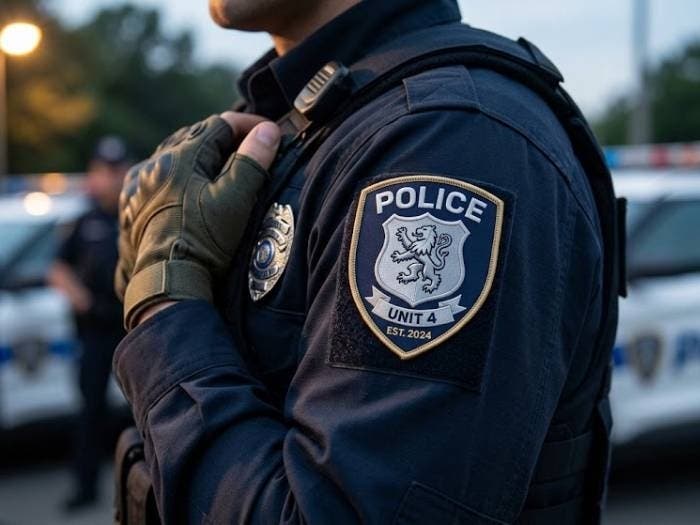
The UK has a wide range of police forces, specialist units and policing roles. Each force has its own area of responsibility, uniform details and operational structure.
From local neighbourhood teams to specialist response units, UK police officers work across many different areas. Their roles can include crime prevention, investigations, public protection, roads policing and emergency response.
This guide looks at the main areas of UK policing and the different types of police patches and identification commonly associated with the service.
Find out what's happening in Washington DCfor free with the latest updates from Patch.
Police Forces Across the UK
Policing is organised differently across the four nations of the United Kingdom.
England and Wales have a number of territorial police forces. Scotland has a national police service, while Northern Ireland is policed by its own dedicated force.
Find out what's happening in Washington DCfor free with the latest updates from Patch.
There are also specialist police forces with specific responsibilities.
These include:
- Territorial police forces
- British Transport Police
- Civil Nuclear Constabulary
- Ministry of Defence Police
- Police Scotland
- Police Service of Northern Ireland
Each organisation has its own responsibilities and operational requirements.
Local Police Forces
Territorial police forces provide most everyday policing across England and Wales.
They cover specific geographical areas and deal with a wide range of incidents. Their work includes neighbourhood policing, emergency response, investigations, roads policing and public protection.
Local forces also work closely with councils, businesses, schools and community organisations.
British Transport Police
British Transport Police focuses on policing the railway network and related transport environments.
Its officers work across railway stations, trains and other parts of the rail network. Their responsibilities include dealing with crime, protecting passengers and supporting public safety.
Ministry of Defence Police
The Ministry of Defence Police provides specialist policing for the UK defence community.
Its work can include protecting defence sites, personnel and sensitive locations.
Specialist Police Units
Modern policing includes many specialist teams. These officers receive additional training for specific duties.
Depending on the force, specialist roles can include:
Roads Policing
Roads policing officers focus on road safety and serious road-related offences. They may also attend major collisions and support wider police operations.
Dog Units
Police dog handlers work with specially trained dogs. Dogs can assist with searches, tracking and detecting certain substances or items.
Firearms Units
Authorised firearms officers receive specialist training to respond to incidents where firearms may be involved.
Public Order Units
Public order officers can be deployed for major events, large gatherings and situations requiring additional resources.
Detective Teams
Detectives investigate a wide range of offences. Their work can involve interviewing witnesses, gathering evidence and building criminal cases.
UK Police Ranks
Police forces use a structured rank system.
Common ranks include:
Rank General Responsibility Police Constable Front-line policing and investigations Sergeant Supervises officers and teams Inspector Manages teams and operational activity Chief Inspector Supports larger operational functions Superintendent Manages significant areas or departments Chief Superintendent Senior operational management Chief Constable Leads a territorial police force
The exact structure and responsibilities can vary between organisations.
Police Uniforms and Identification
Police uniforms are designed to be practical and professional. They also help members of the public identify officers.
Uniform details can vary depending on the force, role and operational requirements.
Patches and insignia may be used to display authorised identification, force details or specialist roles.
Custom Police Patches
Custom police patches are often created for authorised organisations, training groups, events, clubs and other legitimate purposes.
A custom patch can be designed around an original logo, department name or approved artwork.
Popular options include:
- Embroidered patches
- Woven patches
- PVC patches
- Velcro-backed patches
- Sew-on patches
- Iron-on patches
The best option depends on where the patch will be used and the required appearance.
Custom British Patches
Custom British patches are suitable for a wide range of British-themed designs.
They can be created for clubs, organisations, collectors, outdoor groups and clothing brands. Customers can choose their own artwork, colours, shape and size.
For police-related designs, it is important to avoid copying protected official insignia or creating products that could be mistaken for genuine police identification.
Police Patch Design
A good patch design should remain clear at its actual production size.
Important design elements include:
- Force or organisation name
- Logo or approved emblem
- Patch shape
- Border
- Colour combination
- Text size
- Backing type
- Overall dimensions
Simple artwork is often easier to reproduce accurately. Very small text and highly detailed graphics may need to be adjusted before production.
Where Are Police Patches Used?
Depending on the design and authorisation, patches can be used on different items.
Common applications include:
- Police-style uniforms
- Jackets
- Tactical clothing
- Bags
- Caps
- Training clothing
- Club clothing
- Collectors' displays
The intended use should always be considered before choosing the patch material and backing.
Buying Custom Police Patches
When ordering custom police patches, quality and accuracy should be a priority.
Before placing an order, check:
- The patch dimensions.
- The material and backing.
- The number of patches required.
- The production time.
- The artwork requirements.
- Whether the design contains protected insignia.
A digital proof is also useful. It allows the customer to check the design before production starts.
Legal and Responsible Use
Police badges, crests, logos and other official insignia may be protected. Some designs can also create confusion if they appear to represent a real police force.
For this reason, sellers should only produce designs they are permitted to use. Customers should also make sure they have the necessary rights and permissions.
Original designs are a safer option for general commercial products.
Final Thoughts
UK policing covers a broad range of forces, departments and specialist roles. From local neighbourhood teams to transport, roads policing and specialist units, each area has different responsibilities.
For legitimate organisations and customers, custom police patches can provide a professional way to create approved identification and clothing designs. Custom British patches can also be used for original British-themed designs.
The key is to use clear artwork, quality materials and designs that are properly authorised.