Politics & Government
Georgia Is Building First State Psychiatric Hospital Since Landmark Disability Case
Advocates caution against a potential return to institutionalization.

July 20, 2026
After spending 16 years moving away from a psychiatric care system centered on institutionalization, state officials are preparing to build Georgia’s largest state hospital in decades.
Find out what's happening in Across Georgiafor free with the latest updates from Patch.
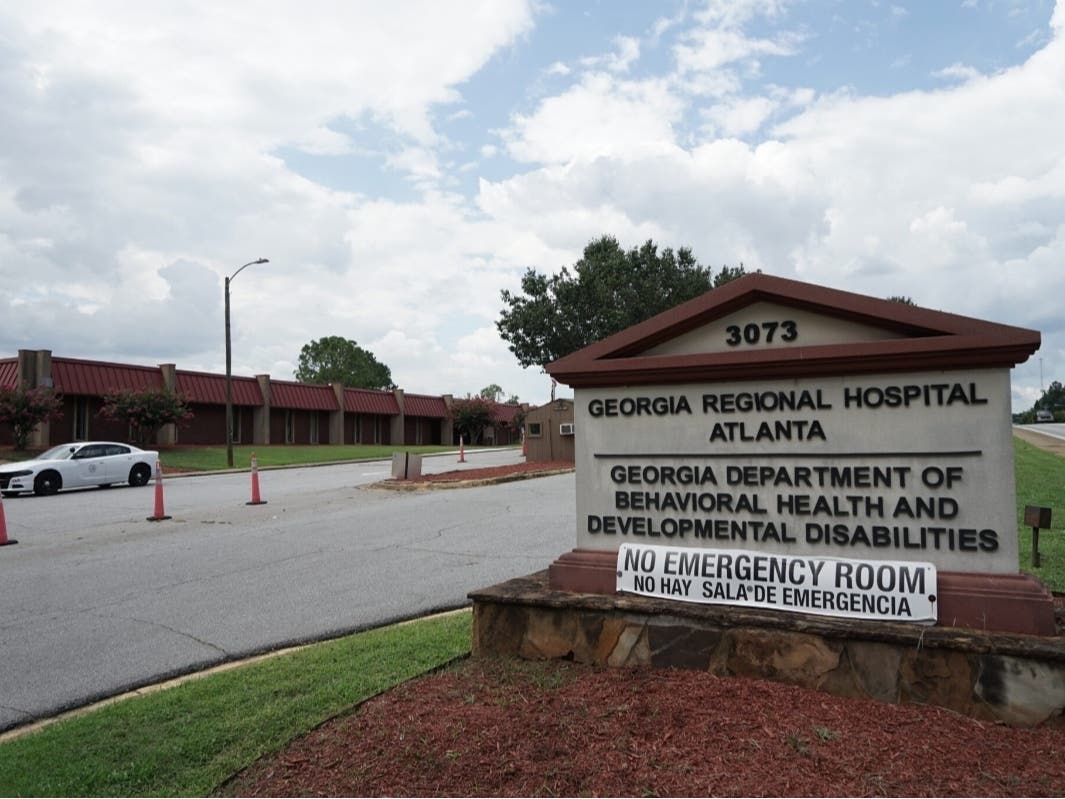
More than 700 Georgians in the criminal justice system are currently waiting for a spot in a state psychiatric facility, according to Kevin Tanner, commissioner of the Department of Behavioral Health and Developmental Disabilities. That’s why state lawmakers made room for $409 million in the budget for a 300-bed forensic state hospital, which will be built near Georgia Regional Hospital, located in south DeKalb County, during the 2026 legislative session earlier this year.
The waiting list is putting pressure on county jails across Georgia. According to Tanner, the hospital will serve only forensic patients — people who have a mental illness or disability and have been charged with or convicted of a crime. When lawmakers announced the hospital project at a February press conference, several sheriffs were standing alongside them.
Find out what's happening in Across Georgiafor free with the latest updates from Patch.
Tanner said patients come to state hospitals in two main ways. In Georgia, when a judge decides that a person charged with a crime isn’t fit to stand trial because of a psychiatric condition or a disability, they order the person into a state-run long-term hospital. Similarly, some individuals with a mental illness or disability are found not guilty because of their mental state — courts also order these people into state care.

But when state hospitals are at capacity, forensic patients who cannot be admitted are forced to remain in local law enforcement custody, usually waiting months for their court-mandated place in a state hospital.
Putnam County Sheriff Howard Sills, along with other local law enforcement across the state, sees the effects of this backlog every day.
According to Sills, one Putnam County inmate with a psychiatric illness sat in her 5-by-10 foot cell for over a year while waiting for a state hospital bed before she was admitted to Central State Hospital in June.
Sills, who’s been sheriff for nearly 30 years, said he worries long-term detainment threatens the civil rights of the patients.
“It is my belief … that it is unconstitutional to keep a person in a penal institution if they are mentally ill and incompetent to stand trial,” he said. “I’m holding this person here, in my opinion, in violation of the Constitution of the United States.”
While Sills said he’s pleased about the new hospital, he is skeptical that just 300 beds will solve the issue facing county jails and hopes more facilities for forensic patients will be built in the future.
Tanner said the shortage is motivating the department to finish the new hospital as soon as possible. While a facility of this scale typically takes 36 months to be completed, he said the department hopes to expedite the process.
“We need the bed capacity today,” Tanner said. “As soon as we can get the hospital open, the better it will be for the system.”
Tanner said the department has already secured Atlanta architectural firm Jericho Design Group and Batson-Cook Construction to work on the project.
“It is my belief … that it is unconstitutional to keep a person in a penal institution if they are mentally ill and incompetent to stand trial. I’m holding this person here, in my opinion, in violation of the Constitution of the United States.”
– Putnam County Sheriff Howard Sills
The new hospital has been in the works for several years, Tanner said. A 2023 capacity study predicted that without an additional facility, the state would be unable to accept any more patients by 2034, since many spend the rest of their lives in a state hospital.
For now, the facility will only serve forensic patients. But Tanner left open the possibility for the hospital to treat other types of patients in the future.
“We’ll design the hospital to be able to house either population, but for the foreseeable future, it will be just a forensic population,” Tanner said. “We don’t want to design a hospital that couldn’t be used for adult mental health patients when needed.”
An April settlement addresses long wait for forensic healthcare
Tanner and other state government officials have been under pressure to address the backlog from mental health and disability advocates along with county sheriffs.
In April, the department reached an agreement with the Georgia Advocacy Office and the Southern Center for Human Rights to reduce the amount of time forensic patients spend waiting in jails.
“This agreement is a critical step toward prioritizing treatment over incarceration and restoring dignity and due process for people with mental illness who are arrested swiftly and then stranded in jail simply because the system did not respond in time,” said Atteeyah Hollie, deputy director of the Southern Center of Human Rights, in an April press release.
By the time the agreement expires in late 2029, the department must have each forensic patient evaluated within 30 days and admit them to an appropriate restoration program within another 30 days.
For county officials like Sills, the Putnam County sheriff, the department will also be required to provide training, education and other support related to engaging with forensic patients.
While the new hospital did not emerge from the April settlement, Georgia Advocacy Office Litigation Director Devon Orland said the two are related and the hospital will be a temporary solution to some issues cited in the agreement.
Funding the hospital created buzz when the state Senate first unveiled it in February. Additionally, a week prior, a federal judge released the state from part of a 2010 settlement agreement with the U.S. Department of Justice, which Tanner hailed at the time as a “historic moment.”
The settlement had originated from a landmark court case: in 1999, the Supreme Court ruled in Olmstead v. L.C. that unjustified institutionalization of people with disabilities violates the Americans with Disabilities Act. The two Georgia plaintiffs were unlawfully held at Georgia Regional Hospital.
The court’s decision led to what is known as the Olmstead settlement agreement between the federal government and Georgia, which has guided expansive reforms to the state’s mental health and disability care for nearly two decades. The settlement mandated that Georgia develop a network of more localized health services for these patients, often referred to as a community-based care system, rather than relying on institutions.
Now, after a federal judge decided to release Georgia from part of the agreement in February, there will be less oversight over how the state provides services for people with behavioral health issues.

While some lawmakers tied the new hospital announcement to the release, Tanner clarified to the Recorder that the agreement did not govern forensic services and the hospital could have been built regardless.
However, the commissioner said the media attention created a “springboard” for the project.
“I’m obviously not in the minds of policymakers and legislators,” Tanner said. “But I do feel like there is a general feeling that it’s good timing to be able to build a hospital now that we’re out of the settlement agreement.”
Georgia's complicated legacy of institutionalization
Rena Harris, chief program officer of the Georgia Council on Developmental Disabilities, said she understands the struggle local sheriffs are facing and why they lobbied lawmakers for the hospital.
While she agreed the shortage must be addressed, Harris added she hopes emphasis will remain on providing in-community care for all patients, including forensic ones.
“I would encourage mental health experts and legislators to work together to produce treatment options that are evidence-based in settings that are evidence-based,” Harris said. “I wouldn’t recommend people getting mental health treatment in jails, and I wouldn’t recommend people getting mental health treatment in large institutional settings either, because the goal is to exist in the community.”
Harris explained that risks often arise in larger facilities, including patient abuse, neglect and exploitation. She said sometimes patients are warehoused — a practice where people are only given basic care in institutions and don’t receive the necessary restorative treatment for their conditions.
Looking at the bigger picture, Orland with the Georgia Advocacy Office said increasing institutional bed capacity could become problematic if proper community care options aren’t also funded.
“We need to build the infrastructure in the community, or we’re going to have to keep building more and more beds, and people are going to be tucked away instead of receiving the support they need,” she said. “Building beds is not the solution, and it can become the problem.”
Orland said it’s important to continually evaluate care systems to ensure adequate in-community care like housing vouchers, mobile crisis units and local health centers are always available and funded.
Tanner, who has led the agency since 2022, acknowledged these concerns and said balancing different types of care is part of his strategy to quell the looming need for state psychiatric beds.
Along with the new hospital, the department has multiple smaller behavioral health crisis centers in the works located in Augusta, Savannah, Dublin, north Fulton County and Clayton County. Crisis centers have typically no more than 30 beds and are intended for short-term care, but can facilitate more long-term services for patients, according to the department’s press release.
Tanner said he thinks the 300-bed hospital will be a “bright place of healing.”
“We’re continuing to build out community-based care with community service boards, with the local crisis centers,” he said. “But at the same time, if someone needs that hospital-level care, we want to make sure it’s available to them — not to institutionalize them, but to keep them just long enough, so that then we can transition them back to community.”
Orland said she feels encouraged that the hospital is only part of the plan to reduce the forensic patient backlog.
“I think we are all hopeful that the commissioner is focused on building a meaningful community-based mental health system, and that this is just a piece of trying to reduce the number of people that are waiting in jails,” Orland said. “We hope that remains true in the future.”
The Georgia Recorder, an independent, nonprofit news organization, connects public policies to stories of the people and communities affected by them through a steady mix of in-depth reporting, blog posts, and social media updates on the latest news and progressive commentary. The Recorder is part of States Newsroom, a national 501(c)(3) nonprofit supported by grants and a coalition of donors and readers.