Neighbor News
Why So Many People Feel on Edge Right Now — And What Your Body Is Trying to Tell You
Your anxiety may be your nervous system in survival mode. Here's how to gently help your body feel safe again.

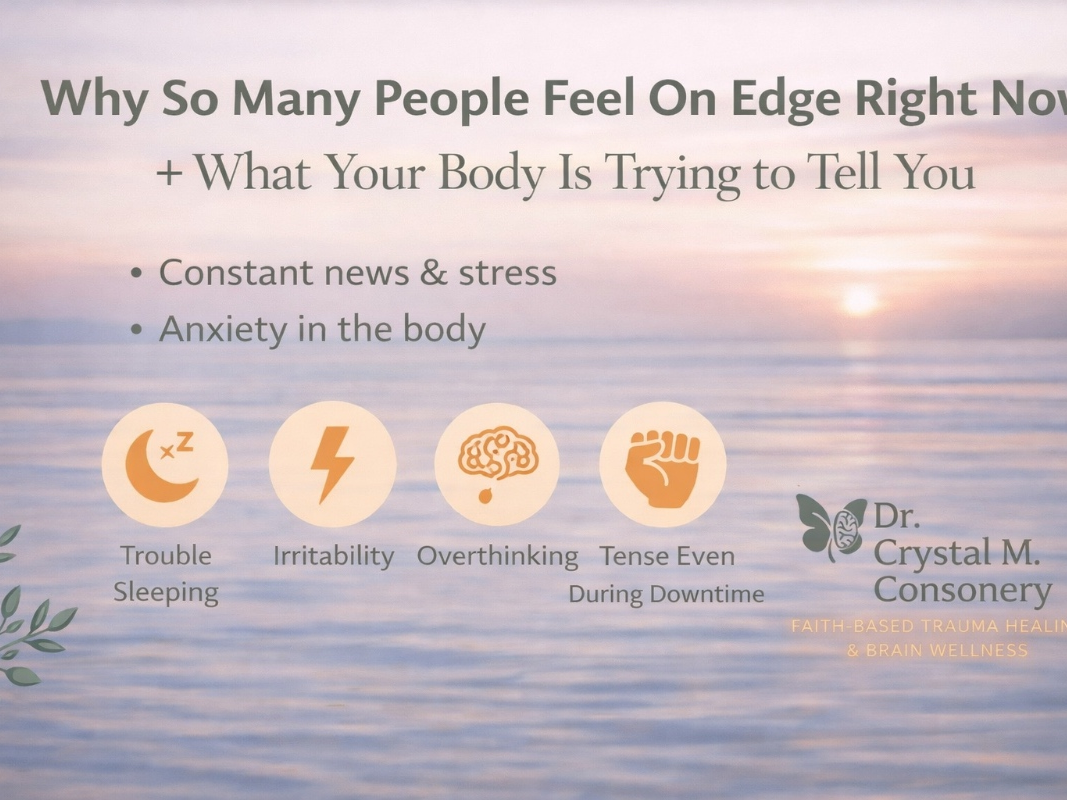
Lately, many people in our community are saying the same thing: “I’m tired,” “I feel anxious for no clear reason,” and “I just can’t seem to relax.” These statements are becoming more common in everyday conversations, not because people are weak, but because life feels heavier than usual. Constant news cycles, social tensions, economic concerns, and daily responsibilities quietly stack on top of one another. Even when we try to push through, our bodies are still keeping score. What we’re experiencing isn’t just mental or emotional, it’s physiological.
Anxiety is not simply a feeling; it is also a biological response. The nervous system has one primary job: to keep you safe. When the world feels uncertain or unpredictable, the body can shift into survival mode without us consciously choosing it. In this state, the brain scans for danger, muscles stay slightly tense, and true rest becomes harder to access. This response once protected us from physical threats, but today it can be activated by emails, headlines, and responsibilities.
When the nervous system stays activated too long, the signs show up in daily life. Sleep may become lighter or more interrupted, even when we’re exhausted. Small inconveniences can feel overwhelming, leading to irritability or emotional sensitivity. The mind may loop through worries or “what if” thoughts, making it hard to focus. Even moments meant for rest can feel uneasy, as if the body forgot how to power down.
Find out what's happening in Mariettafor free with the latest updates from Patch.
It’s important to understand that these reactions are not personal failures. They are signals from a body that has been trying to protect you for a long time. Instead of fighting the symptoms, we can begin supporting the system underneath them. The nervous system responds strongly to cues of safety, even small ones. Gentle, consistent practices can slowly shift the body out of survival mode.
Creating moments of safety throughout the day can make a meaningful difference. Stepping outside for fresh air helps regulate stress hormones and reset the mind. Turning off news notifications for part of the day gives the brain a break from constant threat signals. Slowing your breathing for even 60 seconds tells the nervous system that it’s okay to soften. Spending time with people who feel calming rather than draining reinforces a sense of connection and stability. While we can’t control everything happening around us, we can help our bodies feel safe enough to cope with what is.
Find out what's happening in Mariettafor free with the latest updates from Patch.
Dr. Crystal M. Consonery is a faith-based trauma healing and brain wellness educator who helps women understand the connection between the nervous system, emotional health, and spiritual restoration. Through neuroscience-informed coaching and compassionate support, she equips women to move from survival mode into lasting resilience, peace, and wholeness.