Neighbor News
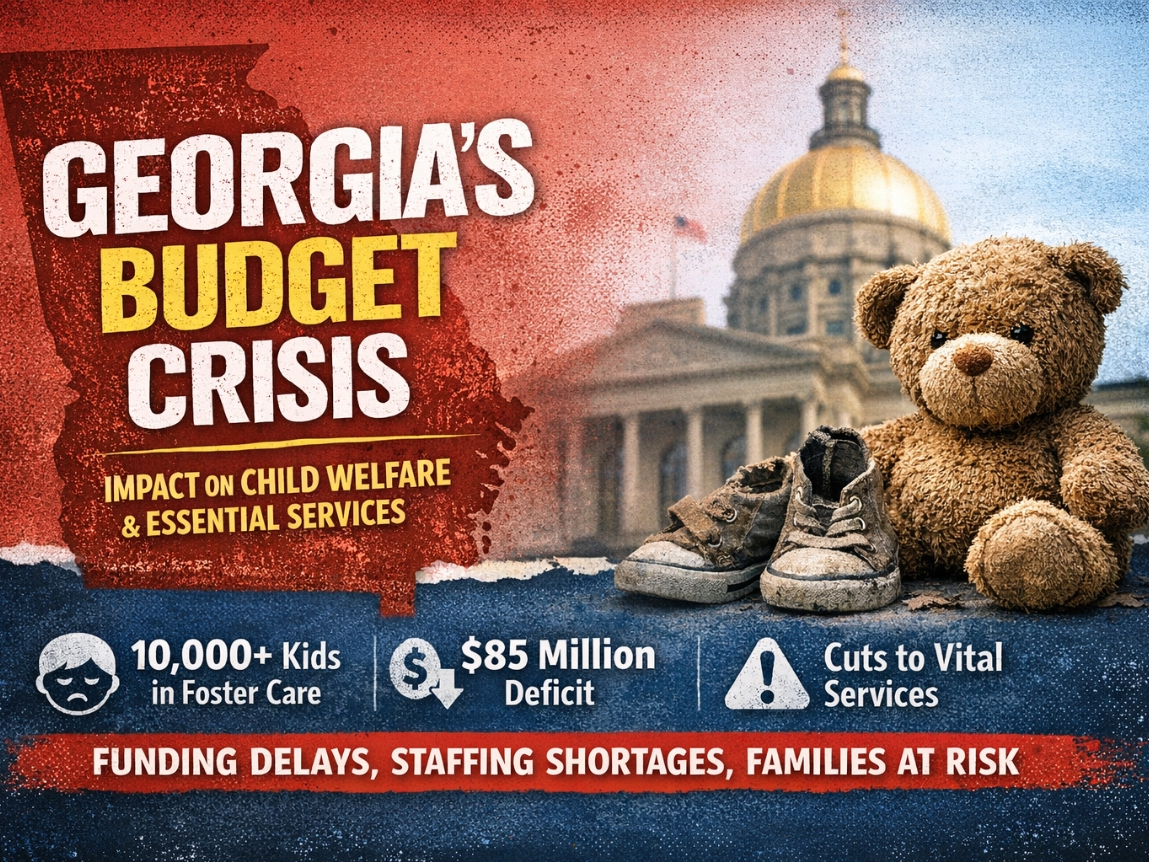
Georgia Lawmakers Warn: $85 Million Child Welfare Deficit Exposes Structural Failures
Georgia Lawmakers Warn: $85 Million Child Welfare Deficit Exposes Structural Failures Threatening Foster Care, Families, & Frontline Workers


FOR IMMEDIATE RELEASE
December 29, 2025
Georgia Lawmakers Warn: $85 Million Child Welfare Deficit Exposes Structural Failures Threatening Foster Care, Families, and Frontline Workers
ATLANTA, GA — State Representatives Viola Davis (D–Stone Mountain), Kim Schofield (D–Atlanta), and Sandra G. Scott (D–Rex) issued a joint warning following testimony confirming Georgia’s projected $85 million deficit within the Department of Human Services (DHS) and the Division of Family and Children Services (DFCS) represents a systemic breakdown and a shortfall that threatens foster care placement, provider stability, child welfare services, and the safety of children, families, and frontline workers across that state.
Find out what's happening in Tuckerfor free with the latest updates from Patch.
Testimony before the Georgia House Appropriations Subcommittee on Human Resources and the House Judiciary Juvenile Committee made clear that this crisis is not the result of a single decision or unexpected expense. Instead, it reflects years of structural vulnerabilities, including heavy reliance on delayed federal reimbursements, staffing losses within DFCS, and the absence of statutory safeguards to prevent child welfare obligations from exceeding available funding.
“Georgia cannot continue to operate a child welfare system where funding gaps are discovered only after harm is already underway,” said Rep. Viola Davis. “Children’s safety cannot depend on delayed federal reimbursements, understaffed caseworkers, or accounting assumptions that do not match reality.”
Find out what's happening in Tuckerfor free with the latest updates from Patch.
Georgia relies heavily on federal funding to operate its child welfare system. Federal dollars make up approximately 55% of the DHS budget, with Title IV-E serving as the primary funding source for foster care and adoption assistance. Title IV-E helps cover foster care per-diem payments, adoption subsidies, administrative costs, staff training, and some prevention services.
However, committee testimony emphasized that Title IV-E is reimbursement-based and eligibility-restricted. Not every child in foster care qualifies under federal criteria, and even eligible costs are reimbursed after services are provided. When reimbursements are delayed or eligibility determinations stall, Georgia must pay upfront using state funds to avoid disrupting placements and court-ordered services.
“Georgia’s foster care system is built on a funding structure that is too fragile,” said Rep. Kim Schofield. “When federal dollars are delayed or restricted, the impact is immediate placements are strained, providers are destabilized, and children suffer. Georgia legislators must make this a priority issue in the 2026 legislative session and not provide a Band-Aid solution to an ongoing systemic problem.”
Lawmakers also learned that DFCS staffing levels have declined significantly over the past several years, with high turnover and persistent vacancies weakening the agency’s capacity to manage caseloads, process federal claims, and prevent fiscal shortfalls before they escalate.
Fewer frontline staff and supervisors mean slower eligibility determinations, delayed reimbursements, heavier workloads, and increased risk of errors—compounding both service disruptions and financial instability.
“You cannot run a child welfare system on vacancies and burnout,” said Rep. Sandra G. Scott. “Staffing losses directly affect children, families, and the state’s ability to draw down federal funds efficiently.”
As a result of the funding gap, DHS and DFCS have already reduced or suspended services, including:
- Family preservation and reunification programs
- Transportation for parent-child visitation
- Mental health and behavioral health supports
- Contracts with nonprofit providers serving foster families
Nonprofit providers testified that these reductions were “catastrophic,” reporting staff resignations, program shutdowns, and delays that increase instability for children and lengthen time spent in foster care.
At the same time, legislators raised concerns that some federal resources, such as housing assistance for youth aging out of foster care, remain underutilized, not due to lack of need, but because of administrative and workforce capacity gaps. The result is a system facing an $85 million deficit while critical federal dollars go unused.
Committee discussions made clear that Georgia lacks a dedicated statutory safeguard to prevent child welfare agencies from obligating services beyond appropriated and released funds or to trigger early legislative intervention when funding gaps emerge.
“This crisis was foreseeable and without reform, it will happen again,” Rep. Davis said. “Children should never be the shock absorbers of a broken funding system. We must include an audit to truly assess this crisis and develop a corrective action plan.”
The lawmakers emphasized that while immediate action is required to close the current deficit, lasting protection must come from Georgia law, including enforceable fiscal guardrails, real-time reporting, workforce stabilization, and continuity protections for child welfare services.
Reps. Davis, Schofield, and Scott reaffirmed their commitment to advancing legislative reforms to ensure Georgia’s child welfare system is stable, transparent, fully funded, and accountable, before the next crisis hits.
“This is not a partisan issue,” said Rep. Scott. “It is a constitutional and moral obligation. Georgia’s children deserve a system that works when they need it most, not one that collapses under predictable strain.”