Politics & Government
Election 2026: Rob Daniels Aims To 'Disrupt' Baltimore Co.'s Political Establishment
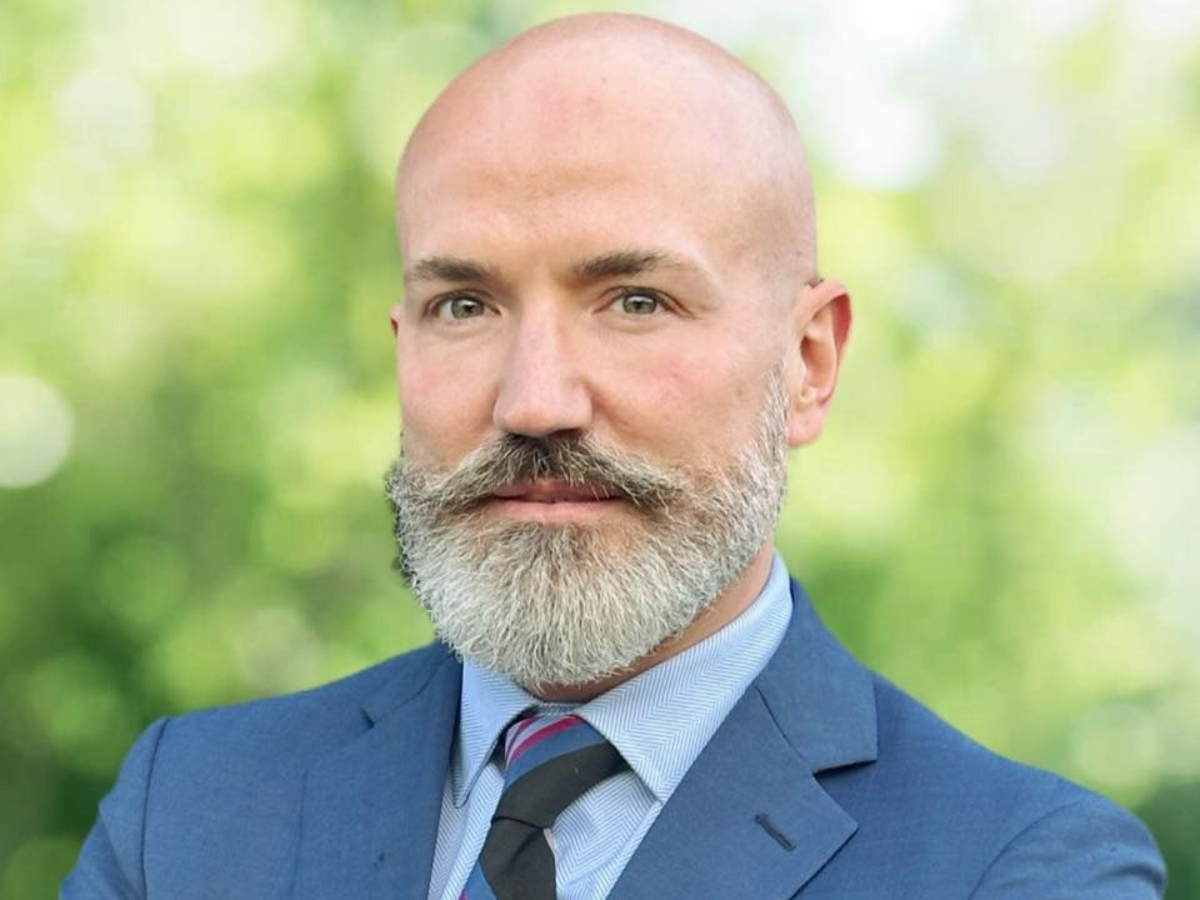
Rob Daniels is an independent candidate running to serve as the next county executive for Baltimore County.


BALTIMORE COUNTY, MD — Ahead of the 2026 general election in November, Patch has invited candidates running to represent Baltimore County to complete a questionnaire touching on a variety of key issues.
Candidate responses will be published verbatim in the run-up to Election Day on Tuesday, Nov. 3.
Questionnaire responses for Rob Daniels, who is running to serve in the county executive post, can be found below:
Find out what's happening in Towsonfor free with the latest updates from Patch.
Name: Rob Daniels
Age: 53
Find out what's happening in Towsonfor free with the latest updates from Patch.
Hometown: Pikesville
Political Affiliation: Independent
Do you have any previous political experience? If so, please state and explain how that experience will influence your time in office.
“Political experience” is exactly what got Baltimore County into this mess. The perceived frontrunner in this race touts his 12 years in county government as his principal qualification.
I see those same 12 years very differently: he has been part of the government while many of the problems we are now being asked to fix developed around him. I’m offering something radically different.
I have experience governing, not making a career out of politics. I’ve spent 15 years working inside the executive branch at the state and local level, making government function, solving problems and advising decision-makers. I’ve also served as a prosecutor and spent years leading community and nonprofit organizations.
I don’t want to become part of Baltimore County’s political establishment. I’m running as the Independent, write-in candidate to disrupt it.
What do you believe is the single-most important issue facing voters in the district you’re looking to represent? How do you intend to address those issues?
The collapse of public trust is the cancer that has metastasized into nearly every organ of Baltimore County government.
A 2026 UMBC poll found that 63% of Baltimore County residents trust their local government “never” or only “some of the time.” That should be a five-alarm emergency for every elected official in this county, not a résumé for promotion.
Trust affects everything: development, policing, schools, spending and whether residents believe a word their government tells them. We rebuild it with radical transparency. Open doors. Public data. No more backroom deals. No more government-by-developer. No more telling communities what has been decided after the deal is signed and the ink is dry.
And when government screws up, my administration will say so. Voters can choose that, or they can choose more of the same politics that produced a 63% trust deficit. That choice could not be clearer.
How do you differ from other candidates running against you?
I’m not running merely to tell people Baltimore County has problems. I have a plan to fix them. Take Towson. I’ve proposed a Towson Public Safety Zone bringing businesses, residents, universities, police and county agencies together; a public-private-partnership to bring a police substation to Towson Town Center; a community-driven revitalization work group; and giving Towson residents the opportunity to decide whether they want greater local self-government.
And juvenile crime cannot disappear into a bureaucratic black hole after an arrest. I’ll convene regular, public Juvenile Justice Roundtables, bringing police, prosecutors, Juvenile Services, schools, the judiciary and community leaders to the same table to identify where the system is working, and where it is failing, while protecting children's identities.
At least one of my opponents acknowledges that Baltimore County has serious problems. Another seems unwilling even to admit that much.
The biggest difference is independence. I’m in nobody’s pocket. I don't owe any favors. If you want to help rebuild Baltimore County, I’ll be your friend and partner. If you stand in the way because protecting the status quo benefits you, I’m not afraid to be your worst nightmare.
How would your work experience benefit the goals/objectives you’ve outlined in your campaign and/or the office you’re seeking?
I’ve spent 15 years in the executive branch of state and local government, including six years in law enforcement as a criminal prosecutor. For the past nine years, I’ve advised senior leadership of one of Maryland’s largest agencies as it administers a roughly $22 billion capital program. Outside government, I’ve served in leadership roles with charitable, legal and community-service organizations.
That matters because the County Executive is exactly that: an executive.
This isn't a legislative job. It isn't a debating society. It requires someone who understands agencies, budgets, personnel, lawyers, bureaucracy and how to make an enormous organization actually move.
My philosophy after years of public and community service is simple: government exists to serve people, not the people who run it.
I welcome a side-by-side comparison of my professional record with either of my opponents. I won't need on-the-job training; I’m ready to lead on Day One.
What is your opinion of the work being done by the current office holder, and how will you improve on it? If you're running for reelection, please explain the lessons of your previous term and how they would impact your next term.
It has been inept, timid and wholly inadequate for the moment Baltimore County is facing.
The current County Executive was selected by the County Council as an interim County Executive. Baltimore County did not need a caretaker. We needed an executive willing to make difficult decisions, challenge entrenched interests and demand results.
We lost valuable time.
The next County Executive needs to understand the separation of powers, know how to run a massive organization and be willing to exert the authority of the office to accomplish big things.
I will keep what works and dismantle what doesn’t. The permitting bureaucracy will be near the top of that list. So will the Office of Community Engagement.
Department heads will be expected to produce measurable results. Agencies will have to justify how they spend taxpayers’ money. And “that’s how we’ve always done it” will not be an acceptable answer.
This office is not a stepping stone for me. I’m not calculating which political faction I’ll need four years from now, so I have no reason to pull punches today.
Baltimore County can continue managing decline or we can choose a different direction. I’m asking voters to take a leap of faith that things can be better, and to write in my name for County Executive: ROB DANIELS. Either way, we will get exactly the government we are willing to accept.
How do you believe Baltimore County should address data centers? What type of legislation — moratorium or temporary pause — should be put in place? Explain.
I am a hard NO on hyperscale data centers in Baltimore County.
I’m not anti-technology. I’m pro-common sense. These facilities can consume extraordinary amounts of electricity, water and land while creating relatively few permanent jobs. That is a terrible trade if residents are left with the infrastructure burden.
On day one, I will direct my permitting agencies not to advance new hyperscale data center projects while my administration works with the Council on permanent legislation. Smaller, appropriately scaled facilities could be considered in existing commercial or industrial areas, but only with community support, adequate infrastructure, mitigation of energy and water demands, and a demonstrable public benefit. That is the standard I've established in my platform, and it hasn't changed.
Technology should serve Baltimore County. Baltimore County should not become a utility company for technology. I'm willing to go to the mat on this one.
What steps would you take to offset data center impacts to residents’ standard of living, such as rising energy prices?
My first strategy is wonderfully simple: don't create a problem and then ask taxpayers to pay to fix it. I will not support hyperscale data centers that require massive new energy infrastructure and then socialize those costs onto Baltimore County families. Life is expensive enough right now without piling on more.
For any smaller data facility considered by my administration, the burden will be on the applicant to demonstrate that adequate infrastructure exists and that its energy and water demands will not be shifted onto surrounding communities. My published standard already requires acceptable facilities to offset their energy and water usage and not strain existing infrastructure.
The promise of additional tax revenue isn't enough. If a project makes its owner richer while making it more expensive for everyone else to live here, that's not economic development.
How would you distinguish between a good vs. bad data center?
Size, location, resource consumption, infrastructure demands, jobs and community impact.
A good data center fits into an existing commercial or industrial area, has community support, can be served by existing infrastructure, offsets its energy and water demands, and provides a measurable benefit to Baltimore County.
A bad data center requires us to sacrifice land, water and electrical capacity for a gigantic building that employs relatively few people while somebody else collects the profits.
My economic-development test is broader than data centers: Does this create opportunity for the people who actually live here? If the answer is no, I'm not interested.
Gov. Wes Moore signed bills banning agreements between local police and federal immigration officials in February.
What is your opinion of the legislation? What steps would you take to support or readjust that initiative?
First, we should be precise about what the new law does. It prohibits Maryland state and local governments from entering agreements such as 287(g) that deputize local personnel to perform federal civil immigration enforcement. It does not prohibit cooperation with federal authorities on criminal investigations, prevent compliance with lawful court orders, or prohibit cooperation concerning violent offenders within the limits of the law.
I support the ban on 287(g), and as County Executive I will follow the law.
Baltimore County police officers have enough to do. I want them investigating crimes, patrolling neighborhoods, enforcing traffic laws and protecting residents — not being transformed into federal immigration agents.
But this cuts both ways. Everyone has to follow the law. County government will comply with valid court orders and lawful federal requirements. We can protect due process, maintain community trust and cooperate with federal authorities on legitimate public-safety matters at the same time.
No sanctuary for lawlessness. No reckless political theater. Just the law. That's the position I've published, and that's how I'll govern.
What is your stance on the establishment of ICE centers in the county and/or your district? What actionable plans would you undertake to address illegal immigration in the county?
Immigration enforcement is principally a federal responsibility. My responsibility as County Executive will be Baltimore County.
I would not volunteer County property or County resources to establish an ICE detention facility. If the federal government proposed a facility here, my administration would fulfill its constitutional role and scrutinize every aspect over which the County lawfully has jurisdiction, including land use, infrastructure, public safety and community impacts, and we’ll conduct that process publicly.
As for illegal immigration, I reject both extremes. Baltimore County will not deputize its police as federal civil immigration officers; Maryland law now prohibits those agreements. But we also won't pretend laws don't exist. County employees will obey valid court orders and lawful federal requirements, and our police will continue lawful cooperation with federal agencies on criminal investigations and public-safety matters.
Baltimore County has enough problems without importing Washington's political circus. My job is to keep people here safe.
Education: What is the biggest issue facing Baltimore County Public Schools? How would you address it?
We spend enormous amounts of money on education without demanding clear enough answers about what that money is accomplishing.
Nearly half of Baltimore County's local tax dollars support education. Yet the debate is almost always framed as "spend more" versus "cut spending." I'm asking a different question: Is the money we're already spending reaching classrooms and improving student outcomes?
I will push for a comprehensive independent review of BCPS finances and expanded independent financial oversight. I'll also establish a public "SchoolStat" system so parents and taxpayers can see meaningful educational performance measures over time.
Every education expenditure should eventually face two simple questions: Does it help us recruit and retain excellent teachers? Does it improve outcomes for students?
If the answer to both is no, we need to ask why we're spending the money. Teachers, not bureaucracy, are our greatest educational investment.
A student brings a gun/weapon to campus without setting off any red flags.
What security measures would you advocate for to prevent such an incident? Do you believe schools need stricter security measures? Metal detectors? Explain.
If a child can walk into a school carrying a gun and nobody knows it until something happens, our security system has failed at its most basic job.
I'm willing to consider metal detectors, but I would not impose a one-size-fits-all mandate on every school simply to allow politicians to announce that they've "done something." Security measures should be driven by evidence, building design, threat history and professional security assessments.
I want a comprehensive security assessment of our schools: controlled entry points, functioning cameras and locks, visitor management, communication systems, School Resource Officer coverage, emergency procedures and how weapons are actually getting into buildings.
And we cannot stop at the front door. Prevention also means identifying threats earlier, improving information-sharing where legally permitted, supporting students in crisis and intervening before a weapon ever reaches school.
Children cannot learn if they don't feel safe. Parents shouldn't have to wonder whether sending a child to school is an act of faith.
What will you do to encourage affordable/public housing in the county?
We need more housing, but Baltimore County's answer cannot simply be "build everything, everywhere." One of our biggest self-inflicted problems is permitting. A county that makes sensible housing extraordinarily difficult and expensive to build shouldn't be surprised when housing becomes extraordinarily expensive.
I will streamline permitting, provide developers and communities with predictable rules, and prioritize redevelopment of vacant shopping centers, dying malls, empty office properties and aging commercial corridors before paving over more open land. My platform specifically identifies these areas as opportunities for mixed redevelopment, including housing where appropriate.
But housing doesn't exist in a vacuum. Schools, roads, sewers, traffic and neighborhood character matter too. I will preserve the URDL and insist that communities have a meaningful seat at the table.
Affordable housing and responsible development are not opposing ideas. Good government should be capable of doing both.
How will you address crime in the county/your district?
Public safety is government's first responsibility. If people don't feel safe, almost everything else we talk about as a government becomes secondary.
I'll begin the search for a new police chief on day one. The next chief will understand that their primary tasks are to aggressively recruit and retain officers, expand visible patrols and pursue a robust take-home vehicle program. My first-six-month plan puts underused County vehicles back into service and ties participating officers to additional traffic-enforcement work targeting reckless driving, aggressive driving and excessive speeding.
But policing is only part of public safety. We also need prosecutors, schools, Juvenile Services, courts, families and community organizations pulling in the same direction.
I spent six years as a prosecutor. I don't approach crime as a slogan. Safety and justice walk hand in hand. Baltimore County deserves both.
The county has seen a spike in incidents involving teen brawls. What steps would you take to curb incidents? What role does the county play in clamping down on the fights, or what's become known as "teen takeovers"?
As far as curbing incidents, we must stop treating each brawl like an isolated event. When groups of teenagers repeatedly gather at the same places and violence follows, government should be smart enough to identify the pattern and intervene before the next fight starts.
That means police intelligence and visible presence at predictable gathering points; better coordination among police, schools, malls and businesses; rapid communication when large groups begin forming; and earlier intervention with young people repeatedly involved in violent behavior.
But arrest cannot be the end of the conversation. My administration will convene a public Juvenile Justice Roundtable every two months, bringing police, prosecutors, Juvenile Services, schools, the judiciary and community stakeholders together. Individual children's identities remain protected, but incidents and outcomes can be examined, from start to finish, so we can see where the system is working and where it is failing.
Juvenile crime doesn't end with an arrest. Neither should accountability. The county's role in clamping down on violent "teen takeovers" is a huge one. And the first requirement is to stop pretending this is somebody else's problem.
Police make the arrest. Prosecutors make charging decisions. Juvenile Services is a state agency. Schools have their responsibilities. Courts have theirs. Businesses control private property. Parents obviously matter.
And that fragmented system is precisely the problem: everyone owns one piece, so nobody owns the outcome. The County Executive cannot order every one of those institutions around. But the County Executive can put them around the same table, demand data, expose gaps, coordinate resources and use the bully pulpit of the office to demand answers.
That's what my Juvenile Justice Roundtables are designed to do. We protect the identity of children while publicly tracking what happens to incidents after the headlines disappear. Government loves silos because silos make accountability disappear.
My job as County Executive will be to break down the silos and make somebody responsible for the result.
Get more local news delivered straight to your inbox. Sign up for free Patch newsletters and alerts.