Neighbor News
New Jersey author claims: Socialism is as American as Apple Pie
Socialism was born in America: 26 erased heroes prove it. Read the book they don't want you to see: https://www.amazon.com/dp/B0H7Q3GS9P
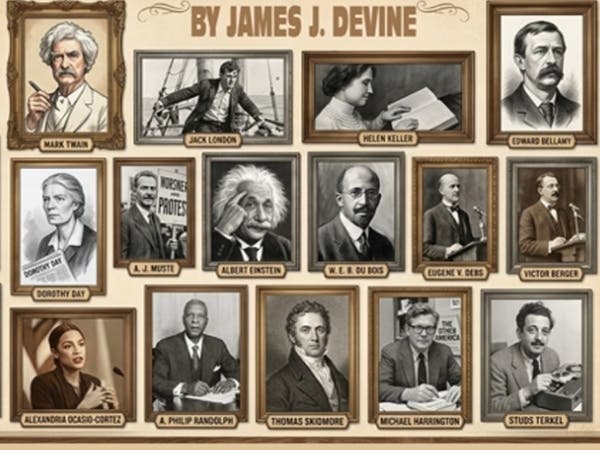
James J. Devine's Socialism is as American as Apple Pie systematically dismantles lies about the disparaged ideology, biography by biography, until the reader is left with an undeniable truth: the demand for economic justice was born on American soil.
James J. Devine's Socialism is as American as Apple Pie systematically dismantles lies about the disparaged ideology, biography by biography, until the reader is left with an undeniable truth: the demand for economic justice was born on American soil.
For generations, Americans have been told a simple, comforting lie: that socialism is a foreign import, an alien ideology that arrived on steamships from Europe, fundamentally un-American and best quarantined.
Find out what's happening in Jersey Cityfor free with the latest updates from Patch.
James J. Devine's Socialism Is as American as Apple Pie: Restoring the Socialist Conscience of the American Republic does not merely challenge that lie—it systematically dismantles it, chapter by chapter, biography by biography, until the reader is left with an undeniable truth: the demand for economic justice was born on American soil, in the American language, out of American grievances.
A Work of Historical Recovery
Find out what's happening in Jersey Cityfor free with the latest updates from Patch.
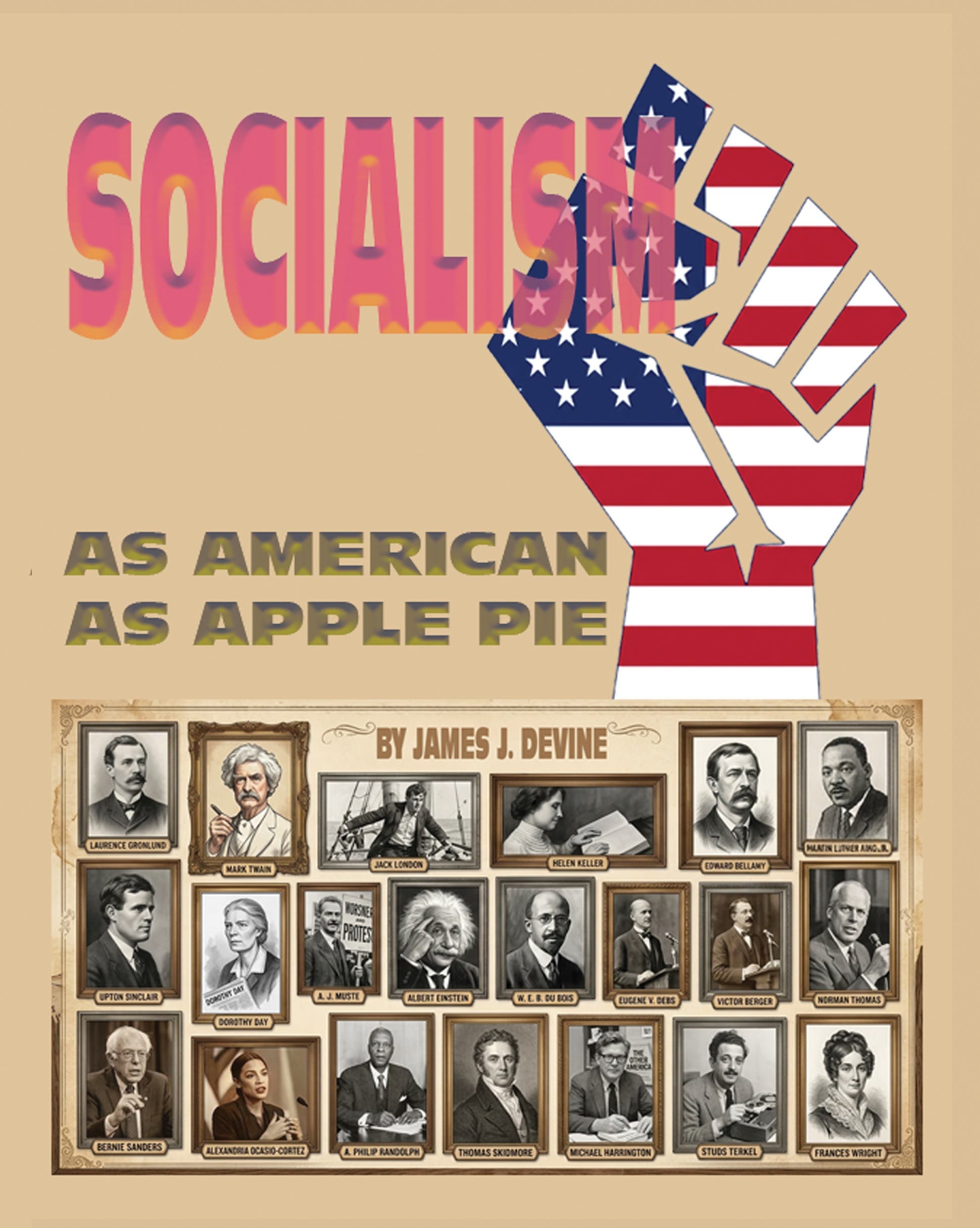
This is not a dry academic treatise. It is an act of repossession. Devine takes the reader on a journey through twenty-six biographical portraits of Americans who believed—plainly, bravely, and in patriotic terms—exactly the things we are now told no American could believe.
From Thomas Skidmore, a New York machinist who proposed redistributing all property in 1829—nineteen years before the Communist Manifesto—to Bernie Sanders and Alexandria Ocasio-Cortez today, Devine traces a continuous, unbroken line of American radicalism that has been deliberately erased from the national memory.
The book's structure is deceptively simple and profoundly effective. Each chapter reclaims a life, documents the specific machinery of erasure, and argues that the subject's socialism was not a rejection of American values but a continuation of them—a logical extension of the liberty and equality the founders proclaimed and then left unfinished.
The Cast of the Erased
Devine's gallery of the erased is staggering in its breadth and its implications. Mark Twain, the beloved humorist, was a vice president of the Anti-Imperialist League who warned that the next ruling dynasty would be organized labor. Helen Keller, the deaf-blind icon of individual triumph, was a card-carrying socialist who blamed industrial greed for much of the blindness she studied—a fact neatly scissored out of the inspirational version.

Albert Einstein, the universal emblem of genius, published "Why Socialism?" in 1949 while the FBI kept a fourteen-hundred-page file on him. Martin Luther King Jr., whose dream we now sanitize into a single comfortable line, told his staff that America would have to move toward a democratic socialism and was drafting an economic bill of rights when a bullet found him in Memphis.
And on it goes: Upton Sinclair, whose EPIC campaign nearly won California with 879,000 votes, remembered only for cleaning up the sausage. A. Philip Randolph, the socialist whose threatened march pried executive orders from two presidents, remembered only as the dignified elder who introduced the speakers in 1963.
Eugene V. Debs, who ran for president from a prison cell and pulled nearly a million votes, shrunk to a Progressive-Era curiosity. Dorothy Day, who called the wage system a sin and spent fifty years on the side of labor against capital, being remade into a safe Catholic saint. Studs Terkel, the listener who preserved the voices of working America, gentrified into a lovable Chicago character with his socialism dissolved into a warm blur.
The Machinery of Erasure
What makes Devine's book truly essential is its systematic exposure of how the erasure was accomplished. It was not censorship in the crude sense—no book burnings, no outright bans. It was something far more effective: selective preservation. The textbooks kept the safe half of each life and dropped the dangerous half.
They kept Twain the humorist and dropped Twain the anti-imperialist. They kept Keller the inspiration and dropped Keller the Wobbly. They kept King the dreamer and dropped King the radical who called for a "radical revolution of values" and a guaranteed annual income.
The appendix alone is worth the price of admission. Devine tallies the erasure itself—textbook by textbook, monument by monument, subject by subject.
The bronze of Helen Keller in the U.S. Capitol depicts her at seven years old, at the water pump, at the instant she learns the word "water." Nowhere on the plinth is there room for the woman who wrote that "the country is governed for the richest." The statue enshrines the miracle and omits the indictment.
Why the Lie Was Told
Devine does not flinch from the hardest question: why? Why spend a century teaching a whole people to flinch at a word? The answer, he argues, is not complicated. The people who own most of the wealth in this country have been waging a quiet, one-sided class war against nearly everyone else.
Socialism is branded an alien menace for one reason above all others: because a government built on it would ask the richest Americans to give up a portion of what they have. The fear is manufactured, and it is manufactured to protect a fortune.
The same handful of the very wealthy who will not part with a fraction of their fortunes also own, directly or through their holdings, nearly everything Americans read, watch, hear, and search. They do not have to tell you what to think. They need only decide what you get to think about—what is treated as serious and what is quietly ruled absurd. If they can make you fear a word, they never have to fight the idea behind it.
A Book for Our Time
Socialism Is as American as Apple Pie arrives at a moment of maximum relevance. With democratic socialism polling at historic highs among young Americans, and a new generation of democratic socialists taking office, the time is right for a book that restores the American roots of the tradition. Devine shows that the current revival is not a rupture but an inheritance—the return of a tradition that never died, only went unnamed.
The book's closing chapters—on Bernie Sanders, Alexandria Ocasio-Cortez, and the Fight for $15—make this clear. Sanders is not a foreign novelty; he is the ghost of this entire history handed a body and a microphone.
Ocasio-Cortez is not an exotic threat; she is the latest carrier of a line that runs from Gronlund's commonwealth through Debs's campaigns through Sanders's rallies, carrying it in the accent of the Bronx.
The Fight for $15 is not a scatter of unrelated wage disputes; it is the living continuation of the tradition of Debs and Mother Jones, with large majorities backing the substance even as they flinch at the label.
A Call to Action
This is not, in the end, a book about the past. It is a book about why the American imagination has been fenced in, and about how wide the country really is once the fence comes down. Devine writes with passion and precision, and he writes with a purpose: to give back to Americans what was stolen from them—their own radical inheritance.
The disappointment so many Americans feel—the sense that the game is rigged, that the choices on offer do not match the size of the problems—is not a personal failing. It has a history. And the history is the point. Devine proves that the alternative we were told was foreign is in fact homegrown, as American as the Fourth of July, as American as apple pie.
About the Author
James J. Devine is a political strategist and writer who has been called "unbalanced" by Tucker Carlson—which, in the current political climate, may be the highest compliment one can receive. New Jersey state Senator Joe Cryan—who used taxpayer-funded computers to send emails seeking bondage and sadomasochistic fantasies during working hours to a lobbyist—called Devine "a sleaze ball, the worst in politics."
Convicted Bridgegate mastermind David Wildstein—who weaponized public infrastructure for malicious political revenge—routinely describes Devine as "controversial and mendacious" and a "political gremlin."
If the enemies of honest politics despise him, Devine must be doing something right. With this book, he has done something extraordinary: he has given us back our own history.
Socialism Is as American as Apple Pie: Restoring the Socialist Conscience of the American Republic
by James J. Devine
Hardcover/Paperback/Kindle
Available at: Amazon
"The disappointment you carry is the entirely reasonable response of someone who senses that the choices on offer do not match the size of the problems—and who has never been shown the tradition that once thought bigger. Here is that tradition. It is older than you were told, braver than you were taught, and more American than the people who buried it ever wanted you to know."