Community Corner
Morris County’s Opioid Funding Drives Outreach. Outpatient Addiction Treatment in NJ Sustains Recovery
While funding supports immediate outreach, the clinical handoff to structured care is essential for continued recovery


This is a paid post contributed by a Patch Community Partner. The views expressed in this post are the author's own, and the information presented has not been verified by Patch.
Morris County’s 2026 Opioid Settlement and the Focus on Saving Lives
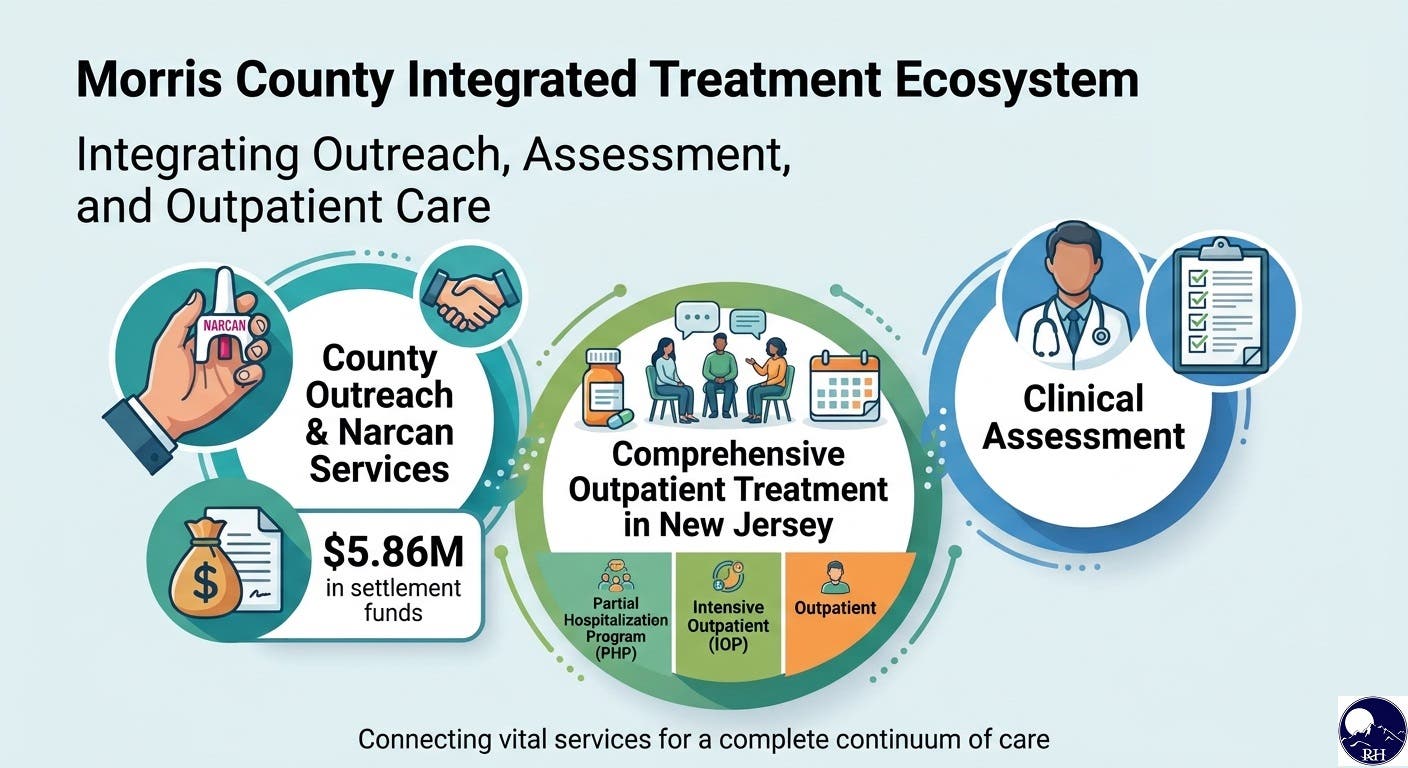
Morris County's response to the opioid crisis includes outreach, harm reduction, prevention, and connections to treatment. The county's FY2026 opioid-abatement report provides a financial snapshot of these efforts and the resources reported during the fiscal year.
Covering July 1, 2025, through June 30, 2026, the report records $5,859,895.03 in opioid settlement funds received since distributions began in 2022. It also reports $3,977,946.08 in unspent or uncommitted funds on hand at the time of reporting. These figures appear in the Morris County FY2026 opioid-abatement report.
The county identifies several priorities for settlement funding, including recovery support, medication-assisted treatment, prevention, transportation, outreach, and harm reduction. Among the programs documented are Hope One Mobile Outreach and Morris County Harm Reduction.
These figures represent the county's reported financial position during a defined fiscal year. They shouldn’t be interpreted as a current balance available for new services or as evidence that Morris County lacks treatment resources. Instead, they illustrate the scale of the response and the importance of connecting people with appropriate care.
Why Outreach and Narcan Are Essential, but Don’t Treat the Underlying Addiction
When someone experiences an overdose, immediate intervention can mean the difference between life and death. Narcan, also known by its generic name naloxone, can reverse an opioid overdose and create an opportunity for further medical attention. These interventions are essential.
However, reversing an overdose doesn't resolve the underlying substance use disorder. A person may still need medical evaluation, a clinical assessment, medication-based treatment when appropriate, and a structured plan for continued care. Without a connection to appropriate treatment, the circumstances that contributed to the crisis may remain unresolved.
The Role of Clinical Assessment in Moving from Crisis to Continued Care
Once the immediate crisis has passed and urgent medical needs have been addressed, the next question is what level of treatment will best support the individual. A clinical assessment helps establish that direction by considering the individual's substance use history, physical and behavioral health needs, and recovery environment. It can also identify co-occurring conditions such as anxiety or depression that may influence substance use.
For individuals with opioid use disorder, medication-assisted treatment may also be appropriate. Medication decisions should be made with qualified medical professionals based on individual clinical needs.
The transition from emergency intervention to treatment involves identifying the challenges contributing to substance use, establishing realistic treatment goals, and connecting the individual with appropriate ongoing services.
Transitioning into Structured Outpatient Care
Not everyone requires the same intensity of treatment. Depending on clinical needs and individual circumstances, structured outpatient services may provide an appropriate next step after assessment or a higher level of care.
Three common outpatient treatment options include:
- Partial Hospitalization Program (PHP): Provides a highly structured daytime treatment schedule. Participants attend multiple hours of programming and return home outside treatment hours.
- Intensive Outpatient Program (IOP): Offers a more flexible schedule while maintaining regular therapeutic contact, allowing time for work and family responsibilities.
- Outpatient Treatment: Involves fewer weekly treatment hours, including individual counseling and ongoing clinical support.
The appropriate level depends on clinical assessment, safety considerations, and the individual's ability to participate in treatment outside a supervised setting.
Some individuals require medically supervised withdrawal management or a higher level of treatment before transitioning into outpatient care. Rolling HillsRecovery Center doesn’t provide residential treatment or inpatient medical detox onsite. When medical detoxification is necessary, its admissions team can coordinate placement with an appropriate outside medical provider before continued treatment begins.
Morris County's Opioid Investment Reaches People in Crisis. Here Is What Comes Next.
Morris County's investment in opioid-abatement efforts highlights the importance of reaching people during difficult moments. But the work doesn't end when an overdose is reversed or an immediate crisis is resolved. Connecting individuals with clinical assessment and appropriate ongoing treatment remains an essential part of addressing substance use and supporting continued recovery.
For Morris County residents and families exploring the next stage of treatment, learning about outpatient addiction treatment in New Jersey can be a starting point for understanding available options.
The Road to Outpatient Addiction Treatment at Rolling Hills Recovery Center in New Jersey
Located at 425 Main Street in Chester, Rolling Hills Recovery Center NJ is an adult addiction-treatment provider serving individuals seeking structured outpatient care in New Jersey. Its treatment options include a partial hospitalization program (PHP) in New Jersey, an intensive outpatient program (IOP) in New Jersey, and outpatient services. The center's approach incorporates clinical assessment, individual and group counseling, and family counseling when appropriate.
While Rolling Hills Recovery Center operates independently from county outreach programs, the center serves as a dedicated clinical resource for those ready to take the next step. For individuals who need a higher level of care before beginning outpatient treatment, the admissions team can help coordinate next steps with outside providers.
Admissions can be reached at (973) 606-9170 to discuss treatment options, determine an appropriate level of care, and verify insurance benefits.
This post is an advertorial piece contributed by a Patch Community Partner, a local brand partner. To learn more, click here.