Politics & Government
Princeton Adopts 2026 Budget: Tax Hike, Cap Bank, & Last-Minute Library Amendment
Council member Brian McDonald corrected earlier cost estimates and explained why Princeton can't exit the state health plan — yet.


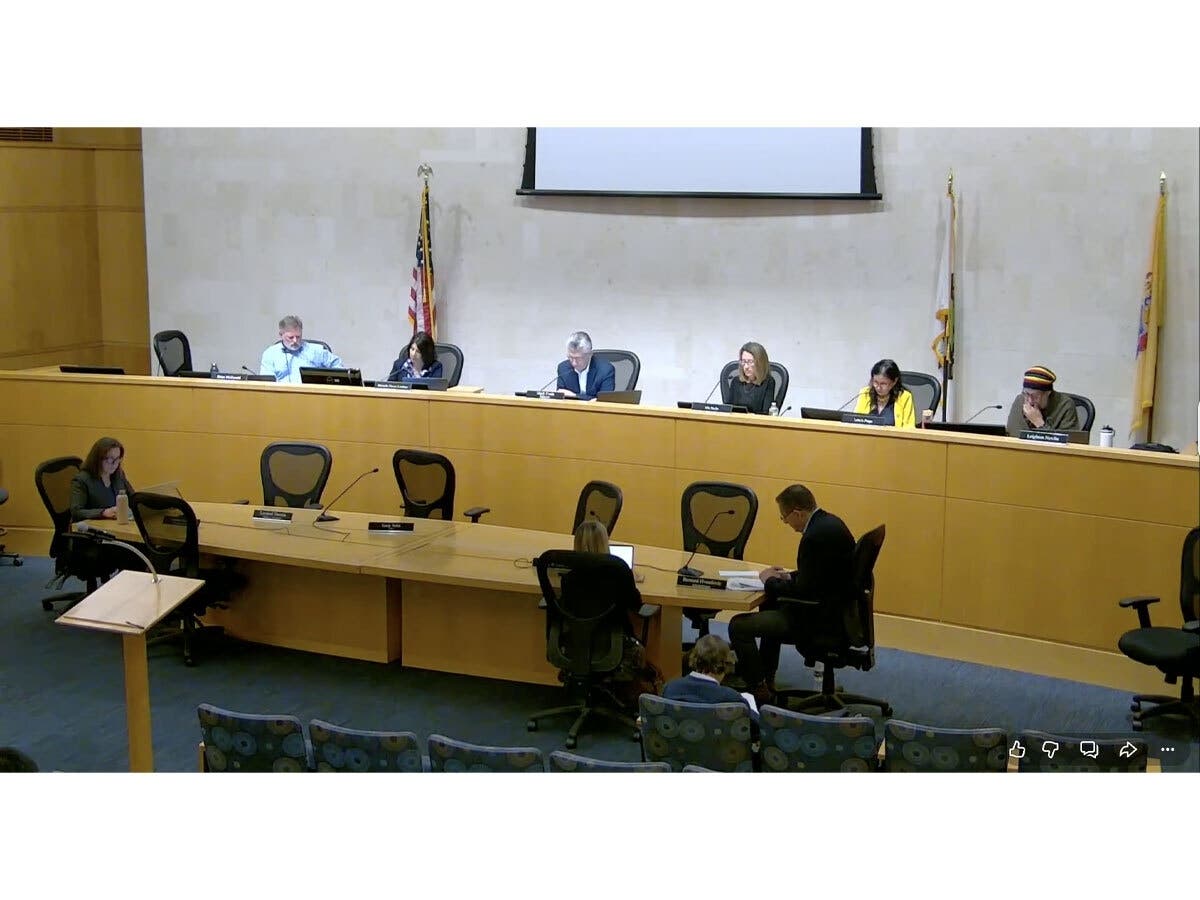
PRINCETON, NJ — The Princeton Council on Monday unanimously adopted an $84.8 million municipal budget for 2026 that will raise the average property tax bill, driven largely by a 36.5 percent spike in employee health insurance costs and ongoing expenses tied to its acquisition of the Westminster Choir College campus.
The proposed 2026 budget totals $84,834,337 — an increase of $5.44 million, or 6.85 percent, over the current year. Finance Committee Chairman Brian McDonald had called it "perhaps the most challenging budget since consolidation" when it was introduced in March.
Before the vote, McDonald offered a correction to figures he had cited at the budget's introduction. He said a 36.5 percent rise in state health plan costs would add $1.8 million in expenses — not the $1.9 million he had previously stated — which, if passed on to taxpayers, would represent a 5 percent increase in the municipal tax levy, not the 6 percent he had initially said.
Find out what's happening in Princetonfor free with the latest updates from Patch.
The council also amended the budget before adoption, adding $75,000 drawn from surplus funds to support the Princeton Public Library.
McDonald noted that Princeton remains in the state health plan because its three union contracts prevent the municipality from switching plans without approval from all three unions and delivery of an equally or better alternative plan. He said timing last year prevented those negotiations from concluding and that the township is starting the process earlier this year in anticipation of further increases.
Find out what's happening in Princetonfor free with the latest updates from Patch.
"We also understand that we are extremely limited and can't make changes to the plan," McDonald said, drawing a contrast with the library, which he noted had managed its own health plan exposure to hold its increase to 18.2 percent. "I want to commend the library for making really hard and important decisions," he said. "I wish we had the ability to do that, but I'm very grateful for them for their hard work."
To adopt the budget, the council also passed Ordinance 2026-17, establishing a cap bank that authorizes Princeton to exceed the standard 2 percent municipal budget appropriation limit under state law. The ordinance allows the municipality to increase its final appropriations by 3.5 percent — amounting to $1,740,965.45 above what would otherwise be permitted — with any unused portion of that authorization available to carry over into either of the next two budget years.
For the average Princeton homeowner — with a property assessed at $866,204 — the combined municipal and library tax bill would rise by $158.77, from $4,998 to $5,156.77, a 3.18 percent increase in the combined tax rate.
The single largest pressure on the budget is health insurance, which jumped 36 percent, adding roughly $1.8 million to the insurance line, with total insurance costs up $2.34 million across the board.
Other major expenditure increases include $1.85 million in debt service on the Westminster Choir College property, $306,000 more to the Stony Brook Regional Sewerage Authority, $349,000 for a new shared services agreement with the school district, and $550,000 in higher utility costs.
Salary and wages are up $1.15 million, covering cost-of-living increases under three settled union contracts, the overlap of an outgoing zoning officer position, two new sewer maintenance workers and three additional firefighters — new hires that reflect Princeton's ongoing transition from an all-volunteer fire department to a primarily paid professional force.
Officials pointed to several revenue gains that helped cushion the tax impact, including $1 million in additional surplus funds, $1.3 million from new PILOT agreements, $825,000 from sewer rate increases, $300,000 in additional parking utility revenue and $216,320 from Princeton University.
Have a correction or news tip? Email sarah.salvadore@patch.com
Get more local news delivered straight to your inbox. Sign up for free Patch newsletters and alerts.