Restaurants & Bars
This NYC Bar Has A Hidden Vinyl Room And Bottomless Brunch Special
Inside its bamboo groves and neon glow, Lucky Tiger leans into immersive design and hospitality-forward service.


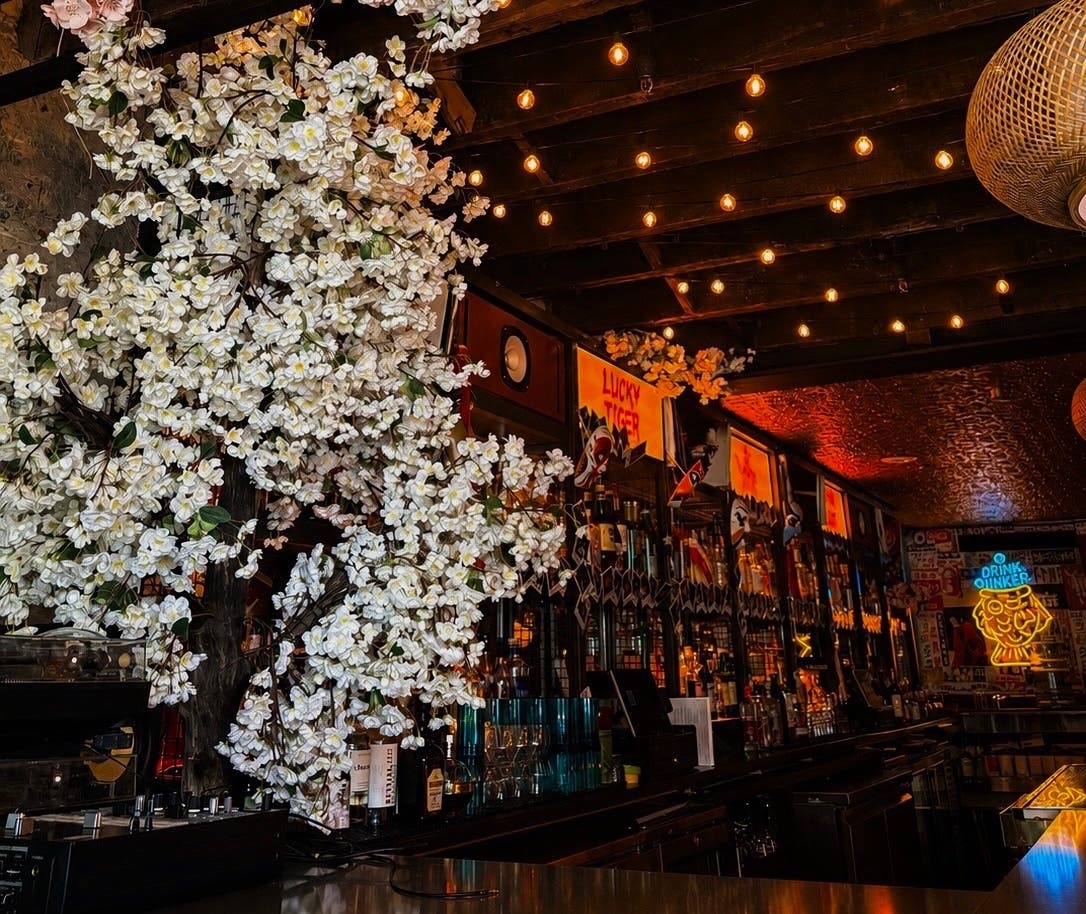
NEW YORK, NY— From the team behind Motel No Tell, a sliver of downtown nightlife has landed in the Financial District.
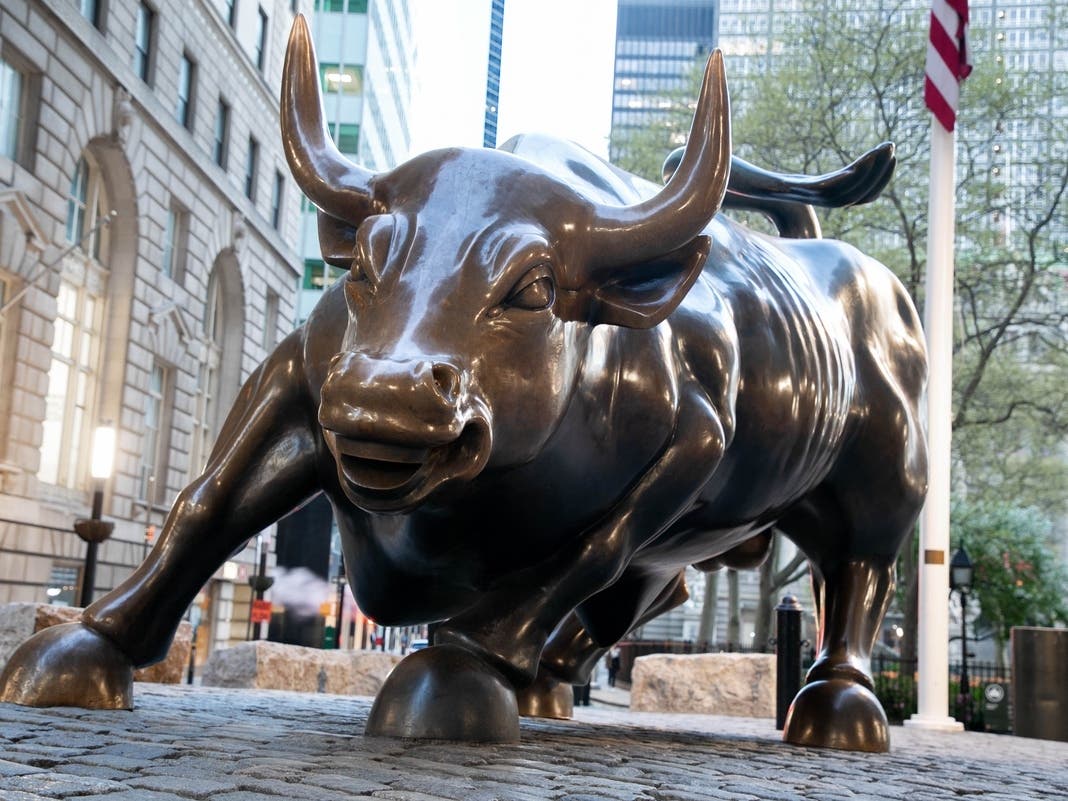
At Lucky Tiger, tucked between Pearl Street and Water Street in the Financial District, Manhattan’s oldest neighborhood began to feel young again since its opening last July.
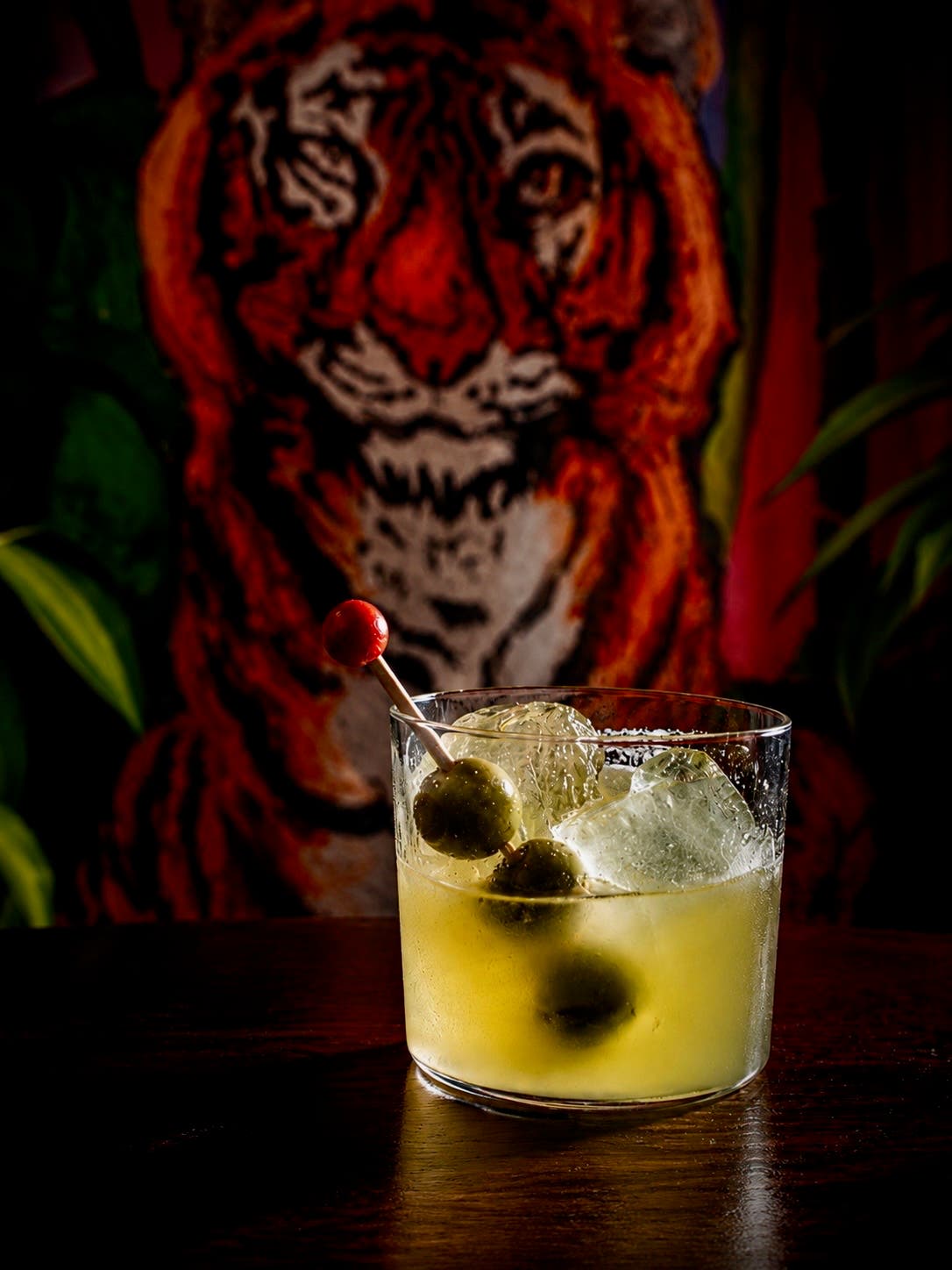
The restaurant recently launched an Endless Brunch program with 90 minutes of bottomless cocktails for $35 — featuring Pearl Street Margaritas sharpened with Italicus and makrut lime, green tea highballs built on Michter’s Sour Mash, and Aperol Spritzes made for long afternoons.
Find out what's happening in New York Cityfor free with the latest updates from Patch.
Deep inside the space, past the dining room, and beyond the bamboo grove, sits Toraya, a hidden vinyl listening bar styled after Tokyo jazz dens.
“We opened as a cocktail bar,” beverage director Alex Dominguez said. “But probably a little naively, we expected the whole place to be full of people looking for cocktails.”
Find out what's happening in New York Cityfor free with the latest updates from Patch.
Instead, FiDi showed them something else. People wanted to stay.
They wanted the classic drunken noodles with elevated plating; a corner seat; and, a place to become regulars.
“We’ve seen a huge demand for food,” Dominguez said. “The food is fantastic, and people love it. So we had to adapt slightly to that.”
None of the ownership team comes from an Asian background, a fact they openly acknowledge, but the restaurant approaches influence less through claims of authenticity than through atmosphere, texture and immersion.
One of the most quietly telling dishes on the menu is the spice bag: karaage-style fried chicken tossed with green onion, Thai basil, and red chili.
It’s a nod to Irish takeaway culture filtered through a Southeast Asian lens.
It speaks directly to its Irish-born general manager, Sam Murphy.
For Murphy, the goal isn’t to obscure origins but to make food that feels immediate and satisfying.
It’s built for repeat orders, for regulars, industry workers and first-time guests who settle in and stay longer than planned.
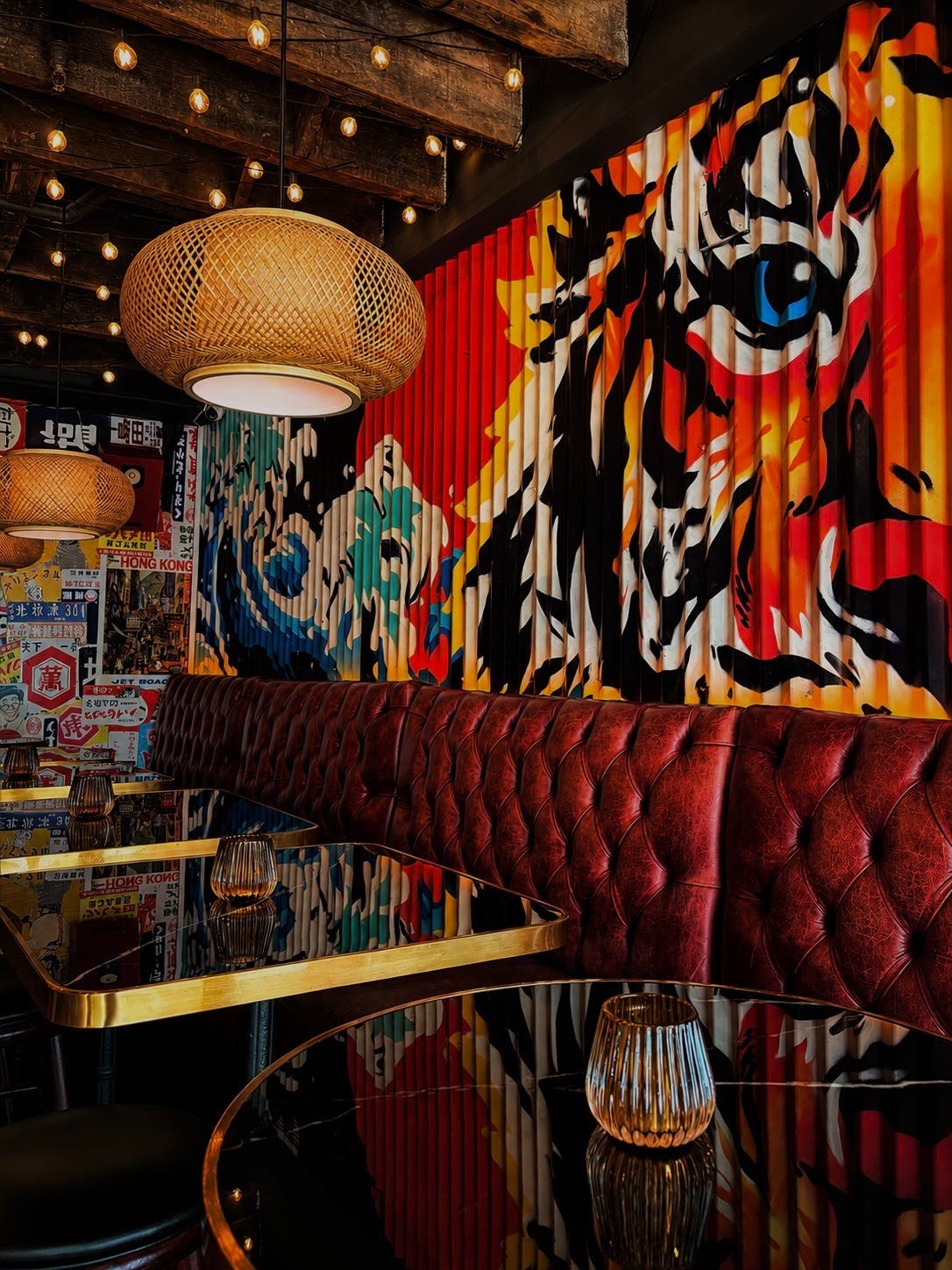
One round becomes another, then another, as the room does its work.
Dominguez describes each room as a different chapter: Japanese cherry blossoms in Toraya, Vietnamese lanterns in the front dining room, Thai street-market energy in the Night Market space.
The result feels intentionally hybridized: downtown Manhattan interpreting Southeast Asia through nightlife rather than strict culinary taxonomy.
That adaptation became Lucky Tiger’s defining trick: splitting its personality in two.
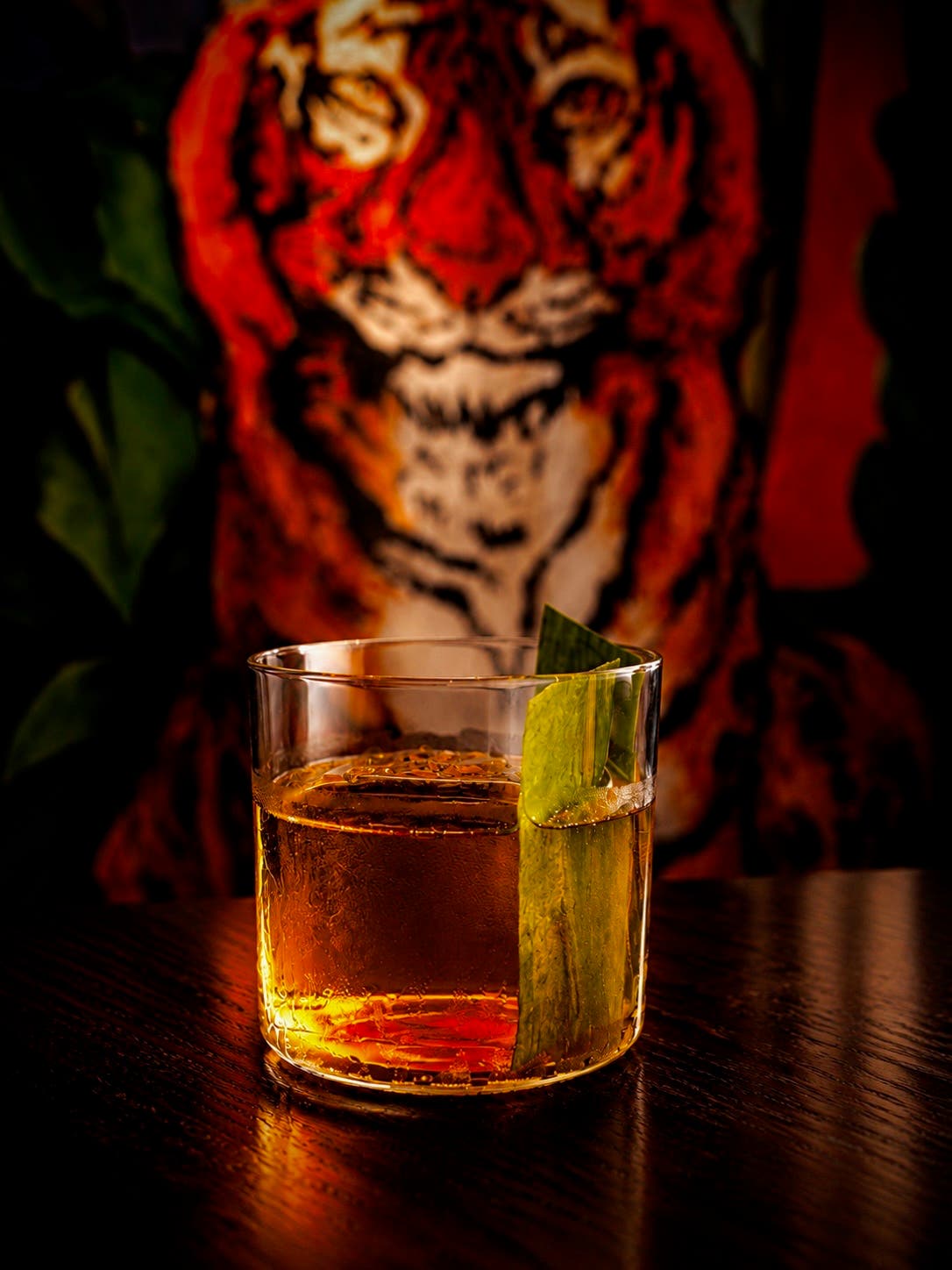
The front room operates like an elevated downtown restaurant-bar hybrid, where cocktails riff on familiarity— an old fashioned with banana-infused bourbon called the Banana Stand, remains a customer favorite.
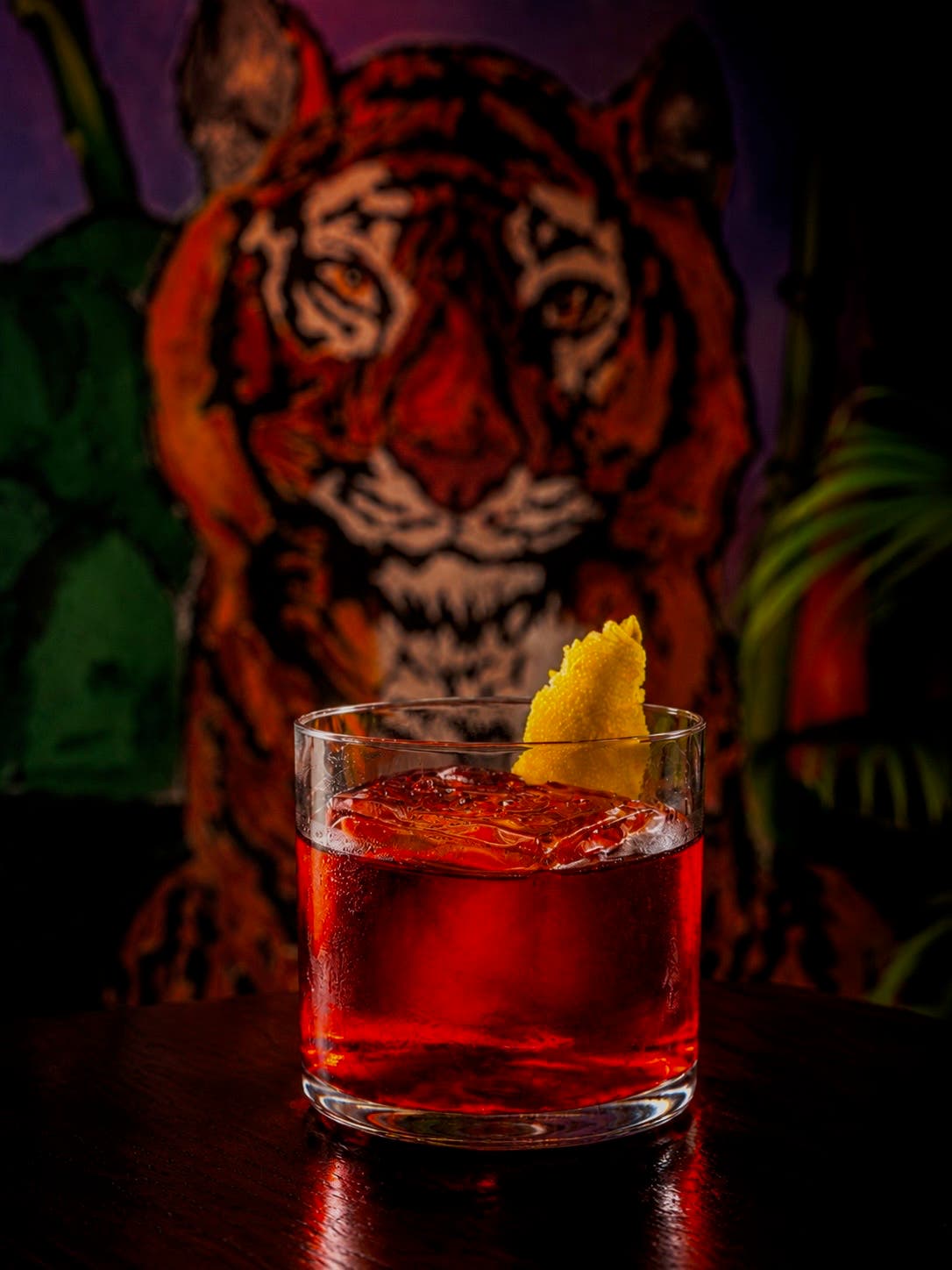
And for the more sophisticated crowd, a plum-and-duck-fat Negroni dubbed Duck Season, brings a polished but approachable punch.
The back bar’s cocktails lean savory, vegetal, clarified, experimental: the kind of drinks that attract bartenders on their nights off and industry regulars looking for something beyond the City’s increasingly homogenized cocktail canon.
Guests are encouraged to scan the back bar shelves and improvise with the bartenders directly.
For all the maximalist design touches, Lucky Tiger’s philosophy feels surprisingly old-school.
Dominguez speaks nostalgically about an era when people went to bars not to document drinks, but to know their bartender.
“There was a day when bartenders would literally speak for hours with you,” he says. “People sometimes just want to talk to you.”
That hospitality-first mentality runs through the entire operation seen through the Polaroids behind the bar, and the cozy geometry of Toraya’s U-shaped seating: intentionally built to collapse the distance between bartender and customer.
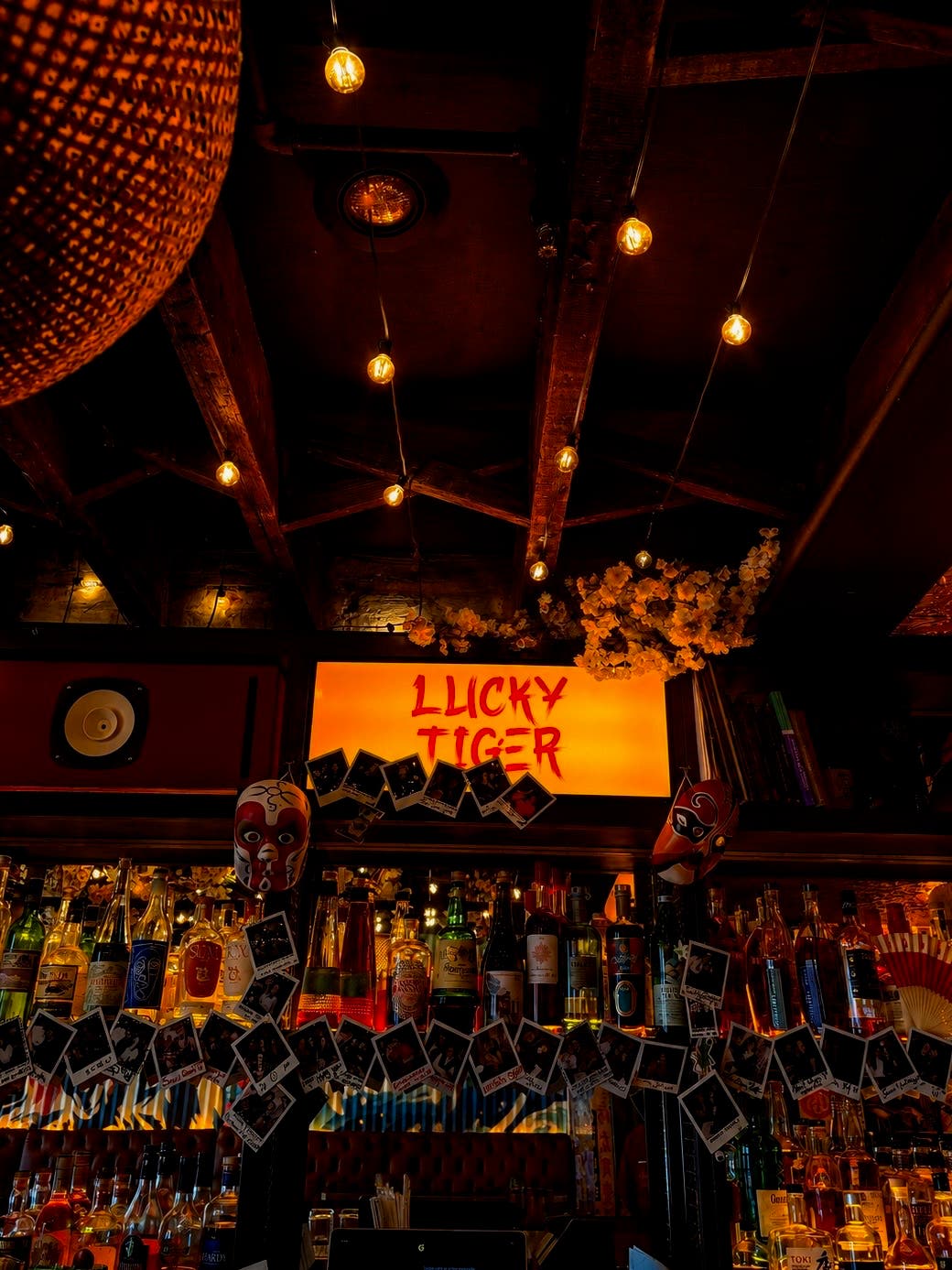
“It’s trying to find a happy medium between having a business to run and wanting to be hospitable,” Murphy said.
Rather than rotating through influencer DJs or algorithmic playlists, the team found a resident selector, Ruben Perez, who curates Friday nights and brings in DJs from his own trusted circle.
And perhaps no neighborhood is more primed for this kind of transformation than FiDi itself.
For decades, lower Manhattan largely shut down after business hours: a financial center emptied of personality by dusk.
“The prejudice about the Financial District is that it’s very commercial,” Dominguez said. “But the last four or five years, particularly since the end of COVID, that’s certainly changed.
Now, towers once filled with offices house full-time residents. Young professionals priced out of parts of the East Village are drifting south.
Bars and restaurants followed, beginning to cluster around Stone Street, Water Street and Fulton.
“We do think we have something special that nobody else has in this area — or in the city,” Murphy said.
Lucky Tiger isn’t trying to transport you to Bangkok or Tokyo with anthropological precision. It’s trying to create the fantasy of discovery, Dominguez said.
It succeeds in providing the feeling New Yorkers are perpetually chasing when they walk into a new bar and immediately think: How did I not know about this place already?
To find out more information visit Lucky Tiger's website.
Get more local news delivered straight to your inbox. Sign up for free Patch newsletters and alerts.