Politics & Government
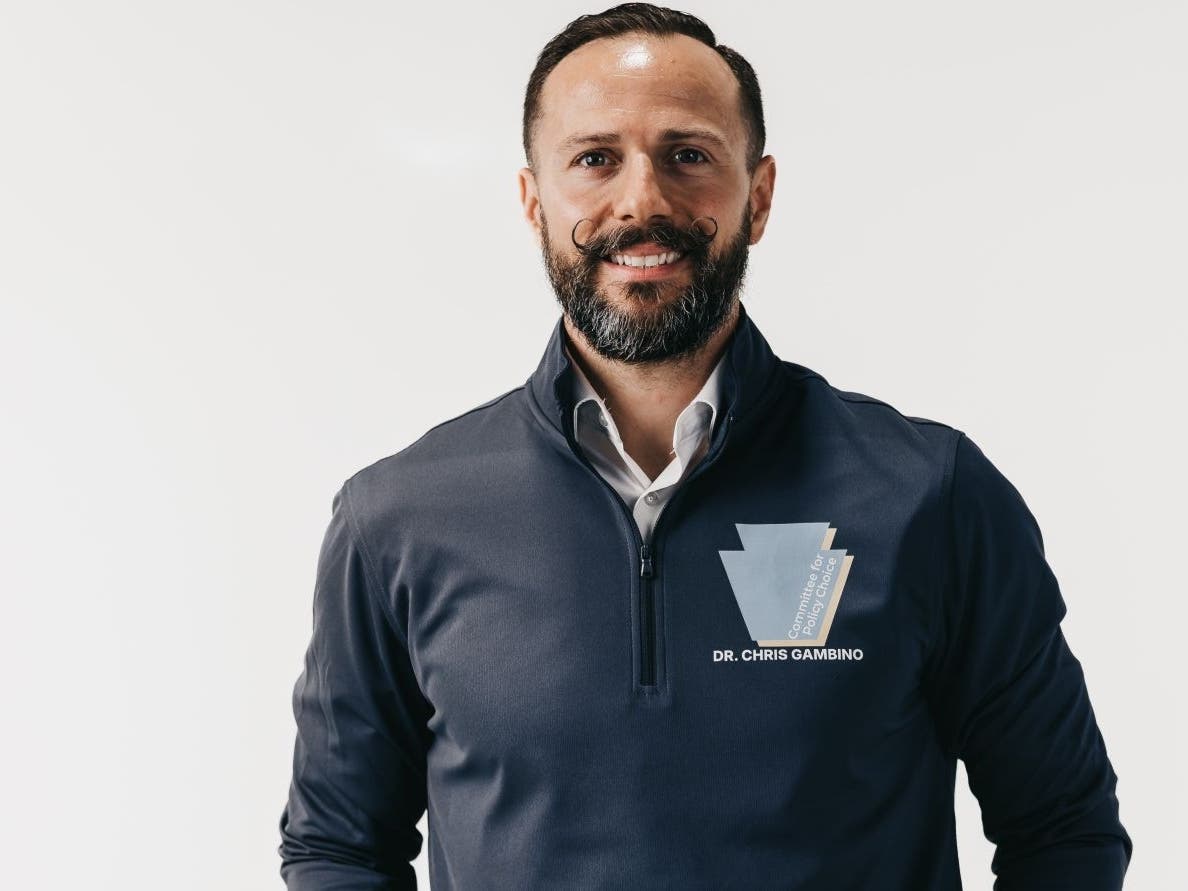
Election 2026: Independent Chris Gambino Running For State Representative
Patch is asking candidates to share their views on issues in Bucks County. Independent Chris Gambino shares his ideas.


Candidates running in the Nov. 3 general election are providing background about themselves and their positions on the issues to voters in these profiles, which will run in Patch when they are received.
BUCKS COUNTY, PA — Independent Chris Gambino is running for state representative in Pennsylvania's 143rd House District. He is running against incumbent Republican Shelby Labs and Democrat Tim Hayes.
Biographical
Find out what's happening in Doylestownfor free with the latest updates from Patch.
Name: Chris Gambino
Town: Plumstead Township
Position: State Representative
Party: Independent (no affiliation)
Family: Husband and Father
Education: Ph.D. (Washington State University), Graduate Cert. Sustainable Agroecosystems (Washington State University), MPA (North Carolina State University), BS Biological Sciences, concentration Nutrition (North Carolina State University)
Occupation: Senior Monitoring, Evaluation, & Learning Officer for a non-profit that funds food and agriculture research, former professor at Delaware Valley University
Questions
Find out what's happening in Doylestownfor free with the latest updates from Patch.
1. Why are you running for state office?
Most people agree things are out of hand. You have Tim claiming to be a leader, yet he refuses to participate in a civic forum hosted by the League of Women Voters. He authorized ads calling Shelby, “Lyin’ Labs.” Not only is name-calling not what an adult who wants to represent a community should do, but it’s not even original. The Harvie campaign has been calling Fitzpatrick “Lyin’ Brian” for some time.
At the same time, you have Shelby’s Republicans sending texts to the community saying Tim will use taxes to benefit illegal immigrants over citizens.
Both campaigns are saying we can’t afford the other. Neither campaign is actually focused on you. They’re just focused on getting elected so they can grab power for their party.
But guess what? A vote for Tim or Shelby changes nothing in Harrisburg. The Democrats are predicted to increase their majority in the House by four seats in districts outside of ours.
Instead, a down-ballot vote for me puts the first Independent in the PA House in almost 100 years.
It’s about time we try something else. One party wins, undoes what the other accomplished, and the cycle repeats. We’re stuck on a political seesaw, moving back and forth but never forward. I’m running to get us off the seesaw.
The people in this community deserve a representative who answers to them, not party leadership.
The people and families I meet aren’t asking for more theater. They just want to live a good life. They’re asking practical questions. Why does childcare cost more than a mortgage? Why can’t young families afford to live where they grew up? Why does the electric bill keep climbing? Those are governing questions. More noise won’t answer them.
I’m running as an independent voice because staying divided only serves party fundraising, not community building. All I ask is that voters take a look. Learn more about me. I've spent my career bringing people together, working through complex problems, and turning good ideas into practical solutions.
You don't have to agree with me on everything. But you deserve someone who will listen, think independently, and put this community first.
2. Where do you stand on energy production in the state?
Every energy question in Pennsylvania gets asked as a loyalty test. Gas or ‘green’? Drill or don’t? RGGI, yes or no?
Instead, let’s start with what’s true. Electricity demand is rising. The power on our grid comes from plants we’ve already built and paid for. And under today’s rules, we can’t build new power fast enough to keep up. People need cheap, reliable energy to work, to live, to innovate, and to thrive. Done right, that doesn’t have to cost our children a vibrant planet.
I’ve worked alongside the Breakthrough Institute, a national energy and environmental think tank built on a simple conviction: prosperous people and a thriving planet aren’t a trade-off. We can have both, if we’re willing to follow the evidence wherever it leads.
I firmly believe that. I haven’t heard a single party candidate articulate a position such as that. Sometimes the evidence leads to nuclear, a reliable, around-the-clock source of carbon-free electricity. I understand people have some fears around nuclear. But if we pause for a moment.
We realize that for decades, our Navy has operated nuclear-powered submarines with service members living alongside reactors. That experience demonstrates what's possible when nuclear technology is engineered and operated with rigorous safety standards. Concerns about nuclear waste are fair, but they deserve investment and answers, not a closed conversation.
Then there’s RGGI. Pennsylvania joined a regional carbon market by regulation, without the legislature’s approval. A state court struck it down as an unlawful tax. Then lawmakers traded it away in a budget deal. Whatever you think of RGGI, that’s no way to make energy policy. Decisions this big deserve an open vote, honest numbers, and a plan that returns the value to households.
Almost a decade ago, I helped develop energy storage policy options for the North Carolina legislature. The lesson holds here too. The technology is ready. Our policies are not.
Pennsylvania needs to produce more energy, expand battery storage, and modernize our grid.
We can deliver affordable, reliable power and a thriving planet—but only if we stop treating energy policy as a political loyalty test and start building for the future.
3. What can be done to curb the increased cost of utilities?
Your energy bill isn't just a price. It measures how much control you have over your own life. Right now, not much. When a war starts half a world away, fuel prices jump, and families here pay for decisions they had no say in. That isn't freedom. It's dependence.
Pennsylvania tells consumers they have a choice. Shop around. Compare electricity and natural gas suppliers. Find a better rate.
But here's what that choice doesn't change: you're still paying PECO to deliver the energy. You can't shop around for another company to operate the wires and pipes serving your home. And even the savings from switching suppliers aren't guaranteed. In fact, many households end up paying more.
That's why I want us to think bigger than shopping for a few cents off a kilowatt-hour.
Real energy freedom means giving households greater control over how much energy they need to buy in the first place. That starts with producing more affordable power, expanding battery storage, and modernizing our grid. Imagine generating electricity on your own roof, storing it for later, or using electricity when it's cheapest. These technologies already exist. The challenge is making them more affordable and accessible, including for households that can't install their own equipment.
But we also need to change the incentives governing our utilities. Pennsylvania's Public Utility Commission has the authority to regulate delivery rates, review infrastructure investments, and hold utilities accountable. We need to use that authority more effectively.
In 2018, Pennsylvania passed Act 58, opening the door to performance-based ratemaking. It's time to build on that foundation. Utilities shouldn't be rewarded simply for building more infrastructure. They should be rewarded for delivering measurable outcomes: lower operating costs, fewer outages, greater efficiency, and reliable service. And when they fall short, there should be meaningful financial consequences.
Anyone promising to simply lower your utility rates either doesn't understand how our energy system works, or worse, understands it and is choosing to mislead you. We can't legislate away the cost of producing and delivering energy. But we can change the rules, demand better results, and give households more control over how much energy they purchase.
Pennsylvania doesn't need another promise of cheaper electricity. We need a government willing to use the authority it already has to make utilities deliver better outcomes for the people paying the bills.
4. Where do you stand on taxes and the state budget?
I’m the only candidate proposing a state standard tax deduction. Pennsylvania doesn’t have one. The state taxes your income starting with the very first dollar in your paycheck, with only narrow exceptions for the lowest earners. A standard deduction would let working families keep more of what they earn. The exact amount should be set by the numbers, through Pennsylvania’s Independent Fiscal Office.
Compare that to a sales-tax holiday on diapers. A holiday makes a headline. A standard deduction makes a difference in every paycheck, all year long. Then there's the conversation we keep avoiding: how we fund public education, and who pays
for it. We've turned education into another political loyalty test. Public schools or school choice.
Vouchers or no vouchers. Meanwhile, here in Bucks County, property owners carry much of the cost of educating our children. In Central Bucks, 64% of school district revenue comes from property taxes. In Pennridge, it's 54%.
Think about our neighbors on fixed incomes. They've lived here for decades. They put their children through our schools, and now their grandchildren sit in those same classrooms.
They've contributed to public education for a lifetime. Yet their property tax bills keep climbing, along with the fear of being taxed out of the homes they worked a lifetime to own.
We should be able to support strong public schools while questioning whether the burden on property owners is fair or sustainable. Those aren't competing values. They're governing
responsibilities.
I won't pretend there's a simple answer. But we need an honest conversation about education funding and property tax relief, without defending a party's predetermined position.
On the budget, I’ll bring the discipline of my day job. I’m a monitoring and evaluation professional. What that means is I regularly assess whether programs work. Effectiveness comes first.
Picture a house on fire. Firefighters don’t toss one bucket of water and call it a success. They put the fire out. Then they can ask how to do it with less water next time. Government should work the same way. First, does the program work? If it doesn’t, we decide whether to cut it, pivot, or redesign it. Only when a program is proven effective do we chase savings.
That takes humility. It means admitting when something didn’t work, no matter who wrote it. Our current politics punishes that honesty. This isn’t about bigger or smaller government. It’s about effective government.
The 143rd House District covers Bedminster, Hilltown, Plumstead, Tinicum, and a portion of New Britain Township and the boroughs of Dublin, Perkasie, Sellersville, and Silverdale.
Get more local news delivered straight to your inbox. Sign up for free Patch newsletters and alerts.