Business & Tech
Rising Costs, AI, Workforce Worries Dominate Spanberger’s Fairfax City Visit
Fairfax City business leaders told Gov. Abigail Spanberger about rising costs, AI, workforce and capital challenges.


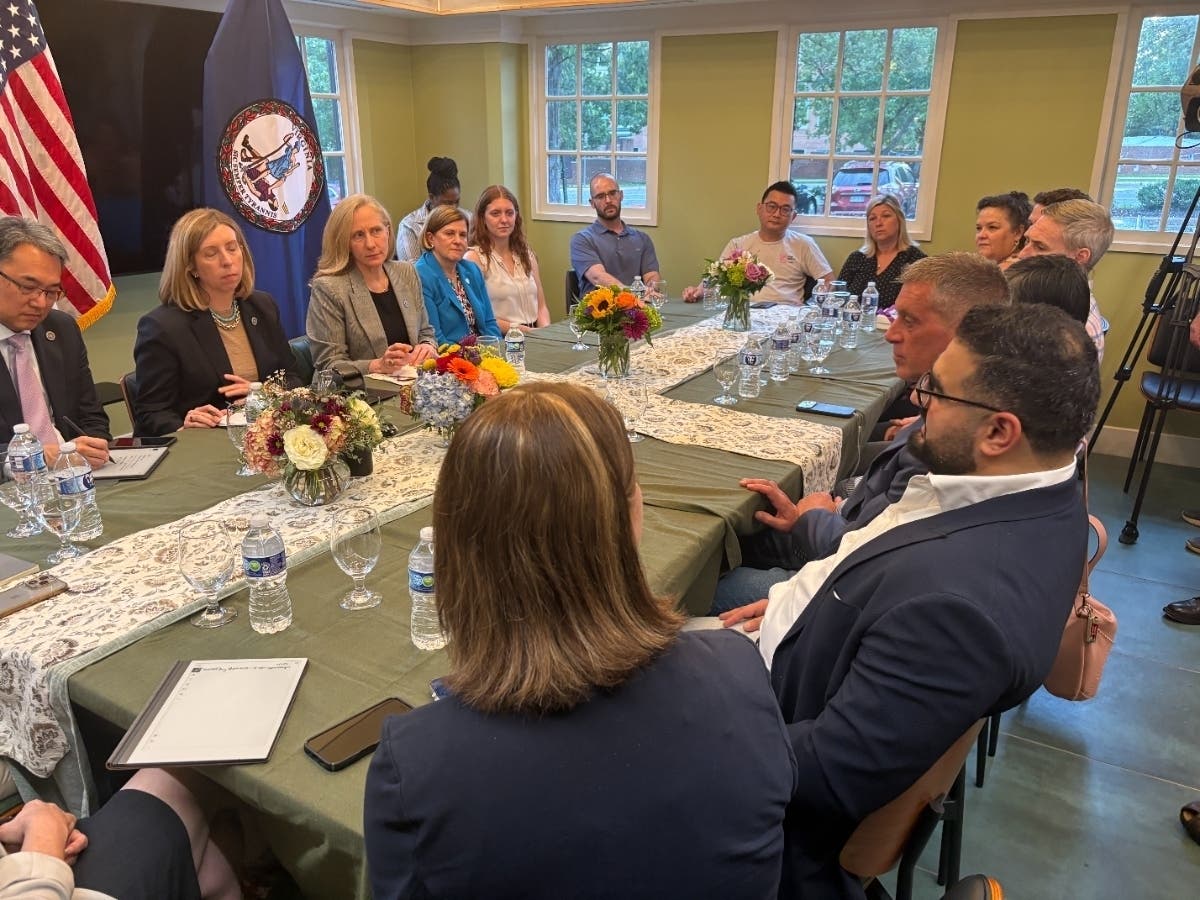
FAIRFAX CITY, VA — Rising electricity bills, difficulty raising capital, workforce changes and the rapid adoption of artificial intelligence were among the challenges Fairfax City business leaders brought directly to Gov. Abigail Spanberger (D) during a small-business listening session Wednesday.
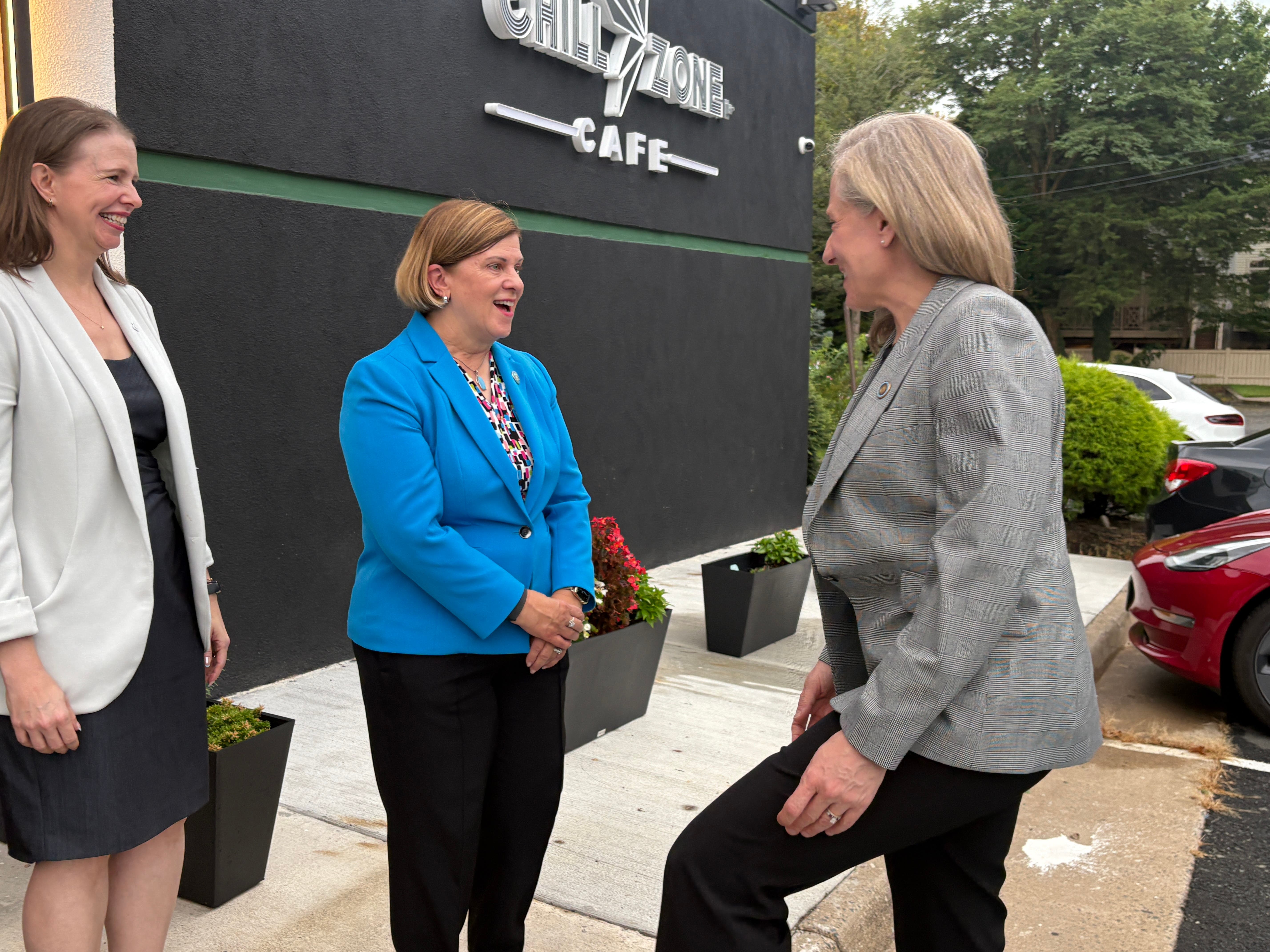
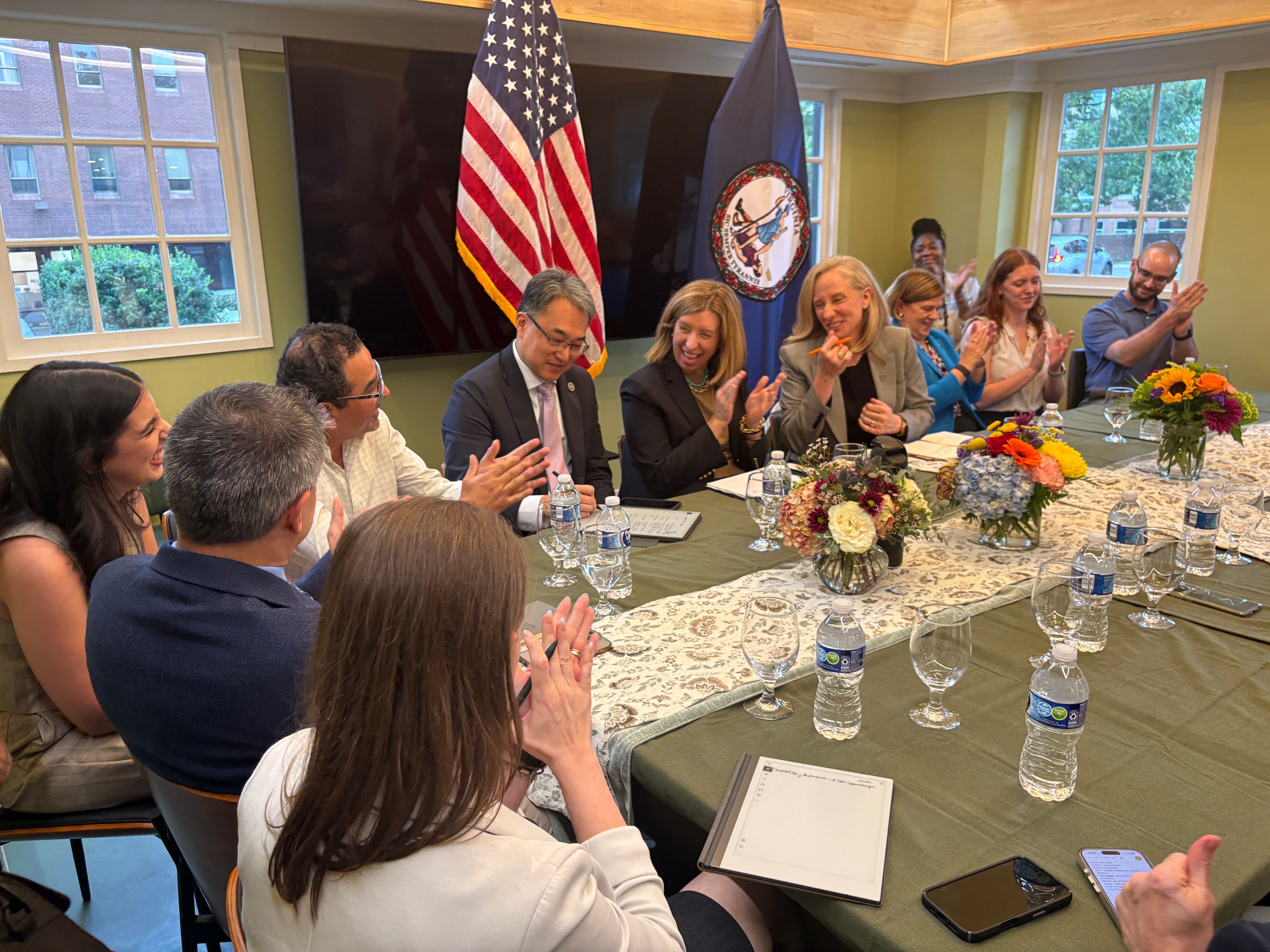
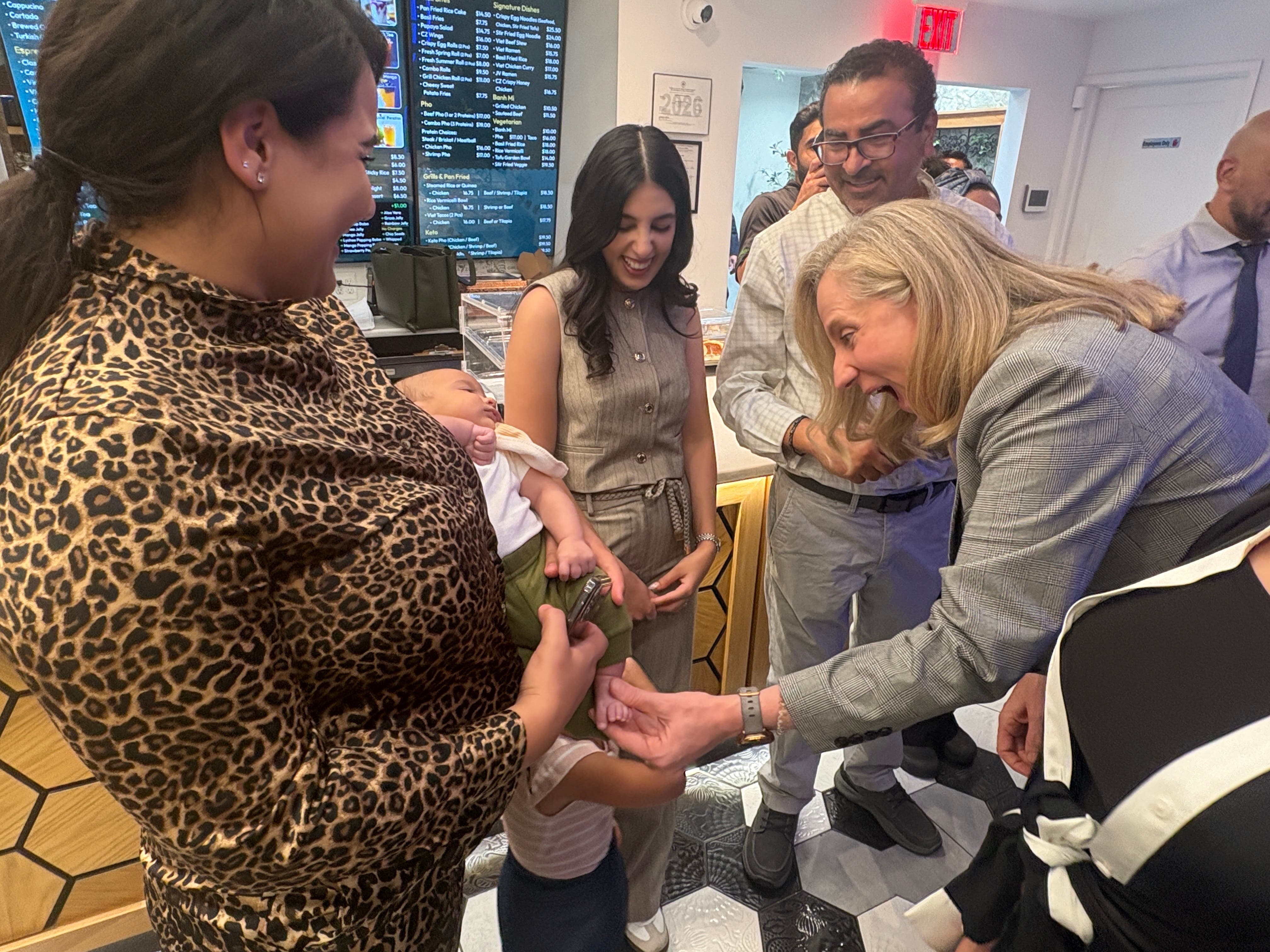
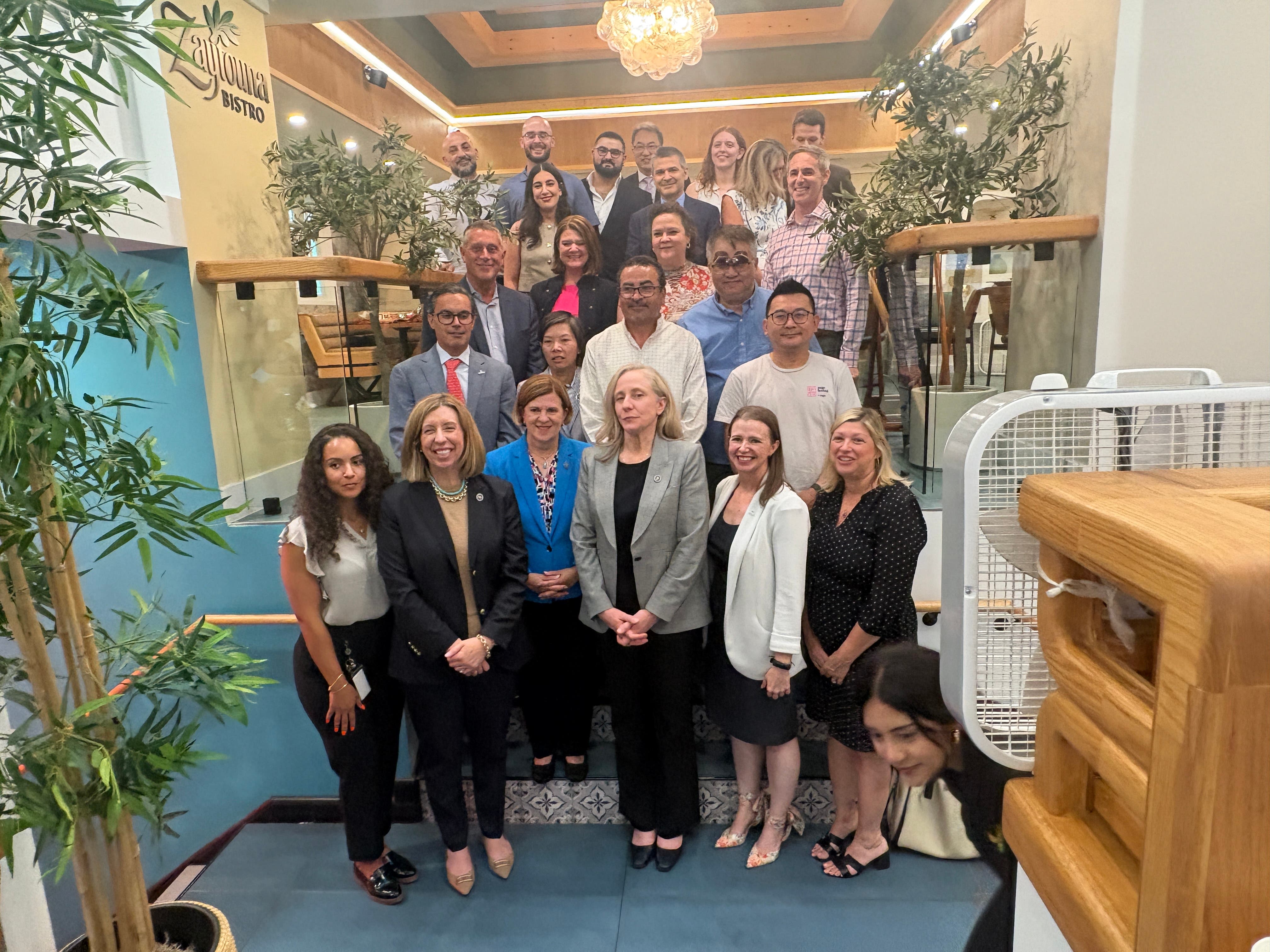
Spanberger met with entrepreneurs and business advocates at Zaytouna Bistro on Chain Bridge Road, joined by Virginia Secretary of Commerce and Trade Carrie Chenery, Virginia Department of Small Business and Supplier Diversity Director Eric Lin and Fairfax City Mayor Catherine Read. The session was part of a Fairfax-area visit by the governor focused on affordability and the costs facing Virginia residents and businesses.
The discussion brought together representatives from restaurants, technology, aerospace, staffing, creative services and local business organizations. Rather than delivering a lengthy presentation, Spanberger spent much of the session questioning participants about the obstacles they face and what the state could do to help.
Find out what's happening in Fairfax Cityfor free with the latest updates from Patch.
Business Owners Point To Rising Costs, Changing Economy
Jinson Chan, owner of High Side, an Asian street food and craft beer restaurant in Old Town Fairfax, told Spanberger that higher electricity costs have become a significant burden.
"I just looked at my bill. I paid $1,000 last month for my restaurant and $200 for my home, which I have a solar panel," Chan said.
Find out what's happening in Fairfax Cityfor free with the latest updates from Patch.
Chan said his restaurant's summertime electric bill used to be around $600.
"Now it's $1,000," he said. "It's getting harder and harder to run a business, especially because this is a cost that we cannot control."
Chan also described a dramatic change in customer behavior since the pandemic. People are eating and drinking out less frequently, he said, while uncertainty surrounding the federal workforce has caused some regular customers to cut back their spending.
"Many of my regulars, instead of coming out every few days, now it's actually once a month, and they tighten up their belt a little bit because of uncertainties," he said.
For Chan, the response has been to emphasize community and give customers reasons to gather.
"I think what the challenge we have right now is definitely trying to bring people together," he said. "It's just about the connection that we're trying to build."
Ali Aldubaisi, co-founder and CEO of Kaiden AI, described a different challenge: finding investment capital in Northern Virginia. The venture-backed startup, which operates out of the Mason Enterprise Center, develops AI-powered voice simulations for law enforcement and public safety. Aldubaisi said Northern Virginia has considerable technology talent but lacks the concentration of venture capital available in places such as Silicon Valley and New York.
"There's a ton of talent here," he said. "Mason being that kind of home of engineering talent, in my opinion, there isn't a lot of venture capital that is operating and investing in this area."
Aldubaisi said that when his company needs to raise money, he generally travels to the West Coast. Asked why he nevertheless chose Virginia, he pointed to his roots in the region and proximity to customers.
"I grew up here. I went to Mason," he said. "I like being where our customers are."
He told state officials that Northern Virginia should capitalize on its technology base by becoming a leader in AI training, reskilling and investment.
"I think Northern Virginia in general should be leading the way of AI talent, AI upskilling and reskilling," Aldubaisi said.
AI Brings Opportunities — And New Problems
Artificial intelligence emerged as one of the dominant themes of the discussion, with business leaders describing both productivity gains and threats to existing companies.
Tod Plotkin, founder and CEO of Green Buzz Agency, said AI has created difficulties for companies in creative industries, where customers sometimes assume technology can replace professional creative work.
"I think it's impacting us very negatively on multiple fronts," Plotkin said. "I think people think that AI can do creative, can do video production, can replace people."
At the same time, Plotkin said AI-generated marketing has made it increasingly difficult for small companies to distinguish themselves online.
"The biggest challenge, honestly, with everything is the noise around AI and how much marketing is just automated right now," he said.
Jennifer Rose, executive director of the Central Fairfax Chamber of Commerce, said her organization is hearing similar concerns from members. The chamber has nearly 400 members, most with fewer than 10 full-time equivalent employees.
Small businesses are attracted to AI because money and time are tight, Rose said, but she cautioned against relying on it for work that requires professional expertise.
"You must treat AI like an intern," Rose said. "You want an intern selling your product? No, you need the professionals to do that."
For the chamber itself, however, Rose said AI has been "a game changer" for a staff of two when used appropriately.
Chris Fauquier, CEO of Fairfax-based AAC SpaceQuest, offered another perspective. His company builds satellite components and operates satellite systems and has been in Fairfax for 35 years.
Fauquier said his engineers use AI as a productivity tool for software development and complex calculations, but employees still need enough expertise to identify mistakes in AI-generated work.
"Once you learn how to use the tool effectively, though, it easily translates into a multiplier, 50-75% higher in ability," Fauquier said.
He also provided a cautionary example. Fauquier said his company had instances in which AI-assisted software uploaded to satellites introduced previously unknown faults, requiring engineers to diagnose the problem.
"You really have to become a much better programmer," he said.
AAC SpaceQuest is planning significant growth. Fauquier said the company could hire another 30 to 40 employees over the next 12 to 18 months, depending on financing.
Stephanie Ranno of FlexProfessionals said companies are also struggling with a mismatch between available workers and the skills employers need.
Her firm, which has operated in Fairfax for 16 years, specializes in flexible employment, including helping caregivers return to or remain in the workforce. Ranno said post-pandemic hiring has been unusually volatile and businesses increasingly need ways to reskill workers.
"This mismatch of talent and opportunity is something that we look at all the time, and try and figure out solutions like upskilling, reskilling," she said.
Businesses Ask State For Help
Toward the end of the session, Fairfax City Economic Development Director and CEO Colleen Kardasz asked business owners what they would request if they had a "magic wand" and could ask Spanberger and state officials for one thing to help their companies remain successful.
The answers ranged from more venture capital and workforce development to tax incentives and assistance marketing Virginia businesses internationally.
Fauquier said Virginia has become an increasingly attractive center for aerospace and satellite companies, competing with established hubs in California and Colorado.
"Virginia, I would say as a state, is fantastic for aerospace," he said.
But Fauquier said tax credits tied to engineering salaries could help companies compete for highly paid technical workers and expand faster.
Plotkin called for more effort to tell the story of Fairfax City and Northern Virginia as a place where businesses and creative professionals can thrive.
"It's just a matter of making sure people know it," he said.
Zaytouna Bistro owner Sam Khamaises, whose restaurant recently opened, raised a much more immediate concern. He said substantial money had been invested to open the restaurant in a space that had been vacant for about three years, but the business has encountered difficulty receiving approval for additional covered outdoor dining space.
Spanberger questioned him about the situation and expressed sympathy with his desire to provide outdoor seating before city officials explained that the issue involved Fairfax City's zoning code.
Read used the discussion to highlight Fairfax City's efforts to cultivate small businesses, pointing to its proximity to George Mason University, diverse restaurant scene and partnerships among the city, its Economic Development Authority, the Central Fairfax Chamber and Old Town Fairfax Business Association.
"We have so many assets here," Read said. "It's a matter of everybody around the table: economic development, the chamber, Old Town Fairfax. How do we pull all of these assets together and make them sell?"
The governor's office said Wednesday's Fairfax visit was intended to highlight Spanberger's efforts to address affordability. Earlier in the day, Spanberger toured Telestar Court, an 80-unit adaptive reuse affordable housing project in the Falls Church area that received support from the Virginia Housing Trust Fund.
The Fairfax City session was scheduled specifically as a small-business listening session with Spanberger, Chenery, Lin, Read and local business owners.
Are you a local business owner? Post a business listing on Patch! It’s an easy way to reach a local audience and connect with customers close to home. Go here to get started today.
Get more local news delivered straight to your inbox. Sign up for free Patch newsletters and alerts.