Politics & Government
Could Fairfax County’s Tree Commission Be Dissolved?
Fairfax County will hold an Aug. 25 public hearing on a proposal to dissolve the Tree Commission and shift its work.


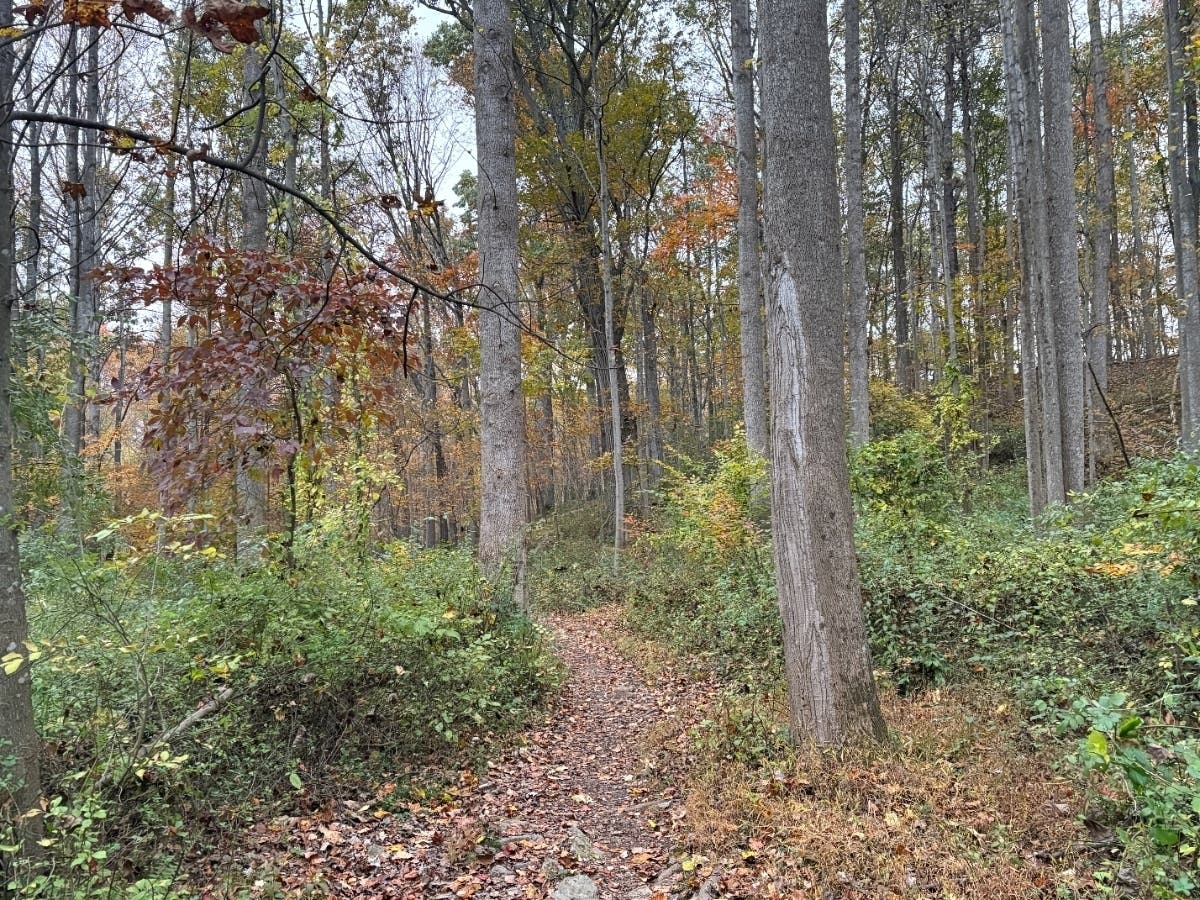
FAIRFAX COUNTY, VA — Fairfax County residents will have an opportunity Aug. 25 to weigh in on a proposal to dissolve the county’s Tree Commission and transfer some of its advisory role to a restructured environmental panel.
The Board of Supervisors voted July 14 to advertise a public hearing for 4:30 p.m. Aug. 25 on proposed amendments repealing the portion of the county code that establishes the Tree Commission. The vote authorized the hearing but did not dissolve the commission.
Board Chairman Jeffrey McKay (D-At-Large) emphasized that distinction before the vote, saying the county still had “a ways to go” before making final decisions. The proposed ordinance would repeal Article 9 of Chapter 122, known as the Tree Conservation Ordinance, and direct the Department of Public Works and Environmental Services to take the steps necessary to dissolve the commission if the ordinance is adopted.
Find out what's happening in McLeanfor free with the latest updates from Patch.
County Says Restructuring Would Reduce Overlap
The Tree Commission was established in 1973 to advise supervisors on protecting, improving and expanding Fairfax County’s urban forest. Its responsibilities include commenting on actions that could affect the urban forest, reviewing the implementation of tree-related ordinances and policies, recommending changes to the county’s Tree Action Plan and conducting public outreach.
The 15-seat commission includes district and at-large representatives, along with representatives from the Environmental Quality Advisory Council, Northern Virginia Soil and Water Conservation District, Fairfax County Park Authority, Virginia Cooperative Extension and Virginia Department of Forestry.
Find out what's happening in McLeanfor free with the latest updates from Patch.
County staff concluded during a broader review of boards, authorities and commissions that the Tree Commission’s work overlaps with that of the Environmental Quality Advisory Council, commonly known as EQAC.
Under the proposal, EQAC would be restructured as an Environmental Commission. The new body would advise supervisors on protecting and enhancing the county’s natural environment and improving its resilience to climate change. At least one commissioner would have expertise in forestry and natural resources, according to the administrative item, and trees and natural resources would be included in each annual work plan.
The county estimates the restructuring would save approximately $20,000 in meeting-facilitation expenses and about 600 staff hours annually.
“Our commitment to protecting Fairfax County’s environment has not changed,” McKay said in a statement provided to Patch. “This proposal is about bringing our environmental advisory work together in a way that is more efficient and effective.”
McKay said combining the work of the two panels would bring together a broader range of expertise while using county resources more efficiently.
“Trees and natural resources will remain a specific focus, with seats reserved for members with forestry and natural resources expertise,” he said.
Civic Groups Oppose Dissolving The Panels
The Reston Citizens Association urged supervisors not to replace the Tree Commission and EQAC with a single commission.
The association acknowledged the county’s interest in efficiency but argued that the projected savings are small compared with the land-use, infrastructure, stormwater and climate-related decisions on which the advisory bodies provide input.
“Saving $20,000 by weakening independent oversight is penny-wise and pound-foolish,” RCA said.
The association said the change could reduce focused advocacy for trees, dilute visible environmental oversight and undermine public participation. It asked supervisors to pause the proposal and conduct a public review involving members of both advisory bodies, civic organizations and other residents.
If supervisors still decide to create an Environmental Commission, RCA said, it should exist alongside specialized advisory bodies rather than replace them.
Citizens For Great Falls has also called on residents to submit comments, attend the hearing and contact McKay and Dranesville District Supervisor James Bierman.
In an Aug. 8 community message, the organization said it filed formal objections and asked supervisors to preserve the existing level of tree-related expertise, authority, outreach and staff support under any successor structure.
Citizens For Great Falls argued that trees would have to compete with subjects such as water, climate and data-center development for the new commission’s attention. The organization also questioned the methodology behind the county’s estimate of $20,000 and 600 staff hours in annual savings.
“The savings are unverified,” Citizens For Great Falls said. It contended that the estimate was released without a published explanation of how it was calculated.
The group also said the Board of Supervisors’ Environment Committee had not examined the potential effects of dissolving the two advisory bodies. According to Citizens For Great Falls, the proposal moved from a staff recommendation toward a public hearing without a committee discussion devoted to the potential loss of tree-related oversight, expertise or outreach.
Citizens For Great Falls further argued that no complete transition plan had been made public showing which existing powers, reports and outreach programs would continue under the new structure.
“Both could end in a single vote on Aug. 25,” the organization said.
Op-Ed Warns About Lost Expertise
Similar concerns are raised in a separate op-ed submitted to Patch exclusively by Doug Britt, who was instrumental in Reston’s acceptance into the Biophilic Cities Network. Britt served as chairman of the Reston Association’s Environmental Advisory Committee and on the Fairfax County Community-wide Energy and Climate Action Plan Task Force.
RELATED: OP-ED: Fairfax Board To Vote On Abolishing Two Longstanding Environmental Advisory Groups
Britt argues that the Tree Commission’s specialized knowledge would not be replicated by reserving one position on a broader commission for a forestry or natural-resources expert.
“Moving from a body centered on tree expertise to a single seat on a Commission is not a consolidation; it is a downgrading of attention to trees,” Britt says.
Britt also questions whether a new commission would continue EQAC’s annual environmental reports and preserve the institutional knowledge accumulated by members of both existing bodies.
Supervisors Say Details Remain Under Review
During the July 14 discussion, Hunter Mill District Supervisor Walter Alcorn asked whether supervisors could transfer duties currently assigned to the Tree Commission to the restructured Environmental Commission.
“I just want to make sure since we’re moving forward with this that we would still have an opportunity, if we so wanted to, to basically designate this new Environmental Commission for some of these duties that are in the ordinance now as the Tree Commission."
Bree Fuller, countywide coordinator in the County Executive’s Office, said staff was compiling comments submitted by EQAC and the Tree Commission, making final changes to the proposed bylaws and preparing responses for both groups.
“There is to be time for that,” Fuller told Alcorn.
McKay stressed that the July 14 action did not give final approval to the restructuring.
“This item is the authorization to advertise a public hearing, and so we’ve got a ways to go,” McKay said.
He added that he had met with people involved in the two advisory bodies and was looking forward to the “evolution” of EQAC and better integration of the county’s environmental initiatives.
A Fairfax County spokesman confirmed that supervisors are expected to take separate actions Aug. 25 on repealing the code provisions establishing the Tree Commission and restructuring EQAC into the Environmental Commission.
Materials for both actions will be available publicly before the meeting, the spokesman said. Board meeting materials are usually posted on the Friday afternoon before a Tuesday meeting, which in this case would be Aug. 21.
Get more local news delivered straight to your inbox. Sign up for free Patch newsletters and alerts.